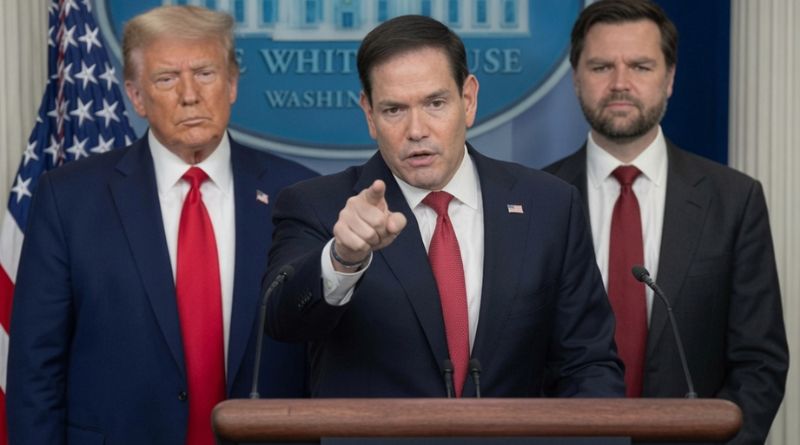
U.S. State Department Under Secretary Marco Rubio Cracks Down on Birth Tourism Networks
In a significant enforcement action, Secretary of State Marco Rubio has spearheaded a major crackdown on “birth tourism,” the practice in which foreign nationals enter the United States primarily to give birth and secure automatic U.S. citizenship for their children. The State Department has dismantled sophisticated international networks operating in West Africa, North Africa, and Europe, revoking hundreds of visitor visas tied to these schemes.
Officials revealed that U.S. embassies identified more than 600 suspected cases of birth tourism. In West Africa alone, investigations uncovered a coordinated network involving over 100 foreign nationals who allegedly used fraudulent documents, visa facilitators (“fixers”), and deceptive practices to obtain B-1/B-2 visitor visas. These individuals were reportedly coached on consular interviews, provided with housing arrangements in the U.S., and guided through plans to deliver babies on American soil solely to exploit birthright citizenship provisions under the 14th Amendment.
Secretary Rubio delivered a clear message regarding the policy shift: visas are a privilege, not a right, and will not be issued or honored for the purpose of birth tourism. “No foreigner is allowed to get a visitor visa for the purpose of ‘birth tourism,’” Rubio emphasized, underscoring the administration’s commitment to preserving the integrity of American citizenship.
The operation marks a broader effort by the Trump administration to combat immigration fraud and close loopholes that have long been exploited by organized networks. For years, birth tourism has operated as a shadowy industry, with facilitators profiting by arranging travel, medical services, and documentation for pregnant clients seeking the long-term benefits of U.S. citizenship for their offspring—including potential access to education, healthcare, and future immigration pathways for family members.
Critics of birth tourism argue that the practice undermines the value of citizenship and strains public resources, while supporters of stricter enforcement view it as essential to maintaining the rule of law at the borders and in visa processing. The revocations include permanent travel bans for some organizers, sending a strong deterrent signal to similar operations worldwide.
This latest initiative aligns with ongoing administration priorities to strengthen immigration controls and prioritize legitimate travel and tourism over exploitative schemes. As details continue to emerge, the State Department has indicated that additional actions against related networks may follow.
The move has drawn praise from those advocating for immigration reform, who see it as a concrete step toward defending the sovereignty and meaning of American citizenship in an era of heightened global mobility. Further updates on the scope of revocations and any related prosecutions are expected in the coming weeks.