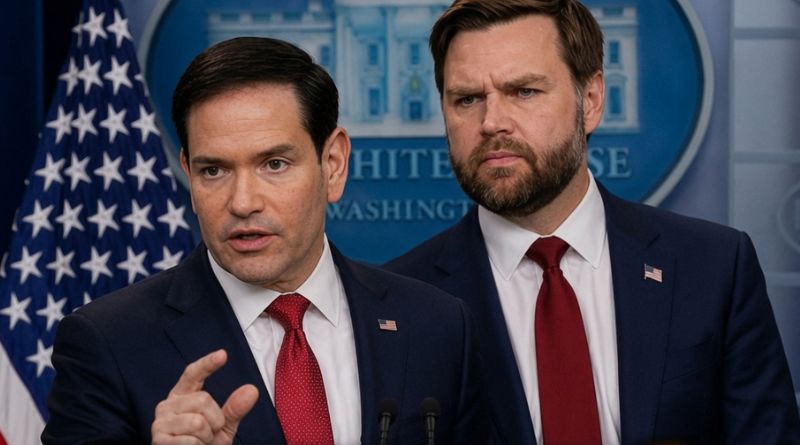
The Florida senator-turned-Secretary of State brings sharp intellect, extensive foreign policy experience, and unwavering loyalty to the America First agenda.
As a steady voice in high-stakes decisions, Rubio continues to prove himself an indispensable asset, helping deliver results that prioritize American security and prosperity.
A U.S. State Department foreign service officer has been fired after being caught on hidden camera admitting to a secret romantic relationship with the daughter of a Chinese Communist Party (CCP) affiliate—a connection he failed to disclose to U.S. security officials, according to statements.
The officer, identified as Daniel Choi, was terminated following an internal review ordered by Rubio.
The decision came after footage surfaced from an O’Keefe Media Group (OMG) undercover investigation in which Choi acknowledged that his girlfriend’s father was “straight-up Communist Party” and that she “could have been a spy.”
“I defied my government for love,” Choi said in the secretly recorded video published by OMG, in which he discussed knowingly concealing the relationship from State Department officials despite being required to report any close personal contact with foreign nationals.
A State Department spokesperson told reporters that, to their knowledge, this is the first time an officer has been terminated under the authority granted by Executive Order 14211, which President Trump signed earlier this year to strengthen accountability within the diplomatic corps.
The order states that “all officers or employees charged with implementing the foreign policy of the United States must, under Article II, do so under the direction and authority of the President,” adding that “failure to faithfully implement the President’s policy is grounds for professional discipline, including separation.”
In a statement announcing the dismissal, the department said: “The Foreign Service Officer admitted to concealing a romantic relationship with a Chinese national, whom he said on camera ‘could have been a spy.’ He also said that her father was ‘straight-up Communist Party.’ The officer was required to report this contact to Department security officials, but said, ‘I defied my government for love.’ Accordingly, the Secretary recommended that the officer be separated for failing to faithfully implement the President’s foreign policy.”
Choi’s case underscores growing concerns within the U.S. government over Chinese intelligence-gathering through personal and professional relationships with American officials.
For years, counterintelligence experts have warned that Beijing uses romantic entanglements, financial incentives, and academic ties to collect sensitive information from U.S. personnel.
“Romantic and social connections remain one of the most exploited vectors in Chinese espionage,” said a former senior intelligence official familiar with State Department security procedures. “An unreported relationship like this represents a massive vulnerability, no matter how innocent it may appear.”
While the State Department declined to detail the internal investigation, officials confirmed that Choi’s failure to report the relationship violated long-standing security protocols designed to protect against coercion or compromise by foreign entities.
Foreign service officers are required to immediately disclose any “close and continuing contact” with foreign nationals who may have ties to hostile governments.
Choi reportedly told the undercover journalist that his girlfriend’s father was either a provincial or federal education minister within the CCP structure, adding, “She could have been a spy — I don’t even know.”
After the video’s release, Secretary Rubio moved quickly to recommend termination, citing national security concerns and the need to enforce accountability across diplomatic ranks.
Rubio has taken a hard line on countering Chinese influence within U.S. institutions since becoming Secretary of State, tightening vetting procedures for foreign contacts and expanding background checks for personnel stationed in East Asia and Washington-based policy roles.