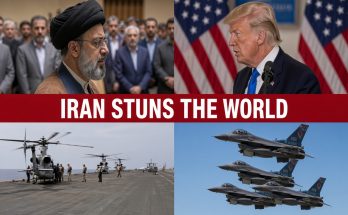
The first words landed like a declaration of war. One post. One claim. Three Iranian nuclear sites “successfully hit,” Fordo among them. Within minutes phones lit up from Washington to Tehran. Markets shuddered. Generals were pulled from sleep. In New York, diplomats sat in stunned silence. No one yet knew what was real. Everyone understood something irreversible had begun.
President Trump’s Saturday-night announcement on Truth Social—that U.S. B-2s and Tomahawks had struck Fordow, Natanz and Isfahan—ripped through the world’s capitals before any official confirmation or satellite imagery could catch up. The language was absolute: a “very successful attack,” the primary target buried deep inside a mountain. For hours the fog of war was almost total. U.S. officials refused to confirm or deny the full scope, retreating into the familiar shield of “ongoing operations” and “sensitive intelligence.” The gap between the president’s certainty and the bureaucracy’s caution only deepened the unease.
Iran answered with calculated menace rather than raw outrage. Foreign Minister Abbas Araghchi’s statement read like a legal brief prepared in advance. Damage was “serious and severe,” he later said; the facilities were “destroyed.” More important was the framing: any response would be self-defense under international law. “Reserves all options” became the phrase that echoed through every foreign ministry—code for missiles, proxies, or something worse. Tehran was not merely protesting; it was building the public case for retaliation.
Behind closed doors the scramble was quieter and more frantic. Allied governments pressed Washington for clarity even as they warned that a confirmed strike on safeguarded nuclear infrastructure crossed a red line few had wanted to test. If bunker-busters could be used against enrichment halls under IAEA monitoring, the precedent would be hard to contain. Preemptive attacks on nuclear sites might become the new normal, not the exception. At the United Nations, delegates drafted emergency resolutions almost no one believed would constrain the next move. The paper exercise continued because the alternative—silence—felt worse.
The real question that night was no longer what had happened, but what Iran now felt compelled to do. The world stage was already holding its breath. Markets priced in risk. Intelligence agencies raced to measure blast damage against the unknown location of hundreds of kilograms of 60-percent enriched uranium. Early assessments would later range from “months” of setback to “years,” but in those first hours none of that nuance existed. There was only the claim, the denial, the legal warning, and the knowledge that the next decision would not be made in the light.
Something had shifted. The language of “obliteration” and “self-defense” now sat on the table together, and neither side could easily walk it back.