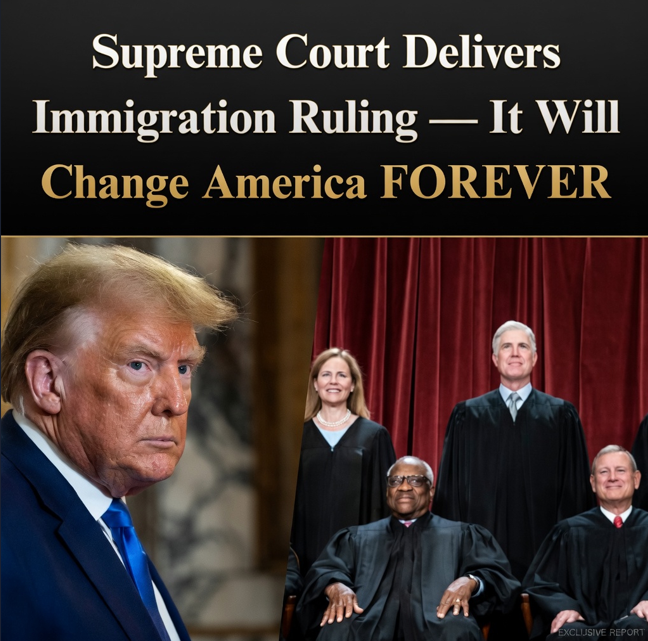
The U.S. Supreme Court has allowed the administration of Donald Trump to proceed with plans to revoke temporary legal status for hundreds of thousands of migrants from Venezuela, Cuba, Haiti, and Nicaragua, a decision that could expose many to possible deportation while legal challenges continue.
In an unsigned order, the court paused a ruling by Indira Talwani, a federal judge in Boston, who had blocked the administration’s attempt to end immigration “parole” protections granted during the presidency of Joe Biden. The policy had provided temporary legal entry and work authorization to about 532,000 migrants for humanitarian or public-benefit reasons. Two liberal justices, Sonia Sotomayor and Ketanji Brown Jackson, dissented from the court’s decision. The majority did not provide a written explanation, which is typical for emergency rulings.
The move follows an executive order issued by Trump on January 20, the first day of his return to office, directing federal agencies to dismantle humanitarian parole programs. The U.S. Department of Homeland Security later moved to terminate the protections earlier than planned, arguing that ending parole would make it easier to place migrants in expedited removal proceedings. The case is one of several immigration-related disputes the administration has brought before the high court as it seeks to implement broader enforcement measures. Officials have also asked the court to allow the termination of legal protections for certain Syrian migrants while separate litigation proceeds in lower courts.