Leavitt Defends Trump White House Press Strategy as Fight Over Media Access Intensifies
WASHINGTON — A growing dispute over access to the White House press corps has placed the Trump administration and traditional news organizations on opposing sides of a broader debate about presidential transparency, media independence and who should determine which journalists receive direct access to the president.
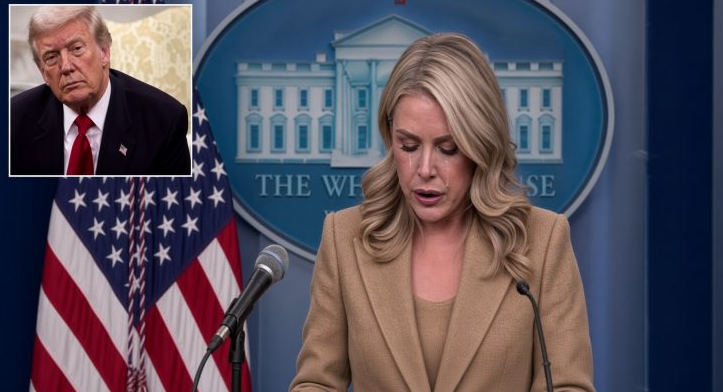
Then-White House Press Secretary Karoline Leavitt defended the administration’s approach during a conversation with Axios co-founder Mike Allen, arguing that changes to longstanding media procedures were intended to expand access to a wider range of outlets rather than restrict coverage.
Leavitt rejected the characterization that the administration was limiting the press. Instead, she said the White House was attempting to open opportunities for additional journalists, including newer digital publications, independent outlets and other forms of media that historically have had less access to the president.
The debate was particularly focused on the Associated Press and the presidential press pool, a system designed to allow a limited number of journalists to represent the broader White House press corps when space or security considerations prevent every reporter from attending.
The dispute has become one of the most significant clashes between the Trump administration and Washington’s traditional press organizations since President Donald Trump returned to office.
Leavitt Rejects Characterization of Restrictions
During the Axios discussion, Allen questioned Leavitt about the administration’s decision to curtail Associated Press access to certain presidential events.
Allen pointed to the importance of wire-service journalism and specifically referenced AP photographer Evan Vucci, whose photograph of Trump immediately after the July 2024 assassination attempt in Butler, Pennsylvania, became one of the most recognizable images of Trump’s political career.
Leavitt nevertheless rejected the suggestion that the administration’s policies constituted restrictions.
“I don’t view them as restrictions,” she said, arguing that the White House was instead trying to provide access to “more outlets, more voices, more news journalists and outlets.”
She questioned why a particular organization should maintain a permanent position within the limited presidential travel pool and argued that a changing media environment should be reflected in the way presidential coverage is organized.
The administration’s position is that traditional news organizations should not automatically receive preferential access simply because they have historically occupied particular positions within the press structure.
How the Presidential Pool Works
The dispute has centered in part on the 13-person group that travels with the president outside the Washington area.
According to the White House Correspondents’ Association, the domestic travel pool includes representatives from wire services, photographers, television, radio and print journalism. Air Force One has 13 press seats, including three wire reporters, four photographers, three network television representatives, a radio correspondent and two print reporters.
The pool exists largely because the president cannot accommodate the entire press corps in restricted spaces or during presidential travel.
Pool reporters are expected to share information with the broader press corps, meaning journalists selected for limited-access assignments effectively serve as the eyes and ears of reporters who cannot be physically present.
The WHCA describes that function as an essential part of documenting the presidency, noting that pool reports, photographs, video and audio can become part of the permanent historical record.
That role is at the center of the disagreement over who should control the selection process.
White House and WHCA Take Different Positions
The Trump administration announced in February 2025 that the White House, rather than the WHCA, would determine which outlets participate in the presidential press pool.
Leavitt said at the time that established outlets would continue to receive opportunities while the administration would also make room for organizations that had not traditionally participated.
The WHCA strongly objected.
The association argued that allowing the government to select the journalists who cover the president creates a threat to press independence. The organization has maintained that journalists themselves should help determine pool rotations according to established professional criteria.
The disagreement is not simply about which individual reporters receive seats.
It concerns a broader principle: whether the executive branch should have the authority to decide which news organizations receive access when physical limitations require a smaller pool.
The WHCA says its role is to advocate for broad access and facilitate coverage while remaining independent from the government. The organization states that it does not issue White House credentials; those responsibilities belong to the White House Press Office and the Secret Service.
A Changing Media Landscape
Leavitt has framed the administration’s approach within a larger transformation of the American news industry.
Podcasts, digital publications, social-media personalities and independent commentators have become increasingly influential in how Americans receive political information.
The Trump administration has sought to incorporate some of those newer voices into White House briefings and media events.
Leavitt argued that the government should recognize the way audiences consume news today rather than relying exclusively on traditional newspapers, television networks and wire services.
The argument reflects a broader change in political communication. Presidents increasingly communicate directly with audiences through social media and other digital platforms, while journalists compete with independent commentators and online personalities for public attention.
For the administration, expanding the press corps is presented as an effort to reflect that changing landscape.
For critics, however, the central question is whether expanded access can coexist with an independent system in which government officials do not control which journalists receive privileged proximity to the president.
AP Dispute Became a Flashpoint
The Associated Press became a particularly important part of the dispute after the White House restricted AP reporters from certain Oval Office events and Air Force One access.
The conflict followed the AP’s decision to continue using “Gulf of Mexico” rather than “Gulf of America,” despite Trump’s executive order directing the federal government to use the latter name.
The AP subsequently sued senior Trump administration officials, arguing that the restrictions violated its constitutional rights.
The White House maintained that access to limited-space presidential events is not a constitutional entitlement.
The dispute placed the AP’s longstanding role in presidential coverage under renewed scrutiny. The WHCA noted that AP has historically held positions within the presidential pool and has been a fixture in the system for more than a century.
Questions About Presidential Media Engagement
The Axios discussion also touched on comparisons between Trump’s interactions with journalists and those of former President Joe Biden.
Such comparisons require careful examination because different administrations may define and record interviews, press conferences, informal exchanges and other media appearances differently.
A simple numerical comparison can therefore be misleading if the underlying categories are not identical.
The broader issue is how presidents communicate with the public and how journalists gain access to them.
Trump has frequently engaged with reporters in informal settings, including on Air Force One and during travel, while also using digital platforms to communicate directly with supporters and the wider public.
The administration has presented that approach as evidence of greater accessibility.
Critics, meanwhile, have focused on whether access can remain meaningful if the government increasingly determines which outlets are present during presidential events.
The Broader Debate Over Press Independence
The disagreement between the White House and traditional press organizations is ultimately part of a larger debate about the relationship between government and journalism.
Administrations have always sought to shape their communications strategies, while reporters have sought access to officials while maintaining editorial independence.
The difference in the current dispute is the extent to which those traditional arrangements are being reconsidered.
The White House argues that the media landscape has changed and that newer outlets deserve greater opportunities to cover the president.
The WHCA argues that the independence of the press corps must remain protected from government control.
Both positions are now part of an increasingly consequential debate over presidential coverage.
As the Trump administration continues to reshape its relationship with journalists, questions about access, transparency, fairness and independence are likely to remain central.
For the public, the stakes extend beyond individual reporters or news organizations. The presidential press pool exists because not every journalist can be physically present with the president. Its work helps create a contemporaneous record of presidential actions and statements.
How that system is managed—and who ultimately decides which journalists participate—will continue to influence how the Trump presidency is documented for the public and for history.