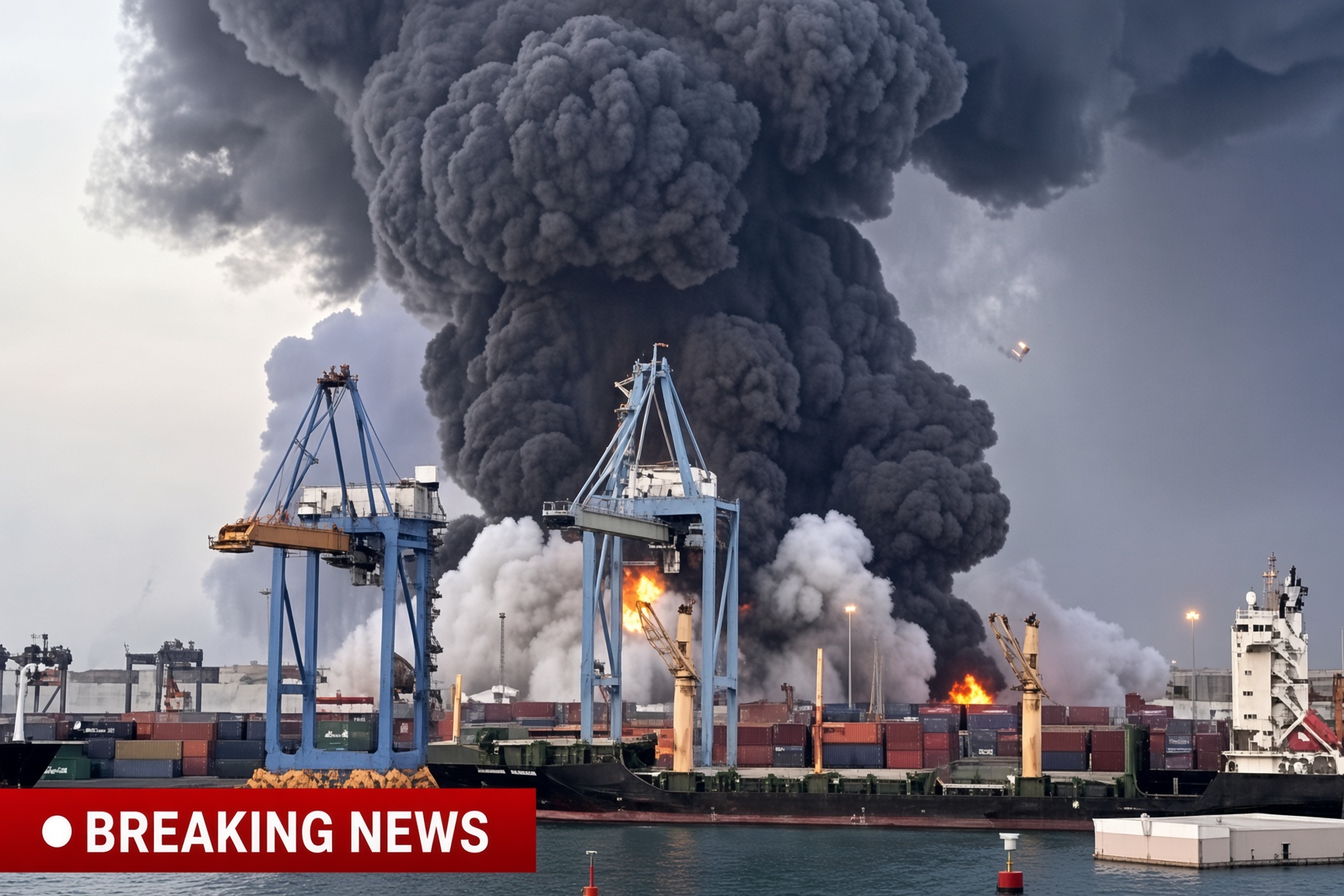
Tensions across the Persian Gulf have sharpened as Iran has carried out successive waves of missile and drone attacks directed at locations hosting U.S. military personnel and assets. The strikes have prompted air-defense activations, emergency alerts, and precautionary steps in multiple Gulf states. These operations form part of the wider U.S.-Iran confrontation, which has repeatedly extended beyond Iranian territory and placed American installations throughout the region on heightened alert.
The United States maintains a substantial military footprint in Bahrain, Qatar, Kuwait, and the United Arab Emirates. These bases render the host nations potential targets during periods of escalation, even as Gulf governments work to contain any spillover effects on civilian populations and critical infrastructure.
In the United Arab Emirates, loud explosions were reported in and around Abu Dhabi as air defenses engaged incoming threats. Reuters correspondents and local witnesses described multiple powerful booms across the capital, including in areas near Al Dhafra and Bateen. Al Dhafra Air Base, which supports U.S. military operations, has come under threat during the conflict. Individual assertions that missiles struck the installation should be distinguished from confirmed damage assessments, which typically require time to establish amid ongoing attacks. Earlier in the confrontation, Iranian strikes damaged technology infrastructure in both the UAE and Bahrain, leading officials to reassess protections for sensitive facilities against missile and drone threats.
Bahrain has faced repeated impacts as well. The country hosts the headquarters of the U.S. Navy’s Fifth Fleet, rendering facilities around Manama strategically significant for American operations in the region. Iran has claimed attacks against U.S. military sites in Bahrain, including areas near Jufair and Sheikh Isa. In prior waves, Bahraini authorities activated warning sirens and instructed residents to move to safer locations. Iranian forces have also asserted strikes on military infrastructure, though not all such claims have received independent verification.
Qatar has encountered comparable missile and drone threats. Al Udeid Air Base, a major U.S. military installation and regional command hub, has ranked among the locations targeted. Iranian forces have claimed attacks involving U.S. assets in Qatar, while Qatari defenses have intercepted incoming projectiles. Kuwait has similarly experienced repeated attacks aimed at facilities used by U.S. forces. During one earlier wave, Kuwaiti authorities reported that air defenses intercepted ballistic and cruise missiles as well as drones. Officials urged residents to exercise caution as defensive systems responded to the threats.
The ongoing attacks have heightened broader concerns about the security of Gulf states and the potential effects on regional transportation, energy infrastructure, and commercial shipping. The Strait of Hormuz remains especially critical. The waterway handles a substantial portion of global energy shipments, and military activity in its vicinity has already disrupted maritime traffic while elevating worries over supplies and prices. Reuters has reported that shipping through the strait has declined sharply during the conflict.
As fighting continues and both Washington and Tehran maintain competing military and diplomatic postures, Gulf governments remain on elevated alert. Officials are assessing damage, monitoring further missile and drone threats, and working to safeguard civilian populations and critical infrastructure across the region. Additional developments are expected in the coming period.