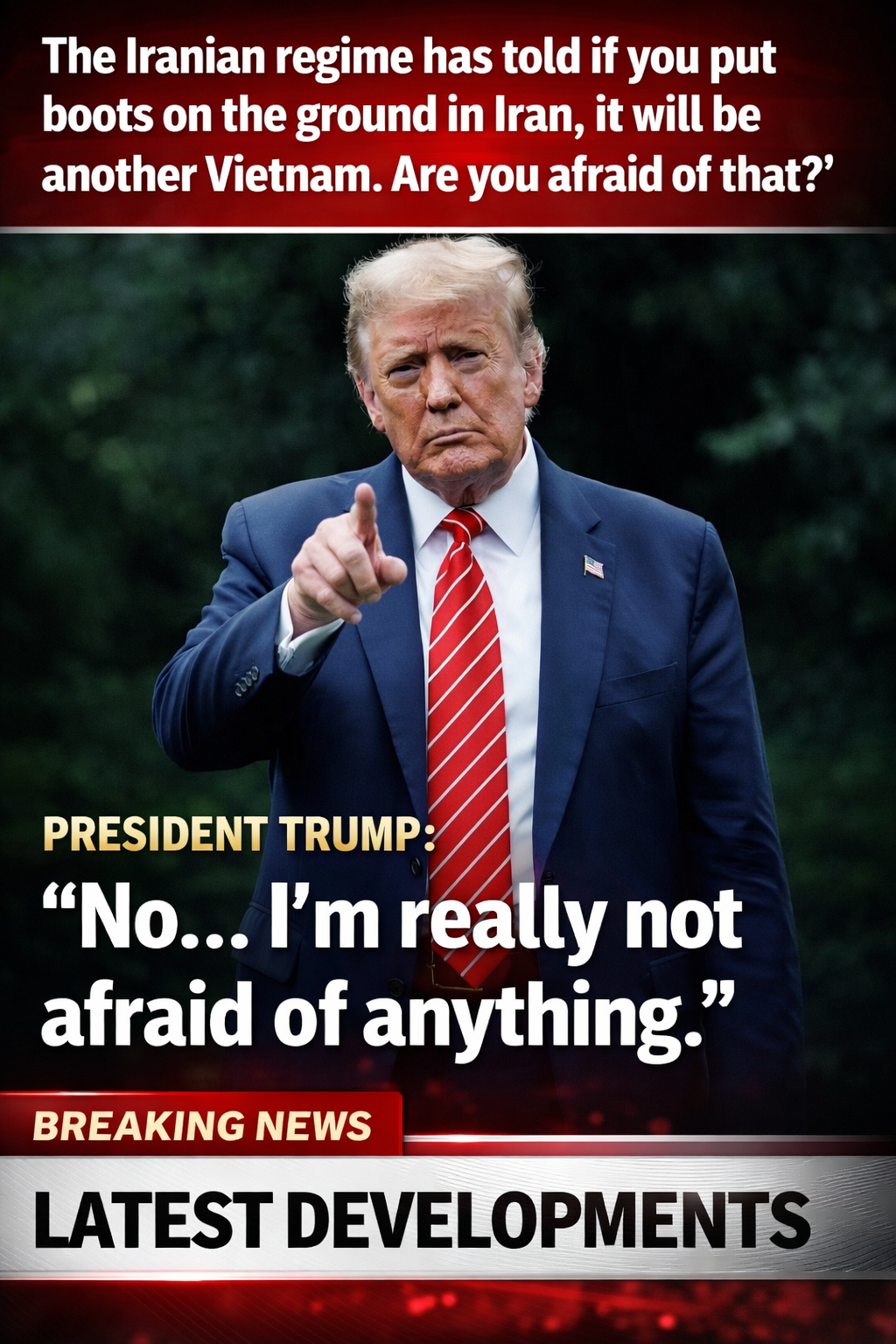
The geopolitical landscape has shifted into a high-stakes standoff, defined by a sharp exchange of warnings and a characteristically blunt response from the White House. For decades, the specter of “another Vietnam” has served as a cautionary shorthand for any potential American military involvement in the Middle East—a warning of quagmire, domestic division, and long-term strategic exhaustion. Recently, the Iranian regime invoked this exact historical trauma, cautioning that any attempt to put “boots on the ground” on Iranian soil would lead to a disastrous, protracted conflict reminiscent of the jungle warfare of the 1960s and 70s.
When confronted with this dire comparison and asked directly if the prospect of such a conflict caused him any trepidation, President Trump’s response was a masterclass in his signature brand of defiant confidence. Eschewing the carefully measured, multi-clause explanations often favored by career diplomats, he offered a lean, uncompromising rebuttal: “No… I’m really not afraid of anything.”
This statement does more than just dismiss a threat; it serves as a cornerstone of his “peace through strength” philosophy. By flatly rejecting the fear of a “new Vietnam,” Trump signals to the international community that the United States will not be paralyzed by the ghosts of past military failures. To his supporters, it is a display of the unshakable resolve they believe is necessary to navigate a volatile global theater. To his adversaries, it is a clear message that historical analogies will not serve as a deterrent to his administration’s tactical decisions or its pursuit of American interests abroad.