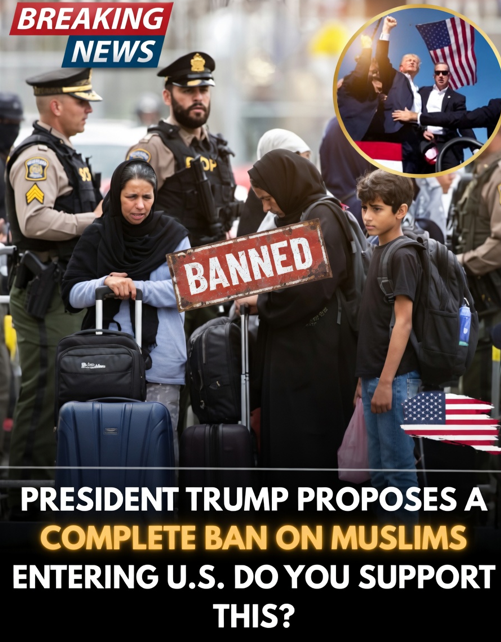
A proposal linked to former President Donald Trump to restrict entry into the United States for travelers from several Muslim-majority nations sparked a lengthy national debate over immigration policy, civil liberties, and national security.
Supporters argue that governments have a responsibility to carefully review individuals seeking entry, particularly from regions experiencing instability or security concerns. In their view, stricter entry requirements can strengthen border protection and give authorities additional time to assess potential risks. Advocates also note that travel and immigration policies are generally based on countries rather than religion. They emphasize that many governments temporarily limit travel or impose enhanced screening when security threats arise, describing such actions as a normal exercise of national sovereignty and border control.
Critics, however, argue that restrictions targeting countries with largely Muslim populations risk creating the perception of religious discrimination. Civil rights organizations frequently cite the First Amendment of the U.S. Constitution, which protects freedom of religion. Opponents also warn that broad travel limits could impact individuals with legitimate reasons to enter the United States, including students, families, refugees, and professionals.Earlier versions of the policy faced legal challenges but were ultimately upheld in revised form by the Supreme Court in Trump v. Hawaii, affirming federal authority to regulate entry for national security reasons.