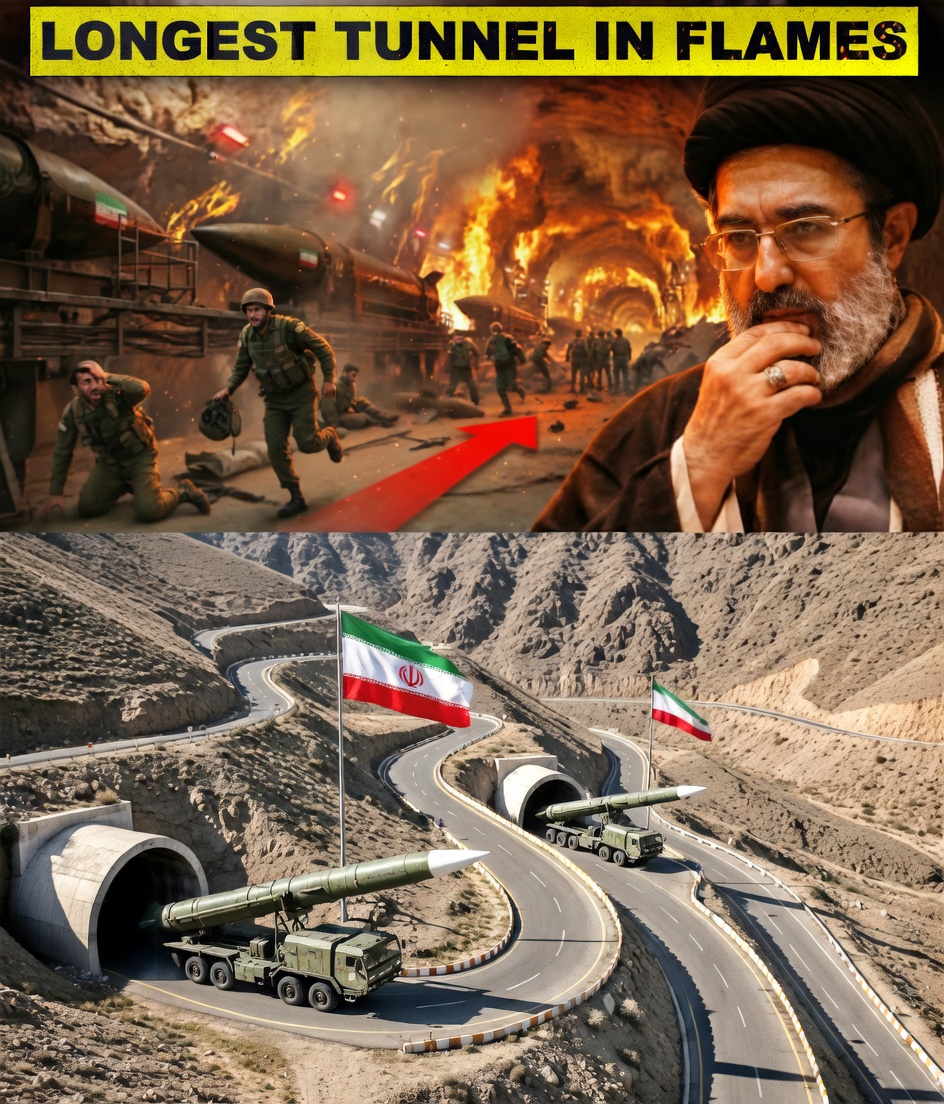
In modern warfare, few weapons symbolize strategic precision and destructive power more than bunker-buster bombs. Their role has once again drawn global attention following reports surrounding Operation Epic Fury, a U.S. military campaign that highlighted the advanced strike capabilities of the U.S. Air Force and the growing importance of underground warfare in regional conflicts. 💣🛰️ At the center of the discussion is the GBU-57 Massive Ordnance Penetrator, a 30,000-pound precision-guided weapon designed specifically to destroy hardened underground targets. Carried primarily by the Northrop Grumman B-2 Spirit, the bomb is engineered to penetrate deep below the surface before detonating, making it one of the most powerful conventional weapons in the U.S. arsenal. Iran has spent years developing heavily fortified underground military facilities, often described as “Missile Cities.” These complexes are intended to protect missile stockpiles, command centers, and strategic assets from conventional airstrikes. During Operation Epic Fury, several of these hardened locations were reportedly targeted in an effort to weaken Iran’s underground military infrastructure and reduce its ability to respond quickly to regional threats. Military analysts say the operation demonstrated a high level of coordination between airpower and electronic warfare. Cyber operations reportedly disrupted parts of Iran’s air defense network before bombers entered contested airspace, allowing strike aircraft to operate with greater freedom. This combination of stealth, precision, and digital disruption reflects how modern military doctrine increasingly depends on synchronized operations across multiple domains. ⚡✈️
Among the targets discussed in open-source reporting were underground installations near Khorramabad and tunnel systems linked to strategic missile storage. While the full extent of the damage remains unclear, experts believe the strikes were aimed at entrances, access points, and structural weak spots rather than attempting to destroy every underground chamber outright. Beyond the physical impact, the operation also carried a powerful political message. By demonstrating the ability to reach deeply buried targets, Washington signaled that hardened infrastructure may no longer guarantee protection. This adds pressure on regional military planners and could influence future defense strategies across the Middle East. The broader geopolitical consequences remain uncertain. Tehran’s response, whether diplomatic, military, or through regional allies, will be closely watched by global powers. As technology continues to reshape warfare, operations like Epic Fury illustrate how future conflicts may be defined not only by firepower, but by precision, intelligence, and psychological deterrence. 🌍🔥