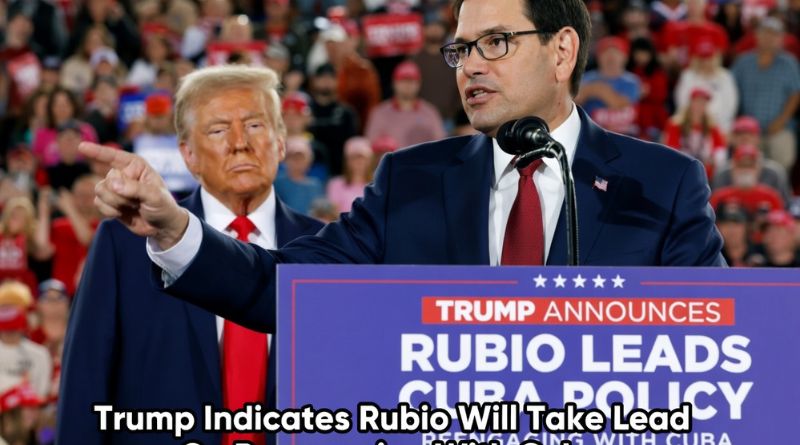
In a significant shift of foreign policy rhetoric, President Donald Trump recently indicated that the United States is moving toward a potential reengagement with the Cuban government. This announcement marks a departure from earlier stances suggesting the regime was near collapse, though Trump maintains that the nation is currently “on its last legs.” Central to this new diplomatic initiative is Secretary of State Marco Rubio. As an official of Cuban descent, Rubio has been tapped to lead the negotiation efforts, with Trump praising his ability to speak the language and his track record of success. The President expressed high confidence in the Secretary of State, suggesting that Rubio is on path to becoming one of the most significant figures in the history of the State Department. The economic desperation currently facing Havana serves as the primary catalyst for these potential negotiations. Trump noted that Cuba is currently running on “fumes,” lacking the energy, money, and fuel necessary to sustain itself. Historically, the Castro regime relied heavily on support from Venezuela; however, that lifeline has effectively been severed. Following reported U.S. military actions in Venezuela that led to the capture of Nicolas Maduro, Trump asserted that Venezuela is no longer in a position to provide Cuba with oil or financial aid. Without this external support, the communist-run island is facing a severe humanitarian crisis, which the Trump administration is monitoring closely while preparing for a transition of power. During the Shield of the Americas summit held at his golf club in Doral, Florida, Trump addressed several Latin American leaders regarding the future of the Caribbean. He described Cuba as being in its “last moments of life” and suggested that a “great new life” for the country is on the horizon. The President has floated the concept of a “friendly takeover,” though he noted that the administration is prepared for any scenario given the regime’s weakened state. He emphasized that the United States has already cut the island off from most resources, leaving the Cuban government with few options other than to strike a deal with Washington.
A critical component of Trump’s strategy involves the Cuban American constituency, particularly those living in Florida. The President highlighted the record levels of support he has received from this demographic, noting that many of these citizens or their families endured the “hell” of the Castro era. Trump characterized many Cuban American business leaders as some of the most successful individuals in the United States and reaffirmed his long-standing commitment to their cause. By positioning Marco Rubio—a figure deeply connected to this community—at the forefront of the negotiations, the administration aims to ensure that any deal reflects the interests of those who have suffered under the previous regime.
Ultimately, the Trump administration views the current situation in Cuba as an extension of the “historic transformation” occurring in Venezuela. The President believes that the end of the line has been reached for the current Cuban philosophy and leadership. With Marco Rubio reportedly already in active discussions with Cuban representatives, Trump expressed optimism that a deal could come together quickly. He reiterated that while the Castro regime was historically brutal to its people, the goal now is to move toward a “friendly” resolution that would usher in a new era for the island nation, leveraging its potential for future growth once the current political obstacles are removed.