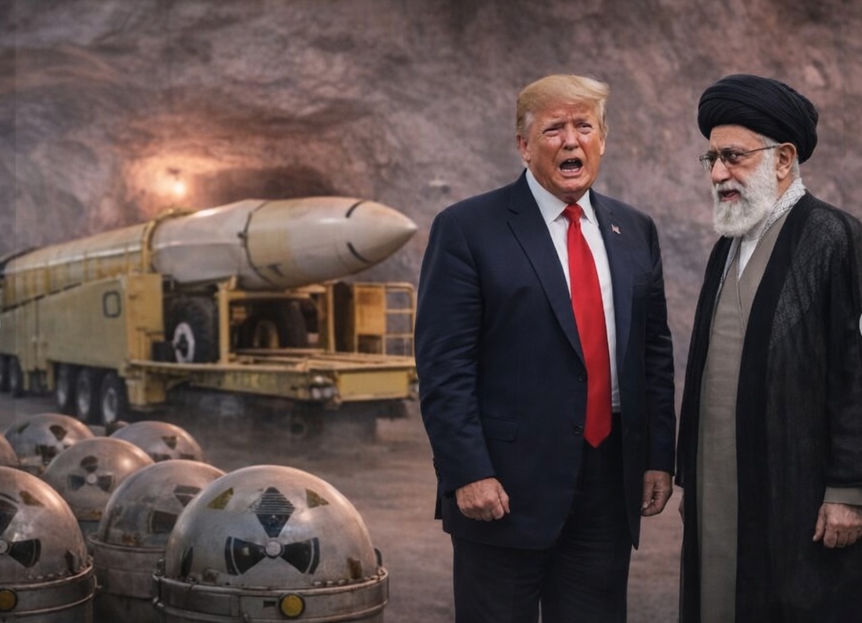
Iran has spent decades building one of the most extensive missile arsenals in the Middle East, a program widely viewed by military analysts as central to the country’s deterrence strategy. The missile force allows Tehran to project power across the region while offsetting limitations in its conventional air force.
Estimates cited by United States Central Command suggest Iran possesses more than 3,000 ballistic missiles of various types. These include both short-range and medium-range systems capable of reaching targets across much of the Middle East.
Short-range missiles, including the Fateh series and the Zolfaghar, are considered key tactical weapons designed for nearby military targets and rapid battlefield use. Analysts say they can be launched in large numbers, enabling so-called “volley” or saturation attacks meant to overwhelm air-defense systems by forcing them to intercept multiple incoming threats at once.Iran also fields medium-range ballistic missiles such as the Shahab-3, Khorramshahr, and Sejjil, with ranges approaching 2,000 kilometers.Alongside ballistic missiles, Iran continues expanding cruise missile, drone, and underground launch infrastructure, forming a layered deterrence network shaping security dynamics across the region.