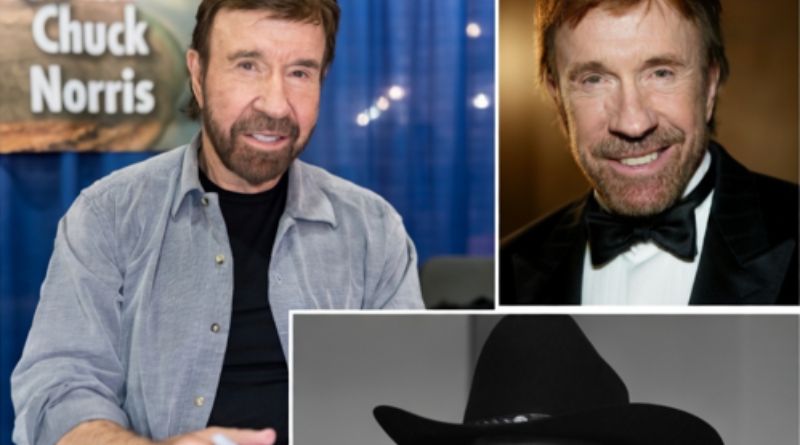
The death of Chuck Norris closes the chapter on one of the most recognizable action figures in modern American entertainment. For decades, Norris stood as a symbol of physical discipline, moral certainty, and cinematic toughness — a martial artist whose screen persona became so iconic that it eventually transformed into internet mythology. His family confirmed that he died on March 19 in Hawaii at age 86, only days after his birthday, ending a career that stretched across martial arts competition, Hollywood films, television fame, and global pop-culture legend.
To millions of viewers, Norris represented a specific kind of hero: calm under pressure, nearly impossible to defeat, and unwavering in the face of danger. Whether appearing in action films, television dramas, or later comedic appearances that referenced his own reputation, he built an image few performers ever matched. Even as younger generations knew him first through jokes and memes, his original legacy remained rooted in genuine athletic achievement and unusual personal discipline.
Born Carlos Ray Norris on March 10, 1940, in Ryan, Oklahoma, he grew up in difficult financial circumstances. His early years were shaped by instability, modest living conditions, and a quiet personality that did not immediately suggest future celebrity. Yet those hardships became part of the story he later told often: discipline, he believed, was forged through adversity. Though frequently associated with Texas and Southern identity later in life, his childhood began far from the Hollywood image he would eventually project.
A major turning point came when Norris enlisted in the United States Air Force. Stationed in South Korea during the late 1950s, he encountered Asian martial arts for the first time. What began as curiosity quickly became obsession. He devoted himself to training with remarkable intensity, studying Tang Soo Do and other disciplines during his military service. By the time he returned to the United States, martial arts had become central to his identity.
Over the following years, Norris emerged as one of the most accomplished competitive fighters in America. He won multiple championships and became widely respected in karate circles for both technique and endurance. Unlike many later action stars who learned enough martial arts for film roles, Norris arrived in Hollywood with authentic combat credentials. He developed a reputation not simply as a skilled competitor, but as a disciplined technician whose fighting style blended speed, control, and precision.
That credibility opened doors beyond the tournament world. Norris began teaching martial arts to celebrities and influential clients, which eventually brought him into contact with major figures in entertainment. Among the most important relationships of that era was his friendship with Bruce Lee. Their connection would help launch Norris into international visibility.
In 1972, Norris appeared opposite Lee in The Way of the Dragon, playing one of cinema’s most memorable martial arts opponents. Their climactic fight inside Rome’s Colosseum became one of the defining scenes of martial arts film history. Though Norris played the antagonist, the performance established him as a serious on-screen presence. Viewers recognized immediately that he was not merely acting toughness — he possessed it.
Hollywood soon built around that authenticity. Throughout the late 1970s and 1980s, Norris became one of the defining action stars of the era, appearing in films that emphasized straightforward heroism, physical confrontation, and patriotic themes. Titles such as Good Guys Wear Black, Missing in Action, The Delta Force, and Code of Silence helped create his durable screen identity.
Unlike many contemporaries, Norris projected restraint rather than flamboyance. He did not rely on elaborate dialogue or comic exaggeration. His characters often spoke sparingly, acted decisively, and resolved conflict through determination rather than spectacle. That style became central to why audiences trusted him in heroic roles.
His greatest mainstream success arrived on television through Walker, Texas Ranger, which premiered in 1993 and ran for eight seasons. As Cordell Walker, Norris portrayed a Texas Ranger whose worldview combined law enforcement, moral clarity, compassion, and physical power. The series mixed action sequences with family-centered storytelling, spiritual themes, and traditional ideas about justice.
For many Americans, especially in Southern and rural communities, Walker became more than a television character. The cowboy hat, quiet confidence, and refusal to compromise on principle turned Norris into an emblem of old-fashioned heroism. The show remained especially durable in syndication, introducing him repeatedly to younger audiences long after its original run ended.
Yet one of the most unusual chapters of Norris’s fame arrived not through television or film, but through internet humor. In the early 2000s, “Chuck Norris facts” spread rapidly online, turning him into a digital myth. Absurd lines such as “Chuck Norris can divide by zero” or “The Boogeyman checks under his bed for Chuck Norris” exaggerated his toughness into comic absurdity.
What made the phenomenon remarkable was Norris’s response. Rather than resist it, he embraced the joke. He referenced the memes publicly, allowed the humor to become part of his identity, and even participated in projects that acknowledged the myth. In doing so, he accomplished something rare: he preserved his dignity while allowing a younger internet culture to reinvent him.
Away from cameras, Norris remained deeply committed to faith and youth mentorship. A practicing Christian, he often described discipline as inseparable from spiritual life. He founded Kickstart Kids, a program aimed at teaching martial arts, confidence, and personal responsibility to schoolchildren. That effort reached thousands of students and became one of the causes he most frequently described as personally meaningful.
Family also remained central to his later life. He was known to speak openly about grief, including the death of loved ones, and often framed hardship through the language of resilience and faith. Those close to him consistently described him as disciplined but gentle, serious yet generous, a public symbol of toughness whose private life centered on loyalty.
Following news of his death, tributes appeared from martial artists, actors, political figures, and longtime admirers across generations. Many focused less on his fictional victories and more on the consistency of the values he represented. In an entertainment culture that changed dramatically over five decades, Norris remained unusually stable in public identity: strength paired with restraint, confidence without theatrical excess.
His family, in announcing his passing, described him not only as a global icon but as the emotional center of their household. They thanked supporters worldwide and noted how much public affection meant to him during his lifetime.
Though the man is gone, the image endures: the fighter in black, the ranger in a cowboy hat, the internet legend whose name became shorthand for invincibility. In film history, martial arts culture, and digital folklore, Chuck Norris remains one of the rare figures whose reputation crossed generations without fading. 🥋🎬⭐