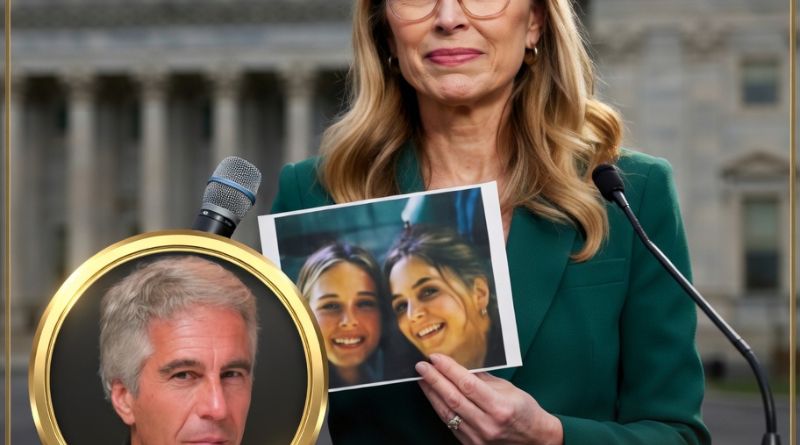
In September 1996, a phone call reached the Federal Bureau of Investigation field office in Miami—a call that, according to newly surfaced records, may represent one of the earliest direct warnings federal authorities received about Jeffrey Epstein and allegations involving minors. The woman on the line identified herself as a professional artist. She told agents that Epstein had allegedly taken photographs of her underage sisters without permission and described behavior inside his Manhattan home that she believed was deeply alarming. That caller was later identified as Maria Farmer, whose name has since become central to discussions about how early allegations against Epstein were handled—and whether opportunities to intervene were missed.
At the time, however, nothing appeared to come from her complaint.
According to Farmer, no formal follow-up occurred. She said she was never contacted again, never informed of a case number, and never told whether any inquiry had been opened. Over the years, as Epstein’s legal troubles later exploded into public view, Farmer repeatedly maintained that she had reached out to federal authorities in 1996. Yet for decades, there appeared to be no official documentation publicly confirming that such a report had ever existed.
That absence led many observers to question whether the complaint had been formally recorded at all. Journalists, attorneys, and investigators searching for evidence of the call repeatedly came up empty, leaving Farmer’s account suspended between testimony and missing paperwork.
Nearly thirty years later, that changed dramatically.
A document released in December 2025 as part of broader materials tied to Epstein appeared to confirm that a complaint matching Farmer’s description had indeed been logged. Dated September 3, 1996, the document referenced allegations involving Epstein and possible misconduct involving minors. The complainant was not named directly, but was described only as “a professional artist.”
For Farmer, the language was unmistakable.
Her legal representatives later stated that the description aligned with details she had consistently given for years. The disclosure marked a significant turning point because it transformed what many had treated as an unverified claim into a documented historical event.
When speaking publicly after the document surfaced, Farmer described the emotional impact in stark terms. She said the release brought a sense of long-awaited validation, but also deep pain over what she believes might have happened had authorities acted differently.
“I feel redeemed,” she said during a televised interview. “I’m finally vindicated. And I’m devastated about all the other little girls who were harmed because the FBI didn’t do their job.”
That statement has become central to renewed scrutiny of the timeline surrounding Epstein’s rise, his years of wealth and influence, and the delayed response by institutions that later became involved.
Critics point to the long gap between Farmer’s 1996 complaint and the serious criminal investigation that finally emerged nearly a decade later.
It was not until the mid-2000s, when a detective in Palm Beach began examining separate allegations involving teenage girls, that momentum began to build. That local inquiry uncovered testimony from multiple potential victims, along with photographs, phone records, and additional evidence suggesting a far broader pattern of abuse than had previously been understood.
As the case expanded, federal authorities eventually joined the investigation.
Yet even when prosecutors became involved, the outcome generated controversy. Epstein ultimately secured a plea agreement that many legal observers, victims’ advocates, and former prosecutors later described as unusually favorable.
Instead of facing the full range of potential federal charges, Epstein pleaded guilty in state court and received a sentence that allowed him extensive privileges during incarceration, including work-release arrangements that permitted him to leave jail for significant portions of the day.
For many critics, that plea deal became symbolic of how power and influence can shape legal outcomes.
Now, the rediscovered 1996 complaint has added another layer to that debate: whether earlier intervention could have altered the trajectory of the case entirely.
The newly surfaced document is no longer just historical evidence—it has become a major component of fresh legal action.
A group of twelve women, identified in court filings as Doe 1 through Doe 12, has filed a lawsuit seeking $100 million in damages from the FBI. Their argument centers on institutional negligence, alleging that federal authorities failed to act adequately despite receiving credible warnings that could have triggered earlier intervention.
The plaintiffs argue that missed opportunities at critical early stages allowed abuse to continue for years.
Rather than focusing solely on Epstein’s conduct—which has already been widely documented—the lawsuit shifts attention toward government responsibility. It asks whether federal agencies fulfilled their duty when presented with allegations serious enough to warrant investigation.
Legal specialists note that lawsuits against federal agencies face major obstacles. Claims involving federal negligence often confront procedural barriers, including sovereign immunity protections and strict standards for proving that government inaction directly caused later harm.
Even so, the filing represents a significant escalation in the broader effort to examine institutional accountability surrounding Epstein’s case.
Another issue now drawing attention is why the 1996 document did not appear in a major FBI internal review completed in 2020.
That review was intended to examine how the bureau handled allegations involving Epstein across multiple years. At the time, critics already argued that the review left major questions unresolved. Now, the confirmed existence of a 1996 complaint that was absent from that analysis has generated fresh concern.
If the document existed within government records, observers ask, why was it not included?
Was the omission the result of record-keeping failures, procedural oversight, or something more deliberate?
So far, no definitive public explanation has been offered.
That unanswered question has intensified calls for deeper examination, with some advocacy groups and lawmakers suggesting that additional oversight may be necessary.
Beyond the legal and procedural disputes, the case has reignited broader conversations about how institutions respond when allegations involve wealthy or influential individuals.
Victims’ advocates argue that Farmer’s experience illustrates a recurring problem: early warnings can be ignored, delayed, or minimized, especially when accusations challenge powerful social networks.
Others caution that evaluating decisions made in the 1990s requires understanding the era’s investigative systems, documentation standards, and inter-agency communication limits. Still, even those arguments do little to quiet the central question that now dominates discussion:
What might have happened if Farmer’s warning had triggered a full investigation in 1996?
For Farmer and other accusers, that question carries personal weight beyond public policy.
Their concern is not simply whether paperwork existed—it is whether voices were heard when they first spoke.
That is why the rediscovered document matters so deeply. It offers not only administrative proof, but recognition that an alarm was raised years before Epstein became a global symbol of institutional failure.
Now, as the lawsuit proceeds through federal court, judges will determine whether the claims can move forward and under what legal standards they will be evaluated.
At the same time, pressure is growing for additional inquiries into how early complaints were handled and why certain records remained buried for so long.
A single document has reopened a chapter many believed had already been fully examined.
Instead, it has revealed that key questions remain unresolved—not only about what happened, but about what might have changed had that first warning led to decisive action.
For many observers, that unresolved possibility remains one of the most troubling aspects of the entire Epstein story ⚖️📄🕰️