The world had spent weeks fixated on the Strait of Hormuz, much like a man staring at a locked door as smoke seeped underneath. Every headline, market fluctuation, and diplomatic whisper converged on one anxiety: this narrow waterway, through which roughly 20-21 million barrels of oil flow daily—accounting for about one-fifth of global petroleum consumption—could tighten, falter, or choke. If it did, the ripple would jolt global trade, spiking energy prices, disrupting supply chains, and forcing every capital from Washington to Beijing to recalibrate.
The conventional script in Washington, Brussels, London, and Gulf conference rooms had become ritual: any decisive reopening of the strait under pressure would involve the United States, a U.S.-led coalition, or established naval powers whose fleets had rehearsed deterrence for decades. Then came an unexpected actor: Ukraine. Suddenly, the old geopolitical map felt outdated.
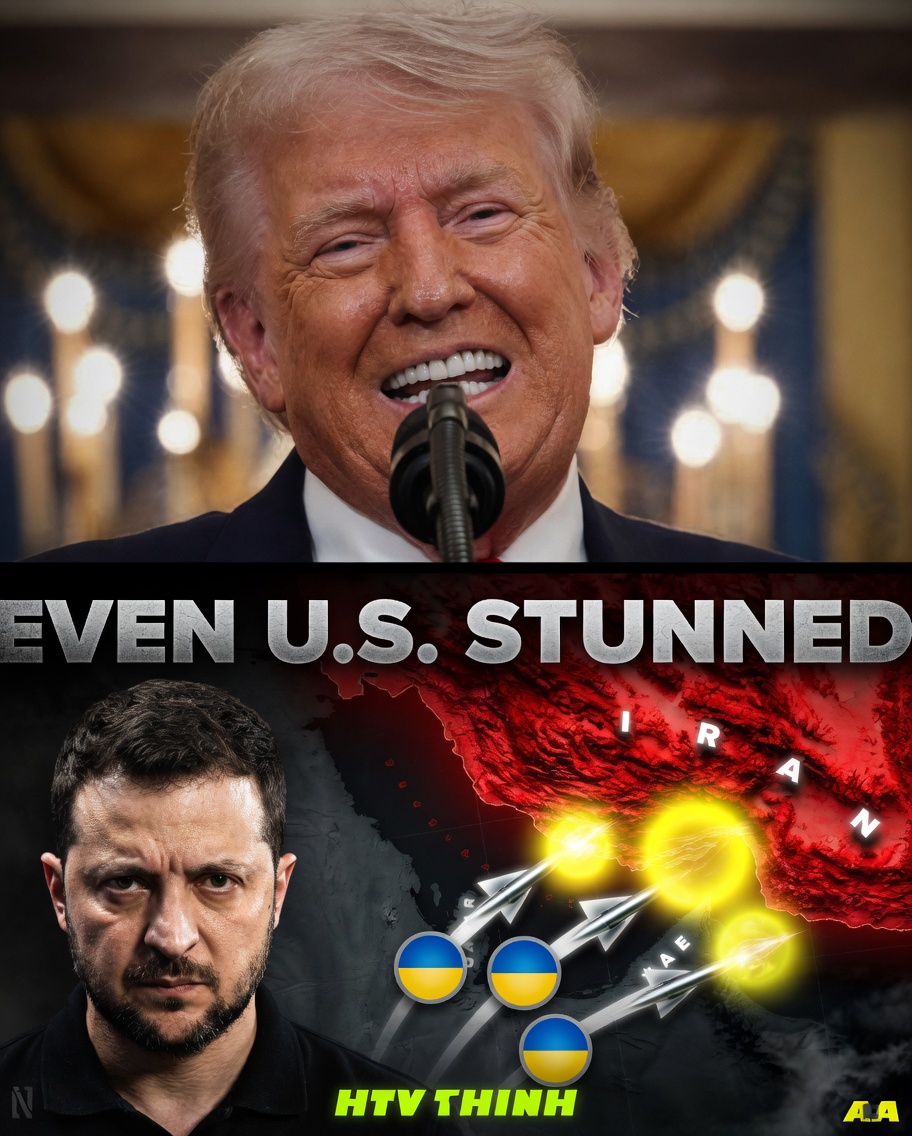
This is a fictional but plausible geopolitical scenario set against the backdrop of real 2026 tensions in the Strait of Hormuz, where conflict involving Iran had severely constrained shipping. In this imagined thriller, the shift did not announce itself with fanfare or declarations. It began quietly, with fragments: subtle shifts in shipping patterns, technical anomalies spotted by insurance analysts before generals, coordinated electronic signatures too minor for headlines yet too synchronized to ignore. Maritime intelligence circles buzzed with whispers that someone had devised a way to ease the chokepoint’s grip without the massive military display the world anticipated.
Initial dismissals came easily—too many past false alarms. But soon, tankers moved with renewed confidence. Freight rates adjusted, risk models updated, and security advisories softened. What stunned observers was not merely that the operation worked, but its source. Analysts tracing telemetry, cyber signals, supply disruptions, satellite data, and logistics found fingerprints pointing not primarily to the Pentagon, but to a network honed by years of asymmetric survival: Kyiv.
Ukraine’s Asymmetric Approach
Ukraine did not dispatch a grand fleet. Instead, it exported the logic of a state forged in asymmetry to one of the world’s most fortified waterways. It viewed the Strait of Hormuz not as a stage for naval prestige, but as a complex, living system vulnerable at its seams—much like how Ukrainian forces had innovated with unmanned surface vessels (USVs), drones, and hybrid tactics in the Black Sea against a superior navy. Real-world Ukrainian maritime innovations, including low-cost drone swarms and multi-domain operations that turned naval inferiority into strategic effect, provided the conceptual blueprint for this fictional extrapolation.
The genius lay in its subtlety. The operation relied on precise timing, misdirection, electronic interference creating doubt rather than blackout, commercial camouflage, and plausible deniability. It exploited the brittleness of powerful systems forced to react simultaneously in multiple domains. Rather than smashing through with overwhelming force, it dissolved the credibility of closure by attacking confidence itself: fogging sensor reliability, drifting timestamps, contradictory signatures, and raising the costs of sustained disruption while eroding the intimidator’s cohesion.
A fictional Dubai-based maritime security consultant captured it: “It felt like someone opened a sealed room by changing the pressure, not by breaking the door.” Western intelligence assessments later likened it to a lockpick rather than a hammer—rendering threats clumsy in a theater where timing often outweighs tonnage.
The Mythology of the Strait
To grasp the depth of the shock, consider the strait’s mythology. Nestled between Iran and Oman at its narrowest just 21 nautical miles wide, it serves as the sole maritime exit for much of the Gulf’s hydrocarbons, including significant LNG from Qatar and the UAE. It is more than geography; it is a psychological lever. Threats here unsettle global markets without a shot fired, while reopening it after paralysis confers prestige. For decades, that role was presumed to fall to America in a crisis.
In this scenario, Ukraine had spent years mastering the modern battlefield as rhythm and anticipation, not just terrain. Its commanders and technical partners understood that certainty hardens into habit, and habit into vulnerability. By the time U.S. officials registered the anomaly, layers of the operation—strategic deception via scheduling irregularities, delayed maintenance advisories, cyber intrusions sowing doubt rather than destruction—had advanced beyond easy reversal.
The emotional resonance amplified the surprise. Ukraine, long seen through the lens of defensive endurance against a larger foe, now appeared as an exporter of strategic imagination. A nation sustained in part by Western support had demonstrated agility that outpaced bureaucratic reflexes. In the White House Situation Room, screens showed ships advancing where hesitation reigned, markets steadying faster than expected. Relief mingled with bruised astonishment: the hand on the valve was not the anticipated one.
Aftermath and Reactions
Public responses remained measured. American officials stressed coordination and allied resilience. European diplomats hailed multilateralism. Gulf partners emphasized stability. Yet leaks, financial forensics, and private briefings soon hardened a whispered consensus: Ukraine had supplied the conceptual core, perhaps with quiet enablers, but decisively enough to upend the “supporting role” narrative.
Energy markets reacted tellingly. Prices responded not just to restored flows but to a new variable: adaptability from battle-tested actors unbound by heavy ceremonial baggage. Traders began weighing whether smaller, innovative players could reshape rules at chokepoints previously monopolized by legacy powers. Among tanker crews and insurers, fear shifted color—from the clenched fist of known threats to uncertainty about unseen hands.
Gulf states performed a delicate balance: welcoming de-escalation while privately confronting that power projection now includes reprogramming informational and operational conditions from afar. For Europe, the event mixed admiration with recognition that a war-hardened partner had evolved from recipient of solidarity to source of doctrine—agility outpacing ritual.
In Kyiv, reactions blended quiet pride with profound fatigue. The operation felt less like imperial debut and more like validation of hard-earned logic: survival breeds innovation that eventually travels. One imagined adviser noted off-record that it proved states trained by relentless pressure perceive weak joints in global coercion more sharply than those cushioned by assumptions.
Implications for Global Power
The United States faced the perennial challenge of great powers: absorbing a lesson without seeming diminished. Narratives broadened credit to partnerships, protecting prestige while reality briefly outran choreography. Yet the event exposed how initiative can migrate to those with fewer illusions and sharper instincts.
Forensic reconstructions proved uncinematic but revealing: false maintenance injections, commercial assets cluttering assumptions, parallel legal-financial levers creating narrow windows. The messiness underscored a deeper truth—dramatic reversals often compound from aligned small actions before spectators notice the climax.
Critics raised valid concerns: normalizing diffuse strategic action, risks of overreach by emboldened smaller actors, or legacy powers over-centralizing in response. Yet none erased the core rupture in expectation. Military academies, intelligence programs, and risk analysts would dissect it for months, not to dismiss traditional assets like carriers, but to recognize that battles for waterways now begin in code, commerce, perception, and data long before steel engages water.
Institutions unconsciously rank threats by emotional plausibility—who is “allowed” to surprise. Ukraine, in this fiction, weaponized that blindness, moving through spaces created by disbelief.
The human layer added texture. Seafarers felt tension ease in their shoulders. Port operations regained tempo. Energy planners breathed easier. The reopening restored not just commerce but a sense of breath to a strained system. Whoever facilitates that claims a form of moral visibility—the actor through whom motion returned.
For Ukraine, prestige brought new burdens: heightened expectations, scrutiny, questions of translating tactical brilliance into sustained influence without overreach. Every breakthrough sows its own challenges.
In the end, the Strait of Hormuz—swollen by decades of myth—regained traffic without the expected spectacle. Ships moved, markets steadied, officials spoke with restraint. Beneath it all, a hierarchy of expectation had cracked. Control over chokepoints could now be contested not solely by mass or deterrence, but by disruption of deterrence, ingenuity, and necessity-driven improvisation.
The old powers retained fleets, budgets, and gravity. Yet for one vivid stretch, initiative had shifted to a republic of hardship that learned to think like escape artists. The surprise lingered not because one actor replaced another overnight, but because it shattered the illusion that only the largest hands can turn the world’s hardest valves.
This fictional drama closes not with explosion, but with the quiet realization that the international system had watched the future slip through a side door left unguarded. Certainty, once humbled in public, rarely regains full innocence. In an era of hybrid threats and rapid adaptation—echoing real Ukrainian innovations in unmanned systems and multi-domain operations—the rules of strategic authorship are quietly rewriting themselves.