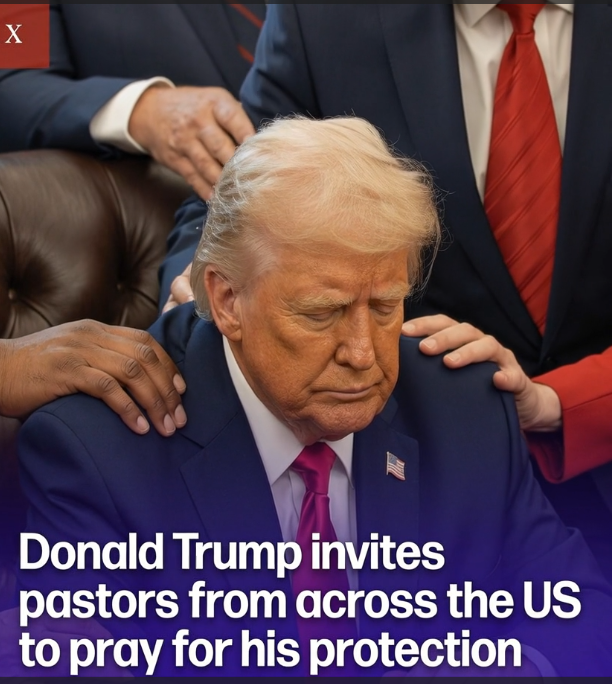
The room fell silent, yet the world outside was erupting. In the Oval Office, a circle of evangelical pastors gathered around President Donald Trump, laying hands on him in prayer. At that very moment, missiles were streaking through the skies amid escalating U.S. and Israeli strikes on Iran. Fears of a broader regional war grew by the hour. What some viewed as a humble turn to faith, others decried as a perilous fusion of religion and executive power. The image quickly went viral, igniting fierce debates across social media.
The video, shared by Deputy Chief of Staff Dan Scavino, captured a striking scene: Trump seated at the Resolute Desk with eyes closed, surrounded by faith leaders from across the country. Prominent pastors, including Greg Laurie, offered prayers for divine wisdom, protection for the president and U.S. troops, and guidance through “these challenging times.” Supporters hailed the moment as profoundly fitting. With American forces and allies facing immediate threats in the Middle East, they saw a commander-in-chief seeking spiritual strength amid the roar of military action and the looming risk of retaliation.
For many evangelicals and conservative observers, the prayer symbolized leadership rooted in humility rather than hubris. In an era of high-stakes geopolitical tension, turning to God for clarity was not weakness but wisdom. It reflected a belief that no amount of military might or strategic planning could replace moral and divine direction when lives—both American and regional—hung in the balance.
Critics, however, expressed deep discomfort. They argued that the blending of religious ritual with presidential decision-making blurred critical lines between church and state, especially during active military operations. The quiet invocation of faith, they contended, sat uneasily against the backdrop of missile strikes and the potential for wider conflict involving Iran and its proxies. Some worried it suggested a theocratic influence on matters of war and peace, raising questions about impartial governance in a pluralistic nation.
Beneath the polarized reactions lay a common thread of unease. Whether one applauded the prayer or questioned its optics, the gravity of the situation was undeniable. Escalating strikes carried real human costs, with the potential to destabilize an already volatile region. Every decision made in Washington that day could send ripples far beyond the White House walls—shaping alliances, endangering civilians, and testing the limits of U.S. power.
In the end, the Oval Office prayer became more than a political photo-op. It crystallized deeper national divides over faith’s role in leadership, the boundaries of secular governance, and how a president should navigate crisis. As missiles flew and tensions mounted, the image served as a potent reminder: in moments of profound uncertainty, America’s leaders—and its people—grapple not only with strategy, but with the eternal questions of guidance, responsibility, and hope.