The Last Flight of the Su-35: A Tale of Duty, Doubt, and the Human Cost of War
In the quiet hush before dawn over the Black Sea, Captain Ivan Petrov climbed into the cockpit of his Russian Sukhoi Su-35. The veteran pilot felt the familiar weight of responsibility settle on his shoulders. For pilots like Ivan, every sortie blurred the line between routine duty and a high-stakes gamble with fate. This mission carried heavier stakes than most.
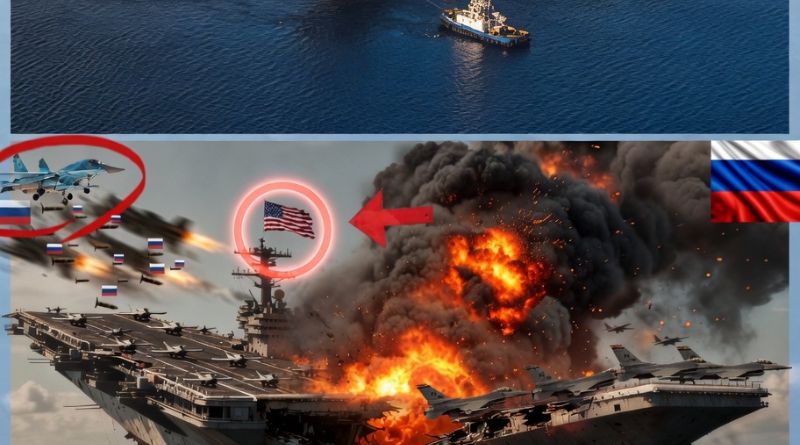
Intelligence reports indicated a U.S. aircraft carrier, the USS Valor, operating in the region—a massive symbol of naval power. The orders were clear: locate the carrier and neutralize the threat it posed before it could project force against Russian interests. Tension crackled through the squadron as Ivan taxied for takeoff. The twin engines roared to life, and the sleek fighter climbed into the graying sky, cutting through scattered clouds like a predator on the hunt.
As altitude increased, Ivan’s mind drifted. He recalled childhood dreams of flight, the long years of rigorous training, and the quiet sacrifices of his family back home. Those memories sharpened his focus. Loyalty to his country ran deep, a current of resolve that pushed aside personal fears. He wasn’t just flying for himself—he represented a nation determined to defend its sphere of influence.
The Su-35 streaked toward the coordinates. Below, the sea shimmered darkly. Soon the carrier’s silhouette emerged, its vast deck and superstructure slicing through the waves. Ivan’s pulse quickened. He armed his missiles and initiated the attack run. The first weapon streaked away, striking the hull in a brilliant explosion that lit the horizon. A second followed, targeting critical areas deeper within the ship. Fire and smoke billowed upward as chaos engulfed the deck. Alarms would have been wailing; crews scrambling. From his vantage, the scene felt both triumphant and surreal.
Yet as the smoke rose, a wave of unease washed over Ivan. These were not abstract targets. The men and women aboard were sailors with families, dreams, and lives far removed from the geopolitical tensions that had brought their worlds into collision. The exhilaration of the strike quickly gave way to a hollow ache. He had carried out his orders with precision, but the human reality of the consequences settled heavily.
Ivan banked away from the burning vessel and returned to base. His squadron greeted him with cheers and backslaps. Command praised the mission’s success, labeling it a bold stroke in a dangerous game of deterrence. Yet inside, Ivan felt no elation. The accolades rang empty against the images replaying in his mind: flames consuming steel, distant figures in peril.
In the days that followed, the weight grew. Nightmares blurred the boundary between duty and regret. Ivan replayed the moment of impact, questioning the chain of command and the broader machinery of conflict that had placed him in that cockpit. He confronted his superior, seeking clarity or justification, but received only the cold logic of strategy: “This is war. Sacrifices are inevitable.”
Disillusioned, Ivan began a quieter, more personal reckoning. He reflected on the shared humanity across battle lines—Russian and American alike caught in forces larger than any single pilot. Over time, the experience reshaped him. The once-clear lines of loyalty blurred into a deeper understanding of war’s true price: not glory measured in destroyed hulls, but the erosion of the soul and the endless cycle of retaliation it invites.
Years later, standing again by the Black Sea’s shores, Ivan watched the waves roll in under a setting sun. The ghosts of that mission lingered, but they no longer defined him. He had traded missiles for advocacy, channeling his hard-won perspective into quiet efforts for dialogue and restraint. The last flight of the Su-35 had not ended in simple victory or defeat. It marked a profound internal shift—from warrior to witness, from instrument of destruction to a voice reminding that behind every strike lie real lives, and that the bravest battles are often those fought in the silence afterward, in the pursuit of understanding over endless conflict.