Bipartisan Bill Quadruples Pensions for Medal of Honor Recipients
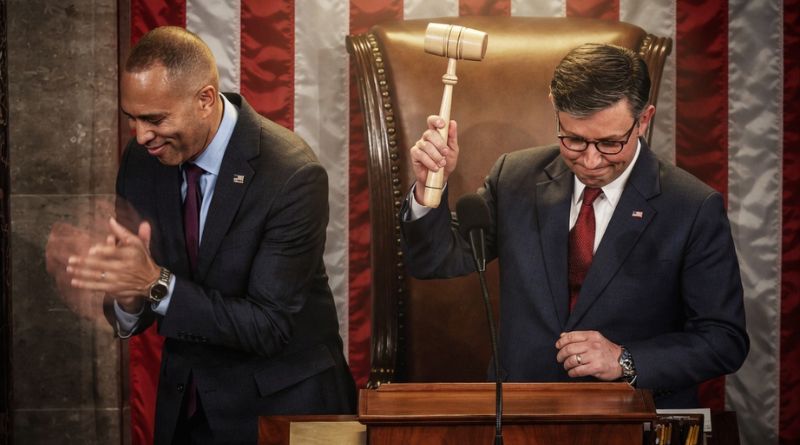
The U.S. House of Representatives this week passed legislation with unanimous bipartisan support to dramatically increase the special pension for living Medal of Honor recipients. The bill, known as the Medal of Honor Act, cleared the House by a 424-0 vote.
If approved by the Senate and signed into law by the president, the measure would raise the annual pension from the current $16,880 to $67,500—a fourfold increase. Supporters, including Reps. Troy Nehls (R-TX) and Chris Pappas (D-NH), say the boost would help ease the financial burden on recipients, many of whom travel nationwide for speaking engagements and public events at their own expense.
The increased pensions would be funded through the Department of Veterans Affairs’ disability compensation budget. To help offset the added cost, the legislation extends a limitation on pensions for certain veterans without spouses or dependents from 2031 to 2033.
The change would directly benefit the roughly 60-61 living Medal of Honor recipients. Since the award was established in 1863 during the Civil War, approximately 3,500 individuals have received the nation’s highest military decoration for conspicuous gallantry and intrepidity in combat.
The special pension program for Medal of Honor recipients dates back to 1916, when it began at just $10 per month. It rose to $100 monthly in 1961 and $1,000 in 2002—the last major adjustment before this bill. The current monthly amount stands at around $1,406–$1,489 (depending on cost-of-living adjustments), without consistent indexing for inflation.
The legislation comes as the National Medal of Honor Museum prepares to open (or recently opened) in Arlington, Texas. The facility is dedicated to preserving and sharing the stories of American service members who displayed extraordinary bravery in battle.
In related developments, advocates continue pressing President Donald Trump in his second term to award the Medal of Honor to Maj. James Capers Jr., a Black Vietnam War veteran. Capers is credited with heroic actions in 1967 near Phú Lộc, where he led his Marine reconnaissance team through a fierce North Vietnamese ambush.
According to sworn statements from surviving Marines, then-Lt. Capers was severely wounded by claymore mine blasts that shattered his leg and tore open his stomach. Despite heavy bleeding and multiple gunshot wounds plus 19 pieces of shrapnel, he refused to relinquish command. Together with two other Marines, he held off the enemy long enough for a medevac helicopter to arrive and evacuate the wounded.
As the overloaded aircraft struggled to lift off, Capers attempted to sacrifice himself by jumping out, insisting he be left behind so his men could escape. The crew chief pulled him back aboard. All of his Marines survived thanks to his leadership and selflessness. Capers still carries the physical scars from that day.
Separately, the Senate voted down three resolutions introduced by Sen. Bernie Sanders (I-VT) that sought to block approximately $20 billion in U.S. arms sales to Israel. During floor debate and a related news conference with fellow senators, Sanders urged colleagues to address what he described as a humanitarian crisis and U.S. complicity in supporting “mass starvation” in Gaza. The resolutions targeted tank rounds, guidance kits for bombs, and other military transfers. All three measures failed.