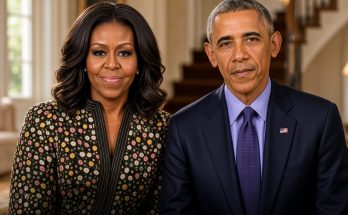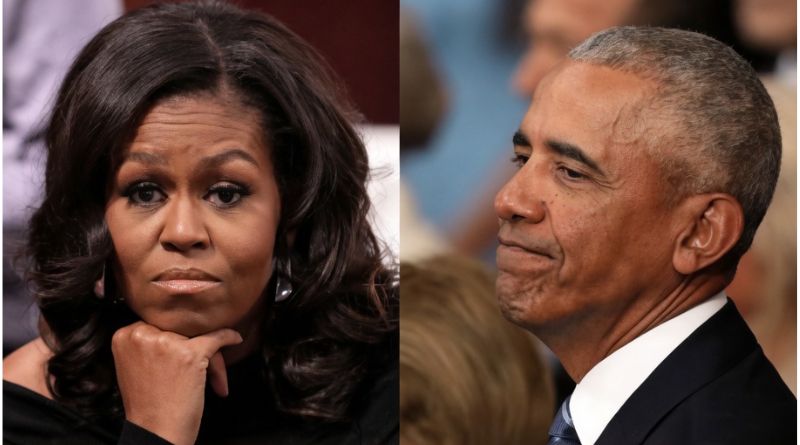
Michelle Obama, the former First Lady of the United States, recently sparked widespread discussion with candid remarks about presidential term limits during an appearance on the Call Her Daddy podcast. In a hypothetical scenario raised by host Alex Cooper—envisioning a situation where President Donald Trump somehow altered the rules to pursue a third term—Obama was asked if her husband, former President Barack Obama, might consider running again. Her response was direct and emphatic: “I hope not. I would actively work against that. I would be at home working against it.”
She elaborated that the presidency demands fresh energy and vision in a rapidly changing world. “I do believe in the need for new vision,” Obama stated. “The two terms is not just about ‘we like him’… eight years is enough.” She stressed the importance of developing new leaders rather than cycling the same figures repeatedly, underscoring her belief that the demanding role requires constant renewal to meet evolving national challenges.
This comment arrives against the backdrop of the 22nd Amendment to the U.S. Constitution, ratified in 1951, which formally limits presidents to two elected terms. The provision was designed to prevent the accumulation of excessive executive power and preserve democratic rotation in leadership, a norm rooted in George Washington’s voluntary retirement after two terms. While the amendment has largely held firm, occasional debates have surfaced about potential loopholes or amendments, particularly amid heightened political polarization and discussions around figures like Trump floating extended tenures.
Michelle Obama has long been a prominent voice in American public life. As First Lady from 2009 to 2017, she championed initiatives in education, healthy living, military families, and girls’ empowerment through programs like “Let’s Move!” and “Reach Higher.” Her bestselling memoir Becoming and subsequent projects have solidified her image as a thoughtful advocate for progress, resilience, and democratic values. Known for her authenticity and independence, her statements often carry weight far beyond partisan lines.
The podcast exchange quickly ignited reactions across media and social platforms. Supporters praised it as a principled defense of constitutional norms and a call for generational renewal in politics. Many viewed it as consistent with Obama’s longstanding emphasis on integrity and forward-looking leadership, especially in an era when trust in institutions faces ongoing strain. Others interpreted the remarks through a partisan lens, seeing them as a subtle commentary on current political dynamics or a reinforcement of Democratic messaging around norms and fresh perspectives.
Critics and commentators offered varied takes. Some framed her stance as a refreshing rejection of political dynasties or personality-driven power, arguing that term limits protect democracy from fatigue and entrenchment. Others speculated on personal or strategic dimensions—whether the comments reflected private family views, a desire to safeguard her husband’s legacy, or broader signaling about leadership transitions. A few dismissed the entire discussion as speculative “what-if” theater, noting that any real third-term bid would require extraordinary—and currently improbable—constitutional changes.
Public discourse has highlighted broader tensions: the tension between admiration for effective leaders and the safeguards against prolonged individual influence. Obama’s words resonate with long-standing arguments that the presidency’s intensity benefits from new voices capable of addressing contemporary issues like technology, climate, and social cohesion with updated approaches.
As reactions continue to unfold, the episode underscores Michelle Obama’s enduring influence. Even in a lighthearted podcast setting, her remarks have reignited conversations about the health of American democracy, the value of term limits, and the role of former first families in shaping national dialogue. While no further clarification has emerged from the Obamas, the statement reinforces a simple yet powerful idea: that adhering to established rules and embracing renewal strengthens the republic more than any single individual’s extended tenure.
In a politically charged climate, Michelle Obama’s firm opposition to a hypothetical third term for her husband serves as a reminder of the delicate equilibrium between leadership charisma and institutional restraint. Whether this moment fades or lingers in public memory, it highlights her continued relevance as a figure who prioritizes principle alongside personal loyalty. The coming political cycles will likely test how such perspectives influence voter expectations and party strategies ahead.