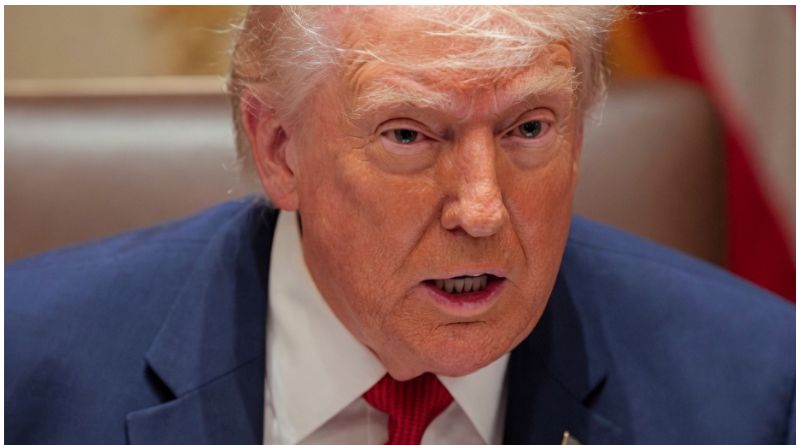
Australian Prime Minister Anthony Albanese has openly challenged US President Donald Trump over the ongoing war with Iran, calling for greater clarity on its objectives and urging a swift de-escalation.
Now stretching into its second month, the conflict between Iran, the United States, and Israel shows little sign of resolution. What began as a series of targeted strikes has grown increasingly complex, with global powers divided and the economic fallout mounting.
The war erupted on February 28, 2026, when US and Israeli forces launched coordinated missile strikes on Iranian targets. Iran responded with retaliatory attacks on US bases across the region. Initial US claims suggested a quick victory, but the situation has since escalated, with reports of thousands of American troops deployed to the Middle East in preparation for possible ground operations.
Speaking in Canberra on March 30, Albanese pressed for “more certainty” about the war’s goals. “I want to see more clarity about the objectives of this war, and I want to see de-escalation,” he said. “De-escalation is in the interest of the global economy. I strongly oppose the Iranian regime.”
Albanese acknowledged that early objectives—such as curbing Iran’s nuclear program and diminishing its regional military influence—appear to have been largely met. However, he warned against pursuing full regime change. “History shows that externally imposed regime change is very difficult,” he added, stressing the need for a clear endpoint to avoid prolonged instability.
The conflict has already delivered severe economic shocks. In Australia, fuel prices have surged by around 40 percent amid disruptions to the Strait of Hormuz, a vital global oil shipping route. Albanese has warned that the effects will linger for months, prompting the government to introduce relief measures for motorists and businesses.
Trump, meanwhile, has claimed the US is engaged in “productive talks” with Iran and that American objectives are nearing completion, vowing to “finish the job.” Iran has rejected these assertions, denying any negotiations and signaling readiness to confront US forces if attacks continue.
Other world leaders have expressed similar concerns. On March 19, the UK, France, Germany, and Italy issued a joint statement condemning Iran’s attacks on commercial shipping and its restrictions in the Strait of Hormuz. UK Prime Minister Keir Starmer has pushed for a rapid end to hostilities while avoiding direct involvement—a position that drew criticism from Trump. Russia, a key Iranian ally, has also condemned the escalation, warning of wider regional spillover.
As the crisis deepens, international pressure is growing for a defined strategy and de-escalation to prevent further global instability.