The room reacted before it fully understood what had just been said. There was a brief, almost imperceptible pause, followed by laughter that arrived a beat too late and sounded oddly tentative. Aboard Air Force One, President Donald Trump had just joked that he was “at the bottom of the totem pole” when it came to getting into heaven. Then came the punchline: if he ended the war in Ukraine, “maybe they’ll let me in.”
On the surface, it was classic Trump—self-deprecating, hyperbolic, and delivered with the timing of a seasoned showman. But the line carried an undercurrent that didn’t land quite cleanly for everyone. Trump, whose public image is built on dominance, strength, and unapologetic confidence, rarely positions himself as anything less than central and indispensable. Framing himself, even jokingly, as low in a spiritual hierarchy felt momentarily off-script. The follow-up about being “let in” only amplified the odd resonance.
The exchange began when Fox News correspondent Peter Doocy asked whether brokering a ceasefire in Ukraine might improve Trump’s chances of entering heaven. Trump leaned into the absurdity with characteristic flair. “I don’t think there’s anything going to get me in heaven,” he said, adding that he was hearing he wasn’t doing well on that front. Ending the war, he suggested playfully, could be one reason “they” might grant him entry. Later, Trump clarified he had been “a little cute,” sarcastic, and “just having fun,” noting that politicians can no longer joke without every word being dissected.
The audience’s laughter carried a hint of hesitation, the kind people use to paper over slight discomfort before moving on. For supporters, the moment was vintage Trump: a blunt, irreverent way of addressing weighty topics—war, legacy, mortality—without pretension. He has long framed global problems as deals to be closed, outcomes measured by results rather than abstract ideals. Here, peace wasn’t presented as moral grandstanding but as a tangible achievement that might even impress the ultimate gatekeeper.
Critics, however, saw something else. The language of hierarchy and conditional acceptance invited readings of status anxiety or a lingering desire for validation from unseen authorities. Trump has always cast himself as the ultimate outsider battling entrenched elites and institutions. Yet he frequently measures success in visible wins, crowds, ratings, and recognition. The joke condensed that familiar tension: the defiant strongman who still notes who holds the keys to certain rooms.
In reality, the remark revealed less about hidden vulnerability and more about Trump’s comfort with exaggeration and sarcasm. He has made similar quips before, poking at his own flaws while promising decisive action. Supporters hear a leader confident enough to laugh at himself while focusing on ending bloodshed. The “they” in “maybe they’ll let me in” was clearly a playful nod to divine judgment—St. Peter, God, or the cosmic scorekeeper—not a confession of craving elite approval.
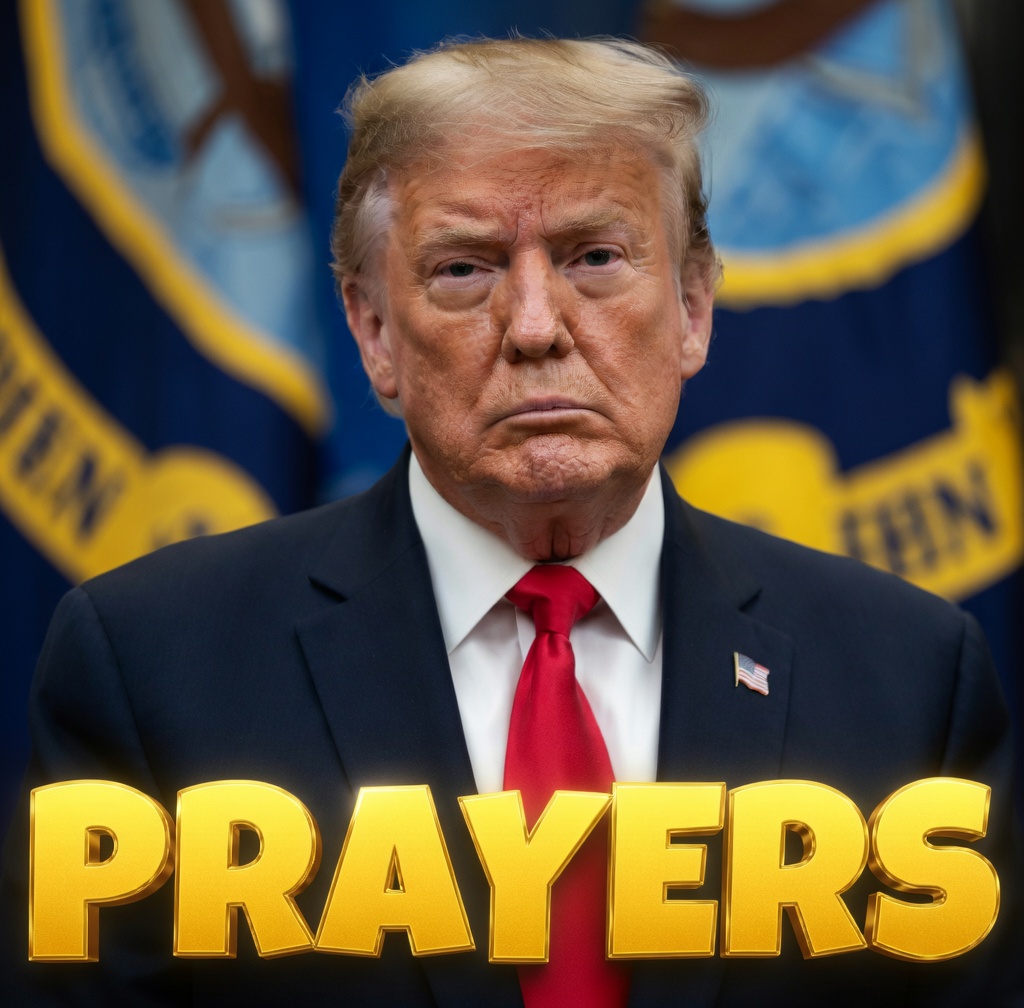
The circulating title “Pray for President Trump” added another layer. For many supporters, it served as lighthearted encouragement or an earnest call for protection amid his efforts. For others, it carried ironic or dramatic weight. Either way, it underscored how quickly a throwaway line can be amplified and interpreted through partisan lenses.
What made the moment linger wasn’t scandal or revelation, but its subtle friction between persona and improvisation. Trump’s brand thrives on certainty, absolutes, and momentum. A fleeting joke about spiritual ranking briefly disrupted that rhythm, exposing how humor can shield discomfort even as it signals it. The president quickly moved on, reasserting control as he always does.
In a political era dominated by performance, such exchanges matter because they humanize the script. They remind us that even the most polished strongman persona includes offhand banter, self-mockery, and the occasional awkward laugh from the room. Trump didn’t dwell because, to him, it was simply a joke. The rest of us—supporters, critics, and observers—turned it into something more, as we often do with his words.
Ultimately, the clip captured Trump being Trump: transactional, hyperbolic, and unwilling to feign false piety. Whether it revealed deeper contradictions or just a man comfortable joking about heaven while pursuing peace on Earth depends largely on the listener. The laughter faded, the plane flew on, and the headlines returned to familiar battles. But for a moment, the totem pole stood as a reminder that even in power, some punchlines invite us all to read between them.