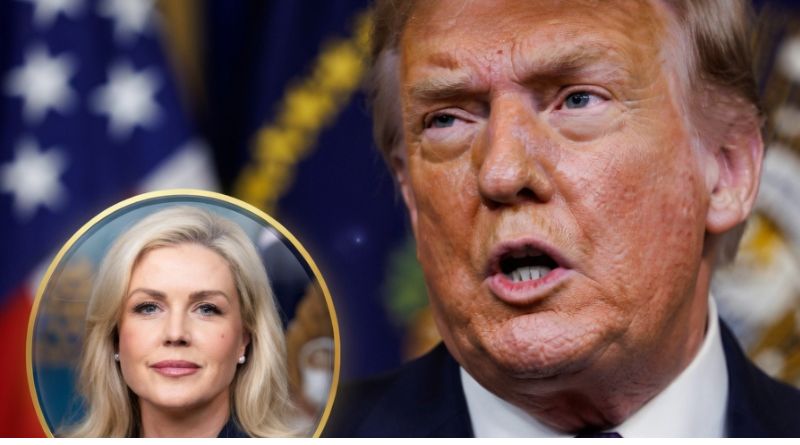
The air in the Oval Office seemed to vanish for a split second. On March 31, 2026, President Donald Trump, while complaining about receiving 93 to 97 percent negative media coverage, turned to White House Press Secretary Karoline Leavitt and quipped, “Maybe Karoline’s doing a poor job, I don’t know… You’re doing a terrible job. Should we keep her? I think we’ll keep her.”
For the press corps, the moment was instant catnip—a potential headline about internal discord. For the administration, it risked being spun as a public reprimand of a key loyalist. Leavitt, who daily navigates the intense scrutiny of the briefing room, stood at the center of the brief storm. The line between a lighthearted jab and something more serious blurred under the relentless spotlight.
Yet the tension dissipated almost as quickly as it arose. Trump, a master of the unscripted moment, immediately softened the remark, framing it as his signature brand of humor designed to cut through the room’s adversarial energy. He reassured everyone that Leavitt was not going anywhere, effectively snuffing out speculation before it could gain traction.
This fleeting episode offers a revealing microcosm of today’s hyper-charged political environment. In an era where coverage of Trump is often laced with friction, even an offhand joke can be amplified into a full news cycle. Supporters see these moments as proof of his authentic, unfiltered style—a refreshing break from the carefully scripted language of conventional politicians. To his base, the willingness to tease even his own staff signals a leader unbound by rigid political norms.
Critics, however, argue that such public comments, even when intended in jest, can undermine the professionalism of an administration and sow unnecessary confusion about internal dynamics. For the media, the constant challenge is separating genuine personnel shifts from the performative nature of Trump’s communication approach.
Ultimately, the incident underscores the high-pressure world in which Karoline Leavitt and her colleagues operate. Serving as the public face for such a polarizing and unconventional figure demands resilience and a sharp instinct for managing 24-hour news optics. While initial headlines hinted at fracture, the reality proved far simpler: another unpredictable beat in the rhythm of the Trump team.
In high-stakes politics, the most telling stories often emerge not from prepared remarks, but from the moments when the script is discarded—leaving observers to decide what is substance and what is simply theater.