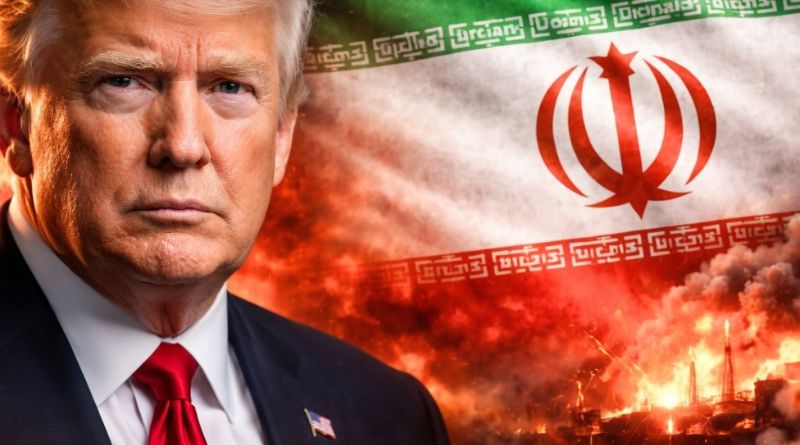
President Donald Trump has intensified his rhetoric toward Iran as high-stakes negotiations to end the ongoing conflict appear to have stalled. In a series of posts on Truth Social Friday, the president portrayed Iran’s leadership as severely weakened, with limited leverage beyond threats to global shipping routes.
“The Iranians don’t seem to realize they have no cards, other than a short-term extortion of the World by using International Waterways,” Trump wrote. He added that “the only reason they are alive today is to negotiate!”
Trump detailed the extent of Iran’s military degradation following weeks of U.S. and Israeli strikes. He claimed Iran’s navy, air force, anti-aircraft systems, and radar capabilities have been effectively eliminated. Missile and drone infrastructure has been “largely obliterated,” along with associated weapons stockpiles, and many longtime regime figures “are no longer with us.” He specifically noted that all 28 of Iran’s mine-dropping boats now lie at the bottom of the sea.
The president highlighted the Strait of Hormuz—a vital chokepoint carrying roughly 20% of the world’s oil and LNG—as Iran’s primary remaining tool for leverage. He accused Tehran of attempting to extort the international community through threats of sea mines or collisions with commercial vessels. In response, Trump announced that the United States is beginning operations to clear the strait “as a favor to Countries all over the World,” naming China, Japan, South Korea, France, and Germany among the beneficiaries. He added that multiple large tankers are en route to the U.S. to load oil.
A senior U.S. delegation, led by Vice President JD Vance and including Middle East envoy Steve Witkoff and senior adviser Jared Kushner, traveled to Islamabad, Pakistan, for direct talks with Iranian officials on Saturday. The marathon negotiations, which reportedly lasted more than 21 hours, ended without a deal. Iran reportedly rejected key U.S. demands, including a verifiable end to its uranium enrichment and nuclear weapons ambitions. The delegation has since departed Pakistan, leaving a fragile two-week ceasefire in jeopardy.
Following the impasse, Trump escalated pressure Sunday by announcing that the U.S. Navy would impose a blockade on the Strait of Hormuz “effective immediately.” He vowed to destroy Iranian-laid mines and interdict any vessels that paid illegal tolls to Tehran. “Any Iranian who fires at us, or at peaceful vessels, will be BLOWN TO HELL!” he warned. Iran’s Islamic Revolutionary Guard Corps responded by stating that any military vessels approaching the strait would be “dealt with harshly and decisively.”
The developments come amid broader frustration in Washington over Iran’s tactics and media coverage of the conflict. On Jesse Watters Primetime Thursday, Democratic Sen. John Fetterman of Pennsylvania criticized much of the American media for “carrying water” for Iran, suggesting bias aimed at undermining President Trump. Fetterman defended U.S. actions, stating that “America is the force of good in the world” and that holding Iran accountable for its support of terrorism and regional aggression remains essential. He stopped short of criticizing fellow Democrats directly.
Fetterman’s comments referenced earlier tensions, including his combative exchange with CNN’s Kaitlan Collins last month in which he defended U.S. military operations.
The negotiations and Trump’s statements also occur against the backdrop of a controversial strike early in the conflict. On February 28, a U.S. Tomahawk missile struck the Shajarah Tayyebeh girls’ elementary school in Minab, southeastern Iran, during the opening phase of Operation Epic Fury. Iranian authorities reported at least 156–175 deaths, mostly children, with dozens more injured. A preliminary U.S. military investigation attributed the tragedy to faulty targeting intelligence based on outdated data from the Defense Intelligence Agency. The intended target was an adjacent Iranian Revolutionary Guard Corps naval base; the school building had once been part of that compound but was converted to civilian use years earlier.
The incident has drawn international scrutiny and calls for accountability from groups like Amnesty International.
As of Sunday, April 12, 2026, the situation remains fluid. With talks collapsed and the U.S. moving to secure the Strait of Hormuz, oil markets and global shipping face renewed uncertainty. Trump has signaled confidence that sustained pressure will eventually force Iran back to the table on American terms. Whether diplomacy can resume before further escalation remains to be seen.