US-Iran Talks End Without Agreement After 21-Hour Marathon in Islamabad
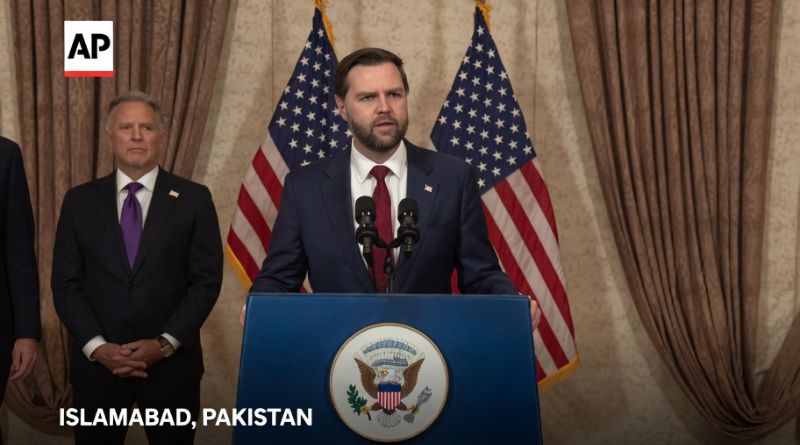
ISLAMABAD — U.S. Vice President JD Vance described 21 hours of direct negotiations with Iranian officials as “substantive,” but acknowledged that no deal was reached to end the ongoing conflict.
Speaking to reporters shortly before departing Pakistan on Sunday, April 12, 2026, Vance said the talks — the highest-level face-to-face discussions between the United States and Iran since the 1979 Islamic Revolution — took place amid a fragile 14-day ceasefire.
“That’s the good news,” Vance stated. “The bad news is that we have not reached an agreement, and I think that’s bad news for Iran much more than it’s bad news for the United States of America. So, we go back to the United States having not come to an agreement.”
The U.S. delegation, led by Vance and including special envoy Steve Witkoff and Jared Kushner, met with an Iranian team headed by Parliament Speaker Mohammad Bagher Qalibaf and Foreign Minister Abbas Araghchi. Pakistan mediated the sessions in its capital.
Vance emphasized that the U.S. presented its “final and best offer,” maintaining constant contact with President Donald Trump throughout the nearly day-long negotiations. He highlighted a core U.S. demand: a clear, long-term Iranian commitment not to develop nuclear weapons or the rapid capability to produce one. According to Vance, Iran chose not to accept these terms despite American flexibility on other issues.
Iranian officials described the U.S. demands as excessive and expressed skepticism about American trustworthiness, though they left the door open for future talks.
The ceasefire, now in its later stages and set to expire around April 22, remains shaky. Pakistani mediators urged both sides to uphold the truce and avoid escalation while efforts continue. The failure to secure a deal casts uncertainty over the broader Middle East conflict, including navigation through the Strait of Hormuz and regional proxy tensions.