Iran’s selective control over the Strait of Hormuz began as a sharp political response to the late February 2026 strikes but quickly evolved into a more flexible, permission-based system shaped by diplomacy, economic pressure, and operational realities.
Following the initial US-Israeli actions against Iran, Tehran asserted sovereignty over the critical waterway. On March 26-27, Foreign Minister Abbas Araqchi announced that ships from “friendly nations”—specifically China, Russia, India, Iraq, and Pakistan—would receive safe passage. Iran framed the move as denying “innocent passage” rights to the United States, Israel, and their direct allies involved in the aggression, while allowing non-hostile vessels to transit after coordination with Iranian armed forces, often via the northern corridor near Larak and Qeshm islands.
The announcement created a clear initial narrative: Iran was dividing global shipping along political lines. Friendly states useful for energy imports, diplomacy, or wartime neutrality gained access, while adversaries faced exclusion. This aligned with a letter Iran sent to the International Maritime Organization emphasizing that only vessels neither participating in nor supporting aggression against Iran could proceed under regulated conditions.
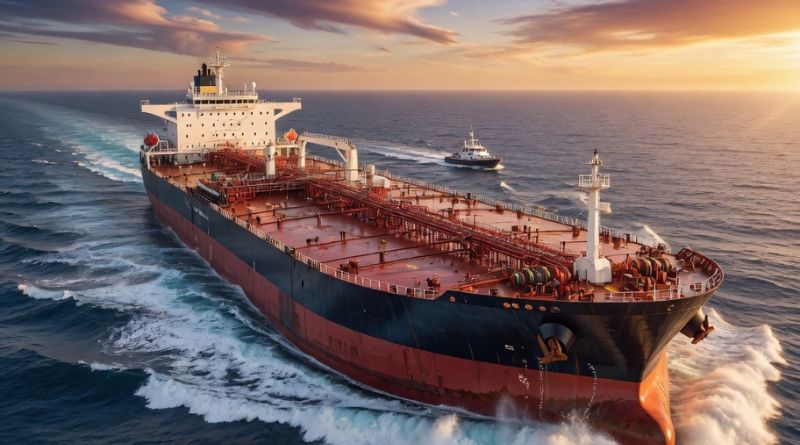
Yet the policy proved less rigid than the headline suggested. Within days, exemptions expanded. Iraq secured broader clearance for its oil exports after negotiations. Ships carrying essential goods, including fertilizers critical for Asia and Africa’s planting season, received humanitarian approvals. Additional clearances went to vessels linked to Malaysia (with multiple ships approved), Thailand, Bangladesh, Oman, France, and Japan, provided they had no evident US or Israeli connections. Even some China-linked vessels, despite early hesitation where two container ships paused despite assurances, eventually moved after quiet diplomatic pressure over crude and Qatari LNG cargoes.
In practice, passage became a case-by-case regime. Shipowners had to seek prior coordination, adhere to Iranian routing instructions, and accept heightened risks. Some reports mentioned potential transit fees (including proposals for up to $2 million per vessel, with at least two ships reportedly paying in yuan). The system allowed Iran to project control while avoiding total isolation from key partners like China and India.
Operational Reality and Traffic Collapse
Despite the diplomatic signals, commercial traffic never recovered to normal levels. The UKMTO’s Joint Maritime Information Center repeatedly warned of “active kinetic hazard conditions,” urging extreme caution amid risks of attacks, potential mines, and GNSS interference. Historical daily transits averaged about 138 vessels. In early March, confirmed commercial movements dropped to as low as 4–7 per 24 hours. Even after a fragile US-Iran ceasefire took hold around early April, traffic remained severely depressed—often 3–11 vessels daily through mid-April, well below 10% of pre-conflict volumes.
Hundreds of tankers lingered inside the Gulf, waiting for clarity. Analysts from Kpler and Vortexa noted that safe passage could not be guaranteed, as decisions hinged on real-time military approvals, insurance costs, crew safety, and shifting political signals. Most recent transits involved Iran-linked vessels, limited bulk carriers, containers, and a handful of tankers (including some Iraqi crude resuming limited flows and Chinese supertankers exiting). Inbound traffic stayed minimal.
The economic stakes remain enormous. The strait normally carries nearly 15–21 million barrels per day of crude—roughly 20–34% of global seaborne oil trade—plus significant LNG and other commodities. Disruptions contributed to stranded volumes, elevated prices, and rerouting via pipelines like Saudi Arabia’s Yanbu and the UAE’s Fujairah where feasible.
Current Standing and Outlook
What began as a politically tidy “short list” of friendly nations transformed into a shifting system of exemptions, conditions, and calculated leverage. Iran maintained it had not formally closed the strait but was managing access during wartime. Even post-ceasefire, a US-announced blockade targeting Iranian ports (effective around April 13) added fresh uncertainty, with some vessels turning away and Tehran denouncing the move as an act of piracy.
Shipowners, insurers, and governments continue to scrutinize every Iranian and American signal. The route remains dangerous and commercially strained, with traffic a fraction of normal despite incremental crossings. A full return to unrestricted navigation would require deeper de-escalation, resolved security concerns, and possibly new regional protocols.
In essence, Iran demonstrated its ability to disrupt one of the world’s most vital energy arteries while pragmatically adjusting to preserve alliances and revenue. The Strait of Hormuz is no longer a fully open trade route—it is a managed chokepoint where politics, risk, and economics intersect daily.