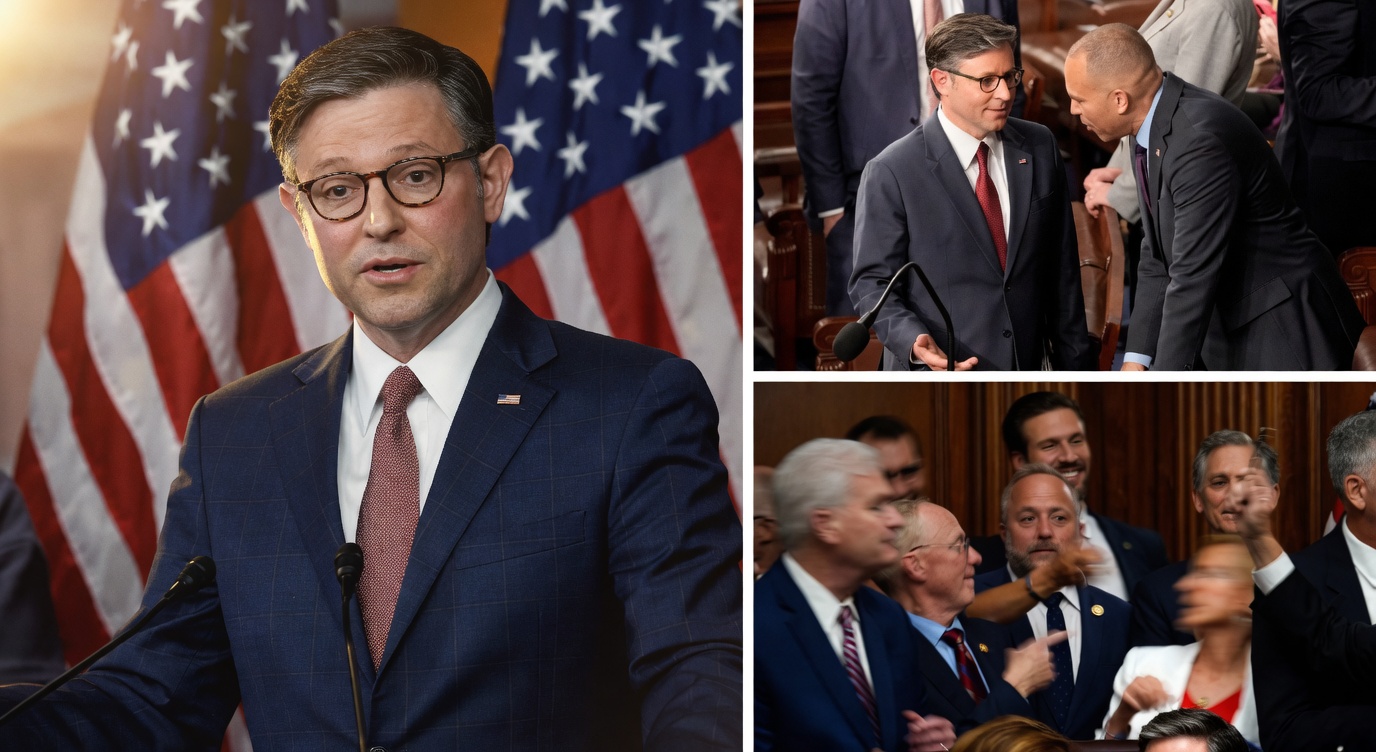
The House of Representatives passed the Fiscal Year 2026 National Defense Authorization Act (NDAA) on December 10, 2025, in a bipartisan 312-112 vote. The legislation, which authorizes approximately $900.6–901 billion in national defense spending, now heads to the Senate for expected swift approval before reaching President Donald Trump’s desk.
An earlier procedural vote on the rule passed narrowly at 215-211, only after four hardline Republicans—Reps. Anna Paulina Luna (FL), Marjorie Taylor Greene (GA), Tim Burchett (TN), and Lauren Boebert (CO)—switched from “no” to “yes.” All Democrats opposed the procedural measure.
Hardline conservatives voiced strong objections to the final compromise package. Their main grievances included the inclusion of $400 million annually for Ukraine (totaling $800 million over two years) through the Ukraine Security Assistance Initiative, which funds U.S.-produced weapons. They also criticized the omission of a provision that would have banned the Federal Reserve from developing or testing a central bank digital currency (CBDC). Privacy advocates argued that a government-controlled digital dollar could enable surveillance and restrictions on individual financial transactions.
Other controversial elements restrict the executive branch from unilaterally reducing U.S. troop levels in Europe or South Korea and from pausing weapons deliveries to Ukraine. The bill also withholds one-quarter of Defense Secretary Pete Hegseth’s travel budget until the Pentagon releases raw, unedited footage and related orders for U.S. strikes on alleged narco-trafficking boats in the Caribbean and near Venezuela.
Supporters, including Speaker Mike Johnson, highlighted several wins. The measure provides a roughly 3.8–4% pay raise for service members, with emphasis on enlisted ranks. It eliminates diversity, equity, and inclusion (DEI) programs in the Department of Defense, strengthens measures against antisemitism, and cuts approximately $20 billion in obsolete programs and bureaucratic overhead.
The bill contains robust provisions aimed at countering China. It establishes an outbound investment screening mechanism requiring U.S. companies and investors to notify the Treasury Department of certain high-risk technology investments in China and other countries of concern, with authority to block deals or mandate reporting. It also bans Pentagon contracts with specific Chinese genetic sequencing and biotechnology firms, and prohibits acquisition of advanced batteries, photovoltaic components, computer displays, and critical minerals from foreign entities of concern—primarily China.
Additional measures direct the State Department to expand Regional China Officers at diplomatic posts worldwide to monitor Beijing’s commercial, technological, and infrastructure activities, including the Belt and Road Initiative. The legislation mandates biennial reports comparing China’s global diplomatic presence with that of the United States.
Other notable inclusions are an FBI disclosure requirement when investigating presidential or congressional candidates, and the repeal of two outdated Iraq war authorizations from 1992 and 2002 (while preserving the 2001 AUMF). Provisions on in vitro fertilization coverage for military families and preemption of state AI regulations were ultimately dropped.
The NDAA, now signed into law, reflects ongoing congressional priorities: supporting troops, reforming Pentagon bureaucracy, and addressing strategic competition with China, while navigating tensions over foreign aid and executive authority.