Former U.S. President Donald Trump, now back in the White House, once again drew intense public scrutiny during a week of heavy activity on his Truth Social platform. Several posts, including memes and digitally altered images, spread rapidly online, igniting debates over tone, accuracy, and the role of visual content in modern politics.
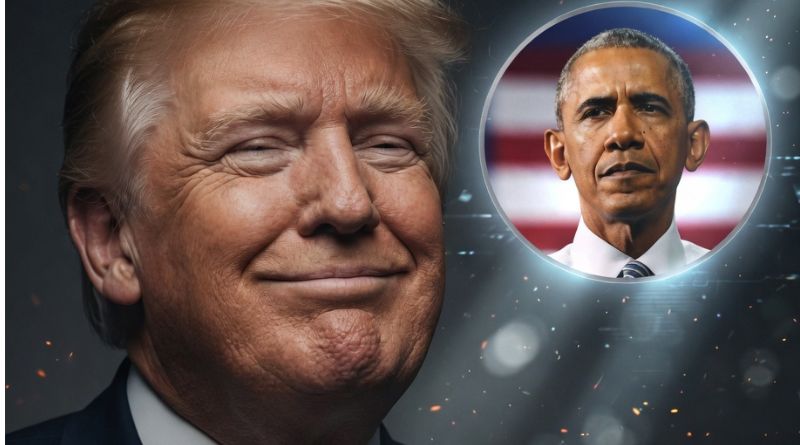
One notable post featured a meme comparing Trump and former President Barack Obama. The image showed Trump smirking at Obama during the 2017 inauguration, accompanied by text referencing Obama’s earlier skepticism about Trump’s presidential chances: “When you see the guy who said ‘you’ll never be president’ at your inauguration.” Trump shared the screenshot without additional commentary, allowing the image to fuel discussions about lingering political rivalries from the 2016 election cycle. While lighter in tone than some of his other recent content, it highlighted Trump’s signature style of reviving past exchanges for humorous or pointed effect.
This incident occurred amid broader scrutiny of Trump’s online habits. Earlier in 2026, during Black History Month, his account posted a video promoting unsubstantiated 2020 election fraud claims. Near the end, set to “The Lion Sleeps Tonight,” it included a brief clip superimposing Barack and Michelle Obama’s faces onto apes — a depiction widely condemned as invoking a longstanding racist trope. The post remained online for roughly 12 hours before deletion. The White House initially defended it as part of a satirical “Lion King” meme but later attributed the full video’s sharing to a staffer’s error. Trump stated he had only viewed the election-related portion and declined to apologize, saying he made no mistake. The episode drew bipartisan criticism, with some Republican senators calling it offensive and Obama later addressing the decline in public decorum.
Reactions to these posts varied sharply. Critics contended that a sitting or former president sharing or amplifying such content—whether petty jabs or more inflammatory visuals—undermines dignity and contributes little to substantive discourse. Supporters viewed them as classic Trump: unfiltered, entertaining pushback against perceived establishment figures, consistent with his direct communication bypassing traditional media. Fact-checkers noted that while the inauguration meme drew on real past remarks, the earlier video’s imagery carried heavier historical baggage unrelated to verified statements.
Analysts observe that political communication has increasingly favored short-form visuals and memes. These formats condense narratives into shareable packages that elicit quick emotional responses, often prioritizing virality over nuance. Trump’s approach exemplifies this shift, allowing him to engage millions directly on Truth Social while generating widespread commentary across platforms. However, the blending of satire, AI-altered images, and real footage raises persistent questions about context, misinformation, and unintended amplification of divisive tropes.
Ultimately, the episodes underscore social media’s power to shape political narratives in the digital era. Content can reach vast audiences instantly, spark polarized debate, and blur lines between humor and provocation. As public figures continue leveraging these tools, the tension between personal expression, accountability, and democratic discourse remains unresolved. Trump’s activity reflects both the immediacy of modern politics and its challenges in an environment where images often speak louder—and faster—than words.