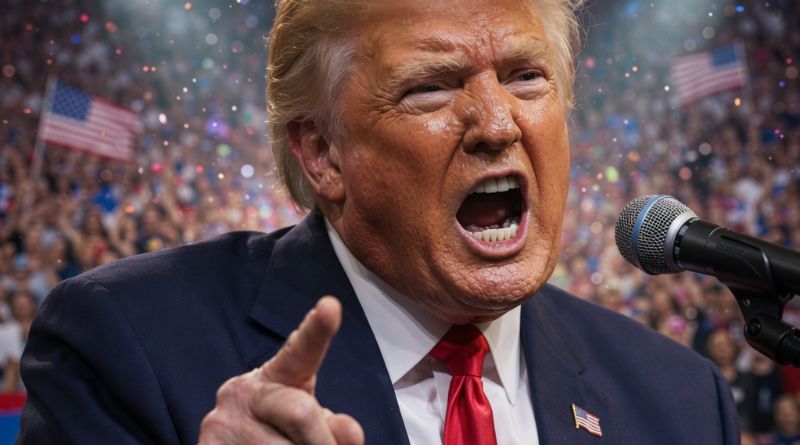
President Donald Trump has reignited the national debate on immigration by reinstating and expanding travel restrictions that fully suspend entry into the United States for nationals of Somalia and 11 other countries. The policy, first implemented via proclamation in June 2025 and expanded in December 2025 to take full effect on January 1, 2026, targets nations with severe deficiencies in governance, documentation, and security cooperation.
The administration’s rationale for the Somalia ban is straightforward and data-driven. Somalia lacks a competent central authority capable of issuing reliable passports or civil records. Its government exercises limited control over much of its territory, severely hampering any meaningful background checks or vetting. Al-Shabaab, an al-Qaeda affiliate, continues to operate as a terrorist safe haven, controlling rural areas and launching attacks. Somalia has also historically refused to repatriate its own nationals ordered removed from the U.S. These conditions make individualized screening unreliable, prompting a temporary but comprehensive pause on new immigrant and nonimmigrant visas for Somali nationals (with narrow exceptions for certain existing visa holders, lawful permanent residents, and cases serving clear U.S. national interests).
This approach mirrors Trump’s first-term travel restrictions, which focused on countries with documented vetting failures rather than religion or ethnicity. Supporters argue it is a pragmatic national security measure. When a source country cannot or will not provide trustworthy information, the risk of admitting unvettable individuals—including potential terrorists or those with criminal intent—rises sharply. The policy prioritizes thorough screening and allows time to strengthen processes or negotiate better cooperation. It also underscores the principle that immigration policy should serve American interests, including public safety and the integrity of the system.
The debate has spotlighted Somali communities in the United States, particularly in Minnesota, home to roughly 75,000–107,000 people of Somali descent, concentrated in the Twin Cities. Many arrived as refugees or through family reunification in the 1990s and subsequent decades. Socioeconomic outcomes have been challenging. According to Center for Immigration Studies analysis of Census data, about 81% of Somali-headed households in Minnesota receive some form of public assistance, compared to 21% of native households. This includes 54% on food stamps, 73% with at least one member on Medicaid, and 27% on cash welfare. Among households with children, the welfare participation rate reaches 89%. Poverty rates remain high, with over 60% of Somali adults and 80% of children living in or near poverty. English proficiency and educational attainment lag significantly behind native Minnesotans.
Large-scale welfare fraud scandals involving Somali defendants in Minnesota have further fueled concerns. Federal and state investigations have uncovered hundreds of millions to over a billion dollars in misused funds tied to meal programs, autism services, and other public benefits. Critics argue that rapid, large-scale resettlement from unstable regions has strained local schools, housing, healthcare, and budgets while raising questions about long-term assimilation and fiscal sustainability.
Opponents of the restrictions counter that nationality-based pauses are overly broad. They penalize ordinary students, professionals, and families who pose no threat and could harm America’s image as a welcoming nation. Broad measures, they say, fail to distinguish genuine risks from law-abiding individuals and may undermine humanitarian traditions.
Yet the counterargument emphasizes realism: sovereignty requires controlling borders when source-country conditions undermine safe admissions. Finite public resources and community capacity must be weighed against resettlement goals. Patterns of high welfare dependency, documented fraud cases, and isolated but serious terrorism recruitment from Minnesota’s Somali community illustrate the practical challenges. Age-adjusted crime data also shows elevated incarceration rates for young Somali males compared to native-born peers in refined analyses.
Trump’s policy is not a permanent religious or ethnic ban but a targeted, reviewable response to verifiable risks—weak institutions, terrorism, poor information-sharing, and non-cooperation on removals. It continues a June 2025 framework and was broadened in December 2025 amid ongoing security assessments. The administration has also moved to terminate Temporary Protected Status for Somalis, citing improved country conditions that no longer justify the designation.
This episode highlights enduring tensions in U.S. immigration: balancing compassion and opportunity with rigorous vetting, fiscal responsibility, and national security. Blanket humanitarian admissions from chronically failed states carry measurable costs and risks, as evidenced by integration data from Minnesota. Effective reform demands honest evaluation of these trade-offs rather than slogans. Whether through improved bilateral agreements, enhanced screening technology, or stricter enforcement of public charge rules, the goal remains the same—admitting immigrants who strengthen rather than strain the nation. Trump’s renewed focus on Somalia underscores that immigration policy must prioritize verifiable safety and sustainability over unchecked inflows.