Scientists’ Deaths Spark Renewed Scrutiny Amid Exotic Technology Claims
The 2022 death of Amy Eskridge, a 34-year-old researcher formerly based in Huntsville, Alabama, has once again drawn public attention as part of a growing list of scientists and engineers connected to sensitive U.S. military, nuclear, and aerospace projects who have died or disappeared under unusual circumstances.
Online investigators and independent watchdog accounts now point to Eskridge as the 11th individual in this series. While no official links have been established between the cases, the overlapping professional backgrounds and timelines have fueled intense speculation and calls for deeper investigation.
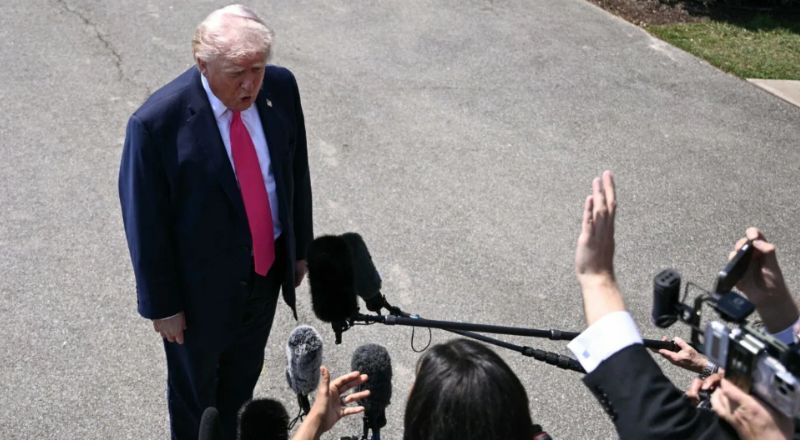
President Donald Trump addressed the mounting concerns on Thursday, stating he had just concluded a meeting on the matter. He described the situation as “pretty serious” and pledged answers within the next week and a half. “I hope it’s random,” Trump said, “but we’re going to know soon.”
White House Press Secretary Karoline Leavitt followed up on Friday, emphasizing the administration’s commitment to a thorough review. “In light of recent and legitimate questions about these troubling cases and President Trump’s commitment to the truth, the White House is actively working with all relevant agencies and the FBI to holistically review all of the cases together and identify any potential commonalities,” Leavitt said. “No stone will be unturned.”
Eskridge passed away on June 11, 2022, in Huntsville. Official records list her death as a self-inflicted gunshot wound, though limited details have been publicly released. She co-founded the Institute for Exotic Science and focused her research on experimental propulsion systems, including concepts she described as “antigravity” technology.
In a 2020 interview with YouTuber Jeremy Rys, Eskridge detailed significant backlash after going public with her work. “We discovered antigravity, and our lives went to [expletive] and people started sabotaging us,” she said. She described experiencing harassment, threats, and sabotage, claiming the pressure intensified over time. “If you stick your neck out in public, at least someone notices if your head gets chopped off,” Eskridge added. “If you stick your neck out in private, they will bury you.”
She expressed determination to publish her findings, believing disclosure offered some protection. “I have to publish because it’s only going to get worse until I publish,” she stated, noting the situation was “getting more and more aggressive.”
Her research involved collaboration with her father, Richard Eskridge, a former NASA plasma and fusion engineer, through entities like HoloChron LLC. Eskridge had previously presented on electrogravitics and gravity modification experiments at local aerospace society events.
Her case is now being discussed alongside other incidents involving figures such as retired Air Force Maj. Gen. William “Neil” McCasland, NASA scientist Monica Jacinto Reza, contractor Steven Garcia, astrophysicist Carl Grillmair, MIT physicist Nuno Loureiro, NASA engineer Frank Maiwald, Los Alamos-linked personnel Melissa Casias and Anthony Chavez, NASA researcher Michael David Hicks, and pharmaceutical scientist Jason Thomas.
The National Nuclear Security Administration (NNSA) confirmed it is reviewing reports related to personnel at its labs, plants, and sites. However, authorities have released no evidence connecting Eskridge’s death to her research or to the other cases. Her family has previously pushed back against conspiracy narratives surrounding her passing.
Despite the absence of verified links, Eskridge’s story has become a focal point in alternative technology and UFO/UAP discussion circles, where claims of suppressed propulsion research and risks to whistleblowers have circulated for years. These theories remain unproven and are not supported by official findings.
As federal agencies coordinate a broader examination, the coming weeks may bring clearer answers. For now, the cluster of cases continues to raise difficult questions about safety, security, and transparency in America’s most sensitive scientific fields.