Dangerous Escalation in the Persian Gulf: Iran Reports Attacks on US Bases
Tensions in the Middle East surged once again as Iranian state television, citing military sources, announced a fresh wave of attacks on US-linked military installations across the Persian Gulf region. According to the reports, Iranian forces launched ballistic missiles and other projectiles targeting key bases hosting American personnel and assets.
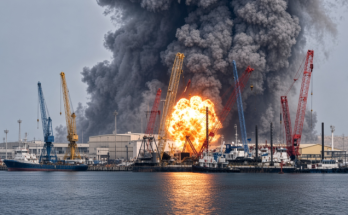
Local authorities in multiple Gulf countries responded swiftly, urging citizens to remain indoors and steer clear of all military sites. In the United Arab Emirates, a powerful explosion rocked Abu Dhabi, prompting officials to close the country’s airspace. Reports indicate that the Al Dhafra Air Base, a critical hub near Abu Dhabi supporting US operations, was struck by Iranian ballistic missiles, resulting in large explosions and visible damage.
In Bahrain’s capital, Manama, plumes of smoke were observed rising over the Al Jufair district, home to the US Navy’s Fifth Fleet headquarters. Authorities described the incident as part of an alleged Iranian assault on the strategic naval facility.
Qatar also faced heightened alerts. The Interior Ministry issued shelter-in-place orders as air defense systems, including Patriot missiles, engaged incoming threats aimed at Al Udeid Air Base—the largest US military installation in the region. Officials confirmed the temporary closure of Qatari airspace amid the exchanges.
These developments form part of a broader, protracted conflict that erupted in late February 2026. Iran has conducted repeated strikes using missiles, cruise missiles, and drones against US-affiliated sites in the UAE, Qatar, Bahrain, Kuwait, and beyond, in retaliation for US and Israeli actions. Gulf states have reported intercepting the majority of projectiles with advanced systems like THAAD and Patriots, though debris, limited impacts, and secondary explosions have caused disruptions, injuries, and infrastructure damage.
The situation remains highly fluid, with risks of further escalation affecting regional stability, oil markets, and international shipping. Residents are advised to follow official guidance, while global observers monitor for any signs of de-escalation amid fragile ceasefire discussions.