Democratic Congresswoman Stumbles During House Debate on Trump’s Major Tax and Policy Bill
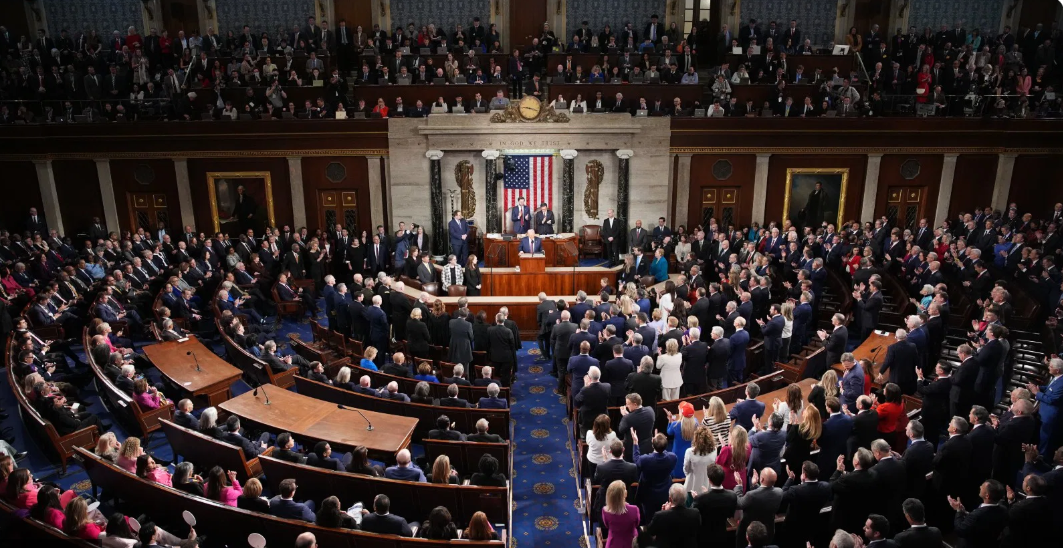
During a heated floor debate on President Donald Trump’s sweeping tax cut and policy package, 81-year-old Rep. Jan Schakowsky (D-IL) stumbled on the House floor. The incident occurred as Democrats mounted strong opposition to the legislation, which Republicans branded the “One Big Beautiful Bill.”
Schakowsky, a longtime critic of the measure, had been echoing Democratic talking points, referring to it as Trump’s “big, ugly bill.” The stumble came amid intense, marathon negotiations as lawmakers worked to meet the president’s July 4 deadline for passing the ambitious package.
The debate featured a lengthy filibuster-style speech by House Minority Leader Hakeem Jeffries (D-NY). Taking advantage of the House’s “magic minute” rule—which allows a member to speak for as long as they remain standing—Jeffries delivered remarks for roughly eight hours and 44 minutes. He stood at the podium with several large binders filled with prepared excerpts, drawing attention to the bill’s provisions and Democratic concerns.
The episode has renewed public discussion about the advanced age of many members of Congress. Concerns over lawmakers’ fitness and stamina intensified after former President Joe Biden’s widely criticized debate performance in 2024 and his subsequent withdrawal from the presidential race. Similar incidents involving elderly lawmakers from both parties during extended sessions have kept the topic in the spotlight.
Schakowsky, who has represented Illinois’s 9th Congressional District since 1999, announced earlier this year that she would not seek reelection in 2026. Her decision brings to a close a lengthy career that included seven years in the Illinois state legislature before her successful run for Congress in 1998.
On the day of the debate, Schakowsky recorded a strong message for social media. “I’m not just a no on Trump’s Big Ugly Bill, I’m a HELL NO!” she posted on X. She argued the legislation would harm healthcare access for millions while providing additional tax benefits to the wealthiest Americans. “This is going to be the most hideous vote that the Republicans are putting forward that would absolutely take healthcare away from literally millions of people,” she said. “When the bill comes up, consider it a crime scene!”
Despite Democratic resistance, the bill advanced. After days of negotiations and the extended floor speeches, the House passed the measure by a narrow 218-214 vote on Thursday, sending it to President Trump’s desk just in time for the July 4 recess. The legislation represents one of the most significant early victories for Trump in his second term, advancing major elements of his campaign agenda within the first six months.
Key provisions include making permanent many of the individual tax cuts from the 2017 Tax Cuts and Jobs Act, eliminating federal taxes on tips, overtime pay, and Social Security benefits for seniors. The bill also introduces tighter eligibility requirements for Medicaid, aiming to reduce improper payments and exclude unauthorized immigrants, with projections estimating $1 trillion in savings over ten years. Additionally, it allocates $46.5 billion to complete construction of a wall along the U.S.-Mexico border—a signature promise from Trump’s 2016 campaign.
Republican leaders and Trump allies hailed the passage as a major accomplishment. Former White House Chief of Staff Mark Meadows posted on X: “Campaigns are filled with promises and ‘most’ administrations are filled with excuses but NOT @Potus, who once again delivered for the American people.”
The legislation has drawn sharp partisan divides. Supporters argue it delivers tax relief for working families and strengthens border security while curbing entitlement spending growth. Critics contend it prioritizes tax cuts for high earners at the potential expense of healthcare programs and adds to the federal deficit.
As implementation begins, the long-term economic and fiscal impacts of the “One Big Beautiful Bill” will be closely watched by lawmakers, analysts, and the public.