House Oversight Committee Launches Probe into Deaths and Disappearances of Scientists Tied to Sensitive U.S. Research
House Oversight Committee Chairman Rep. James Comer (R-KY) is leading a high-priority congressional investigation into the deaths and disappearances of at least 11 American scientists and researchers with connections to nuclear, aerospace, space programs, and advanced propulsion technologies. Lawmakers describe the pattern as suspicious and a potential national security threat.
“It’s very unlikely that this is a coincidence,” Comer told Fox News. “Once you see the facts, it would suggest that something sinister could be happening.” He and Rep. Eric Burlison (R-MO) have sent formal letters to the Department of Defense, FBI, Department of Energy, and NASA demanding briefings on the cases and on protections for personnel with access to classified scientific secrets.
The cases span several years but gained fresh urgency after the February 27, 2026, disappearance of retired Air Force Maj. Gen. William “Neil” McCasland. The 68-year-old former commander of the Air Force Research Laboratory at Wright-Patterson Air Force Base left his Albuquerque, New Mexico, home on foot without his phone, glasses, or other devices. An experienced hiker, McCasland had ties to classified aerospace programs and UAP-related research. Searches continue with no evidence of foul play confirmed so far, though his wife has noted health issues.
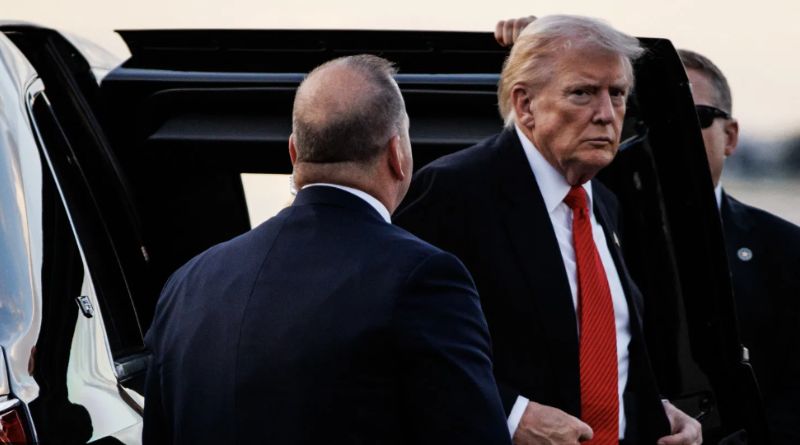
President Donald Trump addressed the matter directly, saying he attended a briefing on the disappearances. “Some of them were very important people, and we are going to look at it over the next short period,” Trump stated. “I hope it’s random, but we’re going to know in the next week and a half.” White House Press Secretary Karoline Leavitt confirmed that the administration is coordinating with the FBI and relevant agencies to examine potential commonalities, promising “no stone will be unturned.”
One case drawing renewed attention is the 2022 death of Amy Eskridge, a 34-year-old Huntsville, Alabama, researcher now often cited as the 11th in the series. Eskridge co-founded the Institute for Exotic Science and publicly discussed experimental propulsion and “antigravity” concepts. In a 2020 interview, she described intense harassment, threats, and sabotage after her team’s claimed breakthroughs. She died on June 11, 2022, from a self-inflicted gunshot wound, according to official records. Her father has rejected conspiracy theories and stated the death was not suspicious, though some acquaintances have raised questions.
Other individuals linked to the list include NASA Jet Propulsion Laboratory personnel such as scientist Monica Jacinto Reza (missing while hiking) and Michael David Hicks; contractor Steven Garcia; astrophysicist Carl Grillmair; MIT physicist Nuno Loureiro; NASA engineer Frank Maiwald; Los Alamos National Laboratory-associated Melissa Casias and Anthony Chavez; and pharmaceutical scientist Jason Thomas. Some deaths involved known causes, such as shootings with arrests made, while others remain open missing persons cases.
Officials have not confirmed any overarching connection, and clusters of deaths in high-stress technical fields are not unheard of. However, the concentration of expertise in nuclear secrets, rocket technology, and space defense programs—some tied to commercial efforts at companies like SpaceX and Blue Origin—has prompted serious scrutiny. Comer has emphasized that foreign adversaries targeting U.S. scientific talent is a more plausible concern than exotic theories.
The Oversight Committee views the situation as a potential grave threat to national security and personnel safety. Briefings are expected soon, and Congress aims to determine whether the incidents share links or reflect broader vulnerabilities in protecting America’s scientific edge. As investigations proceed, families, colleagues, and the public await clearer answers on whether these tragedies represent coincidence, individual circumstances, or something more coordinated.