Dangerous Escalation in the Persian Gulf: Iran Launches Attacks on U.S. Bases
In a significant escalation of the ongoing 2026 Iran conflict, Iranian state television, citing military sources, announced fresh waves of ballistic missile and drone strikes targeting U.S. military installations across the Persian Gulf region. The attacks, part of Iran’s retaliatory campaign known as elements of “Operation True Promise,” follow earlier U.S.-Israeli actions against Iranian targets and have heightened fears of a broader regional war.
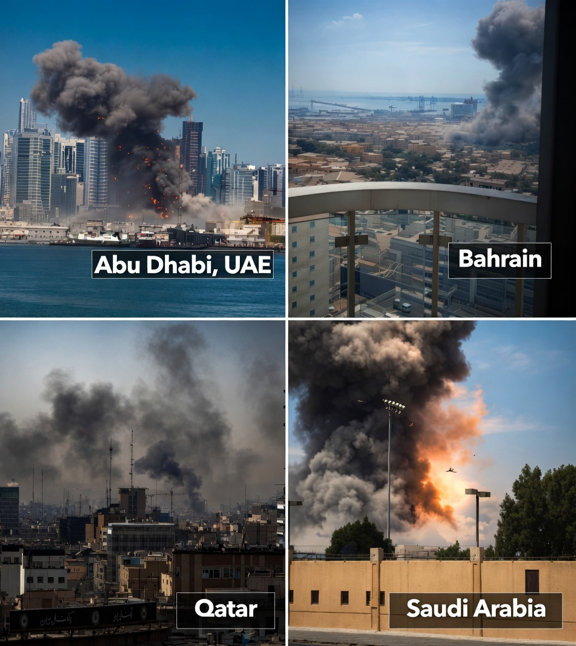
Reports indicate that Iranian forces targeted several key U.S.-linked bases. In the United Arab Emirates, the Al Dhafra Air Base near Abu Dhabi came under fire from ballistic missiles. Powerful explosions rocked the area, with satellite imagery later confirming damage to hangars, infrastructure, and facilities. The UAE responded by closing its airspace temporarily and urging citizens to avoid military zones and stay indoors. Air defense systems, including THAAD and Patriot batteries, intercepted many incoming threats, but some strikes caused structural damage and secondary explosions.
In Bahrain, smoke rose over the Al Jufair district in Manama, home to the U.S. Navy’s Fifth Fleet headquarters at Naval Support Activity Bahrain. Iranian media claimed successful hits on naval facilities, with local reports of explosions and damage to buildings. Bahraini authorities issued shelter-in-place advisories amid the chaos.
Qatar faced direct threats to its massive Al Udeid Air Base, a critical hub for U.S. Central Command operations. The country’s Interior and Defense Ministries activated Patriot missile systems, successfully intercepting several incoming projectiles. Officials confirmed repelling multiple attacks, declared a high-alert status, and closed national airspace while calling on residents to shelter in place. Explosions were audible across Doha as defenses engaged the threats.
Kuwait also reported powerful explosions, with authorities instructing citizens to remain home and avoid workplaces. Iranian strikes reportedly hit sites including Ali Al Salem Air Base and Camp Buehring, causing damage to runways, warehouses, and other infrastructure in some waves of the campaign.
These incidents form part of a larger pattern since late February 2026. Iran has fired thousands of missiles and drones at U.S. and allied positions across the Gulf in retaliation. While air defenses have mitigated much of the damage, assessments reveal billions of dollars in cumulative impacts: damaged radars, hangars, communication systems, and runways at over a dozen sites. Casualties, though limited in many individual strikes due to warnings and intercepts, have accumulated across the conflict.
Gulf states hosting these bases find themselves in a precarious position—balancing alliances with the U.S. while seeking to avoid full entanglement. Many have enhanced defenses and issued public safety alerts. The situation has disrupted regional airspace, raised oil price volatility, and threatened shipping through the Strait of Hormuz.
As of May 2026, the conflict remains fluid. Iranian claims often emphasize maximal impact, while U.S. and Gulf officials highlight successful interceptions and limited operational disruption. Independent verification through satellite imagery and official statements continues to emerge. The evolving crisis underscores the vulnerabilities of forward-deployed U.S. bases and the risk of miscalculation drawing more nations into open conflict.
International observers warn that further escalation could destabilize global energy markets and trigger wider humanitarian consequences. Authorities in affected countries continue to update safety guidance as the situation develops.