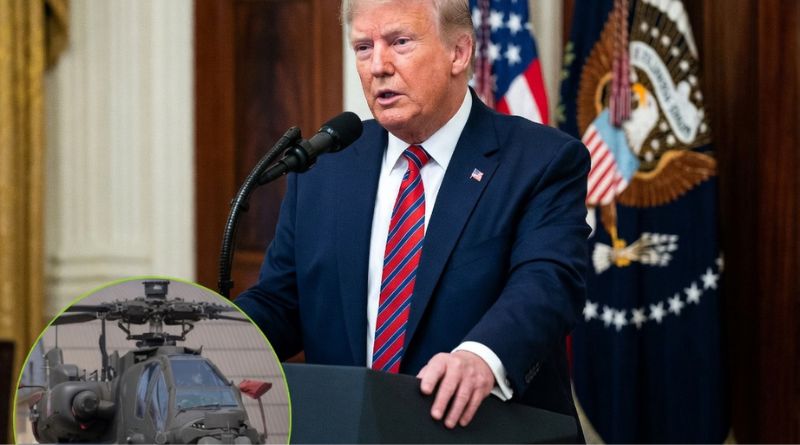
WASHINGTON — Tensions between the United States and Iran escalated sharply this week after a U.S. Army AH-64 Apache attack helicopter was downed near the Strait of Hormuz, prompting President Donald Trump to accuse Tehran of responsibility and order retaliatory airstrikes. The incident has further strained a fragile ceasefire in the broader regional conflict.
According to U.S. Central Command (CENTCOM), the helicopter went down on Monday, June 8, while on patrol over regional waters near the strategic waterway. Both crew members were safely rescued within hours by an American unmanned sea drone and are reported to be in stable condition with no injuries. Initial investigations point to a collision with an Iranian drone, though officials continue to assess whether the action was deliberate.
In a post on Truth Social, President Trump stated that he had been briefed by military leaders and blamed Iran for shooting down the “highly sophisticated” Apache. “The United States must, of necessity, respond to this attack,” he declared, describing the event as unacceptable aggression. Trump emphasized that the pilots were safe and vowed a firm response.
On Tuesday, U.S. forces launched what CENTCOM described as “self-defense strikes” against Iranian military targets, including air defense systems, surveillance radar sites, and ground control stations near the Strait of Hormuz. Explosions were reported in areas such as Qeshm Island, Sirik, Jask, and Bandar Abbas. The Pentagon characterized the operation as proportional and limited.
Iran quickly retaliated with drone and missile attacks on U.S. bases across the Middle East, including sites in Bahrain, Kuwait, and Jordan. Many incoming projectiles were intercepted by defensive systems, and there were no immediate reports of U.S. casualties. Iranian officials described the U.S. strikes as “vicious” and warned of further consequences, while signaling that foreign forces near its territory remain at risk.
The Strait of Hormuz, a critical chokepoint for global oil shipments carrying about one-fifth of the world’s supply, has been at the center of heightened tensions. The waterway had been effectively closed in recent months amid earlier exchanges between U.S.-Israeli forces and Iran. The latest flare-up jeopardizes ongoing diplomatic efforts aimed at securing a nuclear deal and reopening the strait.
This marks the first confirmed loss of a crewed U.S. aircraft to Iranian-linked action in the current conflict. Analysts warn that continued escalation could complicate ceasefire negotiations and drive oil prices higher, with ripple effects on the global economy. As of Thursday, both sides appear to be bracing for potential further developments while international calls for restraint grow.
The situation remains fluid, with investigations ongoing and diplomatic channels active behind the scenes.