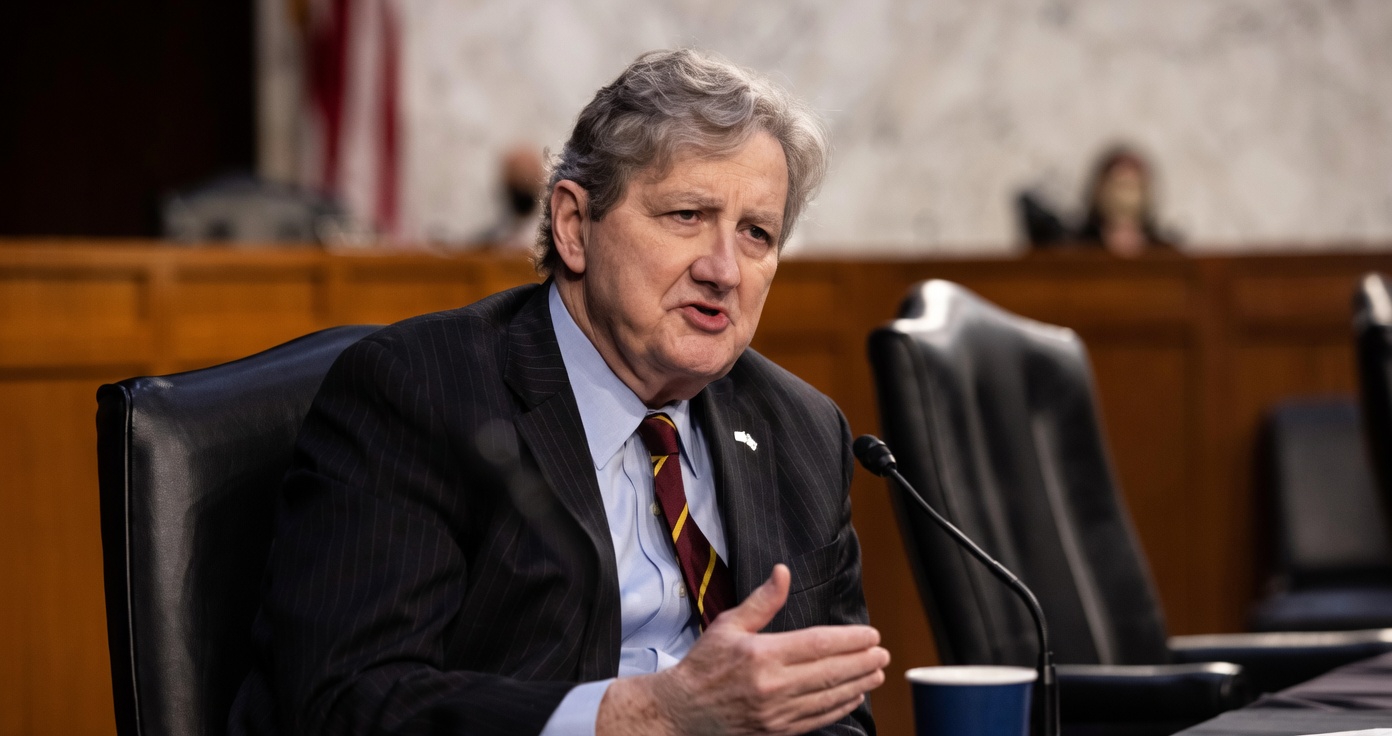
Sen. John Kennedy (R-LA) is urging Republicans to pursue a bold procedural move to pass the SAVE America Act, suggesting they use budget reconciliation to bypass a Democratic filibuster and approve the bill with a simple majority. Currently, Senate Majority Leader John Thune plans to consider the bill as standard legislation, which would require 60 votes to overcome a filibuster. With Republicans holding 53 seats, at least seven Democrats would need to join them. Kennedy argues that is unnecessary. Speaking on the Senate floor, he encouraged GOP leaders to pass the measure through reconciliation, a process under the Congressional Budget Act of 1974 that allows certain budget-related bills to pass with just 50 votes plus the vice president’s tie-breaking vote. “That’s how we passed the one big, beautiful bill,” Kennedy said, referencing past Republican legislation enacted over Democratic opposition. He also noted that Democrats used reconciliation in 2021 to pass the $1.9 trillion American Rescue Plan along party lines. Kennedy acknowledged the process is complex. “Anything you propose through reconciliation has to be paid for. We can find the money,” he said. He explained that provisions must also comply with the Budget Control Act, a step often called a “Byrd bath.” The Byrd Rule restricts reconciliation to measures directly tied to spending, revenue, or the debt limit, allowing the Senate parliamentarian to strike provisions deemed “extraneous.”
Kennedy urged GOP leadership to enlist legal experts to craft a version of the SAVE Act that could survive the Byrd bath. “We have yet to try going to these smart lawyers … and saying, ‘Craft us a SAVE Act that will pass muster under the Budget Control Act and can be blessed by the parliamentarian,’” he said. Some senators doubt the bill’s election-related provisions would qualify. Kennedy pushed back, citing past measures that unexpectedly passed or failed under reconciliation. “You don’t know until you try,” he said. The SAVE America Act, supported by former President Donald Trump, would require proof of U.S. citizenship to register to vote, mandate photo ID at polling places, and restrict mail-in ballots to circumstances such as military service, illness, disability, or travel. Advocates say it is essential to restore public confidence in elections, while critics warn it could burden eligible voters. Kennedy stopped short of calling for changes to the parliamentarian but emphasized testing reconciliation before conceding defeat. His push signals growing pressure within the Republican conference to use every procedural tool to advance their election-integrity agenda.