Trump Blasts Biden’s Preemptive Pardons, Targets Liz Cheney as “Crying Lunatic”
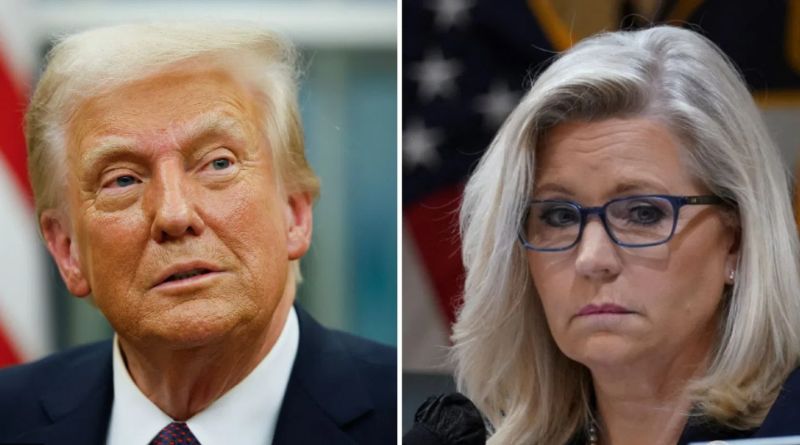
President Donald Trump sharply criticized former Rep. Liz Cheney on Monday, hours after President Joe Biden issued last-minute preemptive pardons to her and other prominent figures who had drawn Trump’s ire. The pardons, issued on Biden’s final day in office, shielded several high-profile individuals from potential future investigations or prosecutions.
While signing executive orders in the Oval Office, Trump addressed reporters on a range of topics, including the January 6, 2021, Capitol events. He announced plans to take concrete action on behalf of what he calls the “J6 hostages,” referring to defendants charged in connection with the riot. Trump said he had intended to focus on their cases but pivoted to Biden’s pardons.
“I was going to talk about the things that Joe did today with the pardons of people that were very, very guilty of very bad crimes, like the unselect committee of political folks,” Trump stated, using his frequent nickname for the House Select Committee investigating January 6.
Trump specifically singled out Cheney, who served as vice chair of the committee. “Why are we doing this? Why are we trying to help a guy like Milley? Why are we helping Liz Cheney?” he asked. “I mean, Liz Cheney is a disaster. She’s a crying lunatic and crying, crying.”
The pardons covered former NIAID Director Dr. Anthony Fauci, retired Gen. Mark Milley (former Chairman of the Joint Chiefs of Staff), members and staff of the January 6 Select Committee—including Cheney—and others. Biden acted preemptively before any charges were filed, an unusual but constitutionally permitted step.
Republicans viewed the move as a telling admission. “Proves they know she’s guilty,” Sen. Jim Banks (R-IN) said of Cheney. Rep. Ralph Norman (R-SC) described Biden’s action as sealing a legacy of “corruption, pay-to-play schemes, and the overall total sellout of our American principles.” Rep. Barry Loudermilk (R-GA), who led a GOP counter-investigation into the January 6 committee, called the pardons a “direct result of our investigation.” Rep. Eli Crane (R-AZ) highlighted what he called the “unlawful, deceitful, and corrupt” behavior of those protected.
In his accompanying statement, Biden defended the pardons as necessary to protect dedicated public servants from politically motivated retaliation. He cited threats of criminal prosecutions against Milley, Fauci, and the January 6 committee members.
“These public servants have served our nation with honor and distinction and do not deserve to be the targets of unjustified and politically motivated prosecutions,” Biden wrote. He praised Milley’s 40-plus years of service, including guiding the military through global threats, and Fauci’s decades-long work on health crises from HIV/AIDS to COVID-19.
Regarding January 6, Biden reiterated the committee’s role in investigating the “insurrection” that sought to overturn the 2020 election. He argued that those involved had faced intimidation and attempts to rewrite history. “Baseless and politically motivated investigations wreak havoc on the lives, safety, and financial security of targeted individuals and their families,” Biden concluded, saying he could not “in good conscience do nothing.”
The pardons come amid deep partisan divides over January 6. Trump and his allies have long portrayed the committee as a partisan “sham” that selectively presented evidence and ignored security lapses. Democrats and committee members insist it was a necessary, bipartisan effort to document an attack on the Capitol and American democracy.
Preemptive pardons are rare but not without precedent—most famously President Gerald Ford’s pardon of Richard Nixon. Critics on the right argue Biden’s broad action undermines accountability and fuels perceptions of two-tiered justice. Supporters say it was a defensive measure against anticipated retribution.
Trump has previously floated investigations or stronger measures against Cheney, whom he views as a traitor for her criticism of him, and has used harsh rhetoric against both Milley and Fauci. The new administration is expected to pursue reviews of January 6 cases, though the pardons largely remove these specific targets from legal risk.
The episode underscores the intense polarization that continues to define American politics more than four years after the Capitol breach. Both sides accuse the other of weaponizing government institutions, further eroding public trust in core democratic processes.