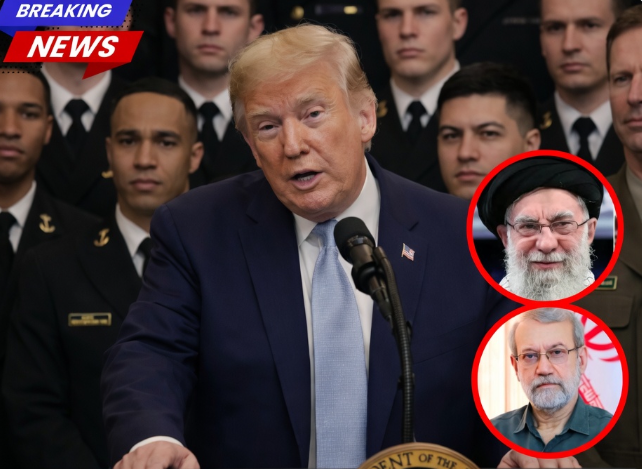
Donald Trump recently stated that the United States remains open to negotiations with Iran, but added that there may be few, if any, counterparts left to engage with. His remarks came amid reports that a number of high-ranking Iranian officials have been killed during ongoing strikes, significantly disrupting the country’s leadership structure and, in turn, its ability to participate in diplomatic talks.
According to these reports, the loss of key figures has created a vacuum that complicates any immediate effort to restart meaningful dialogue. While Trump suggested that the U.S. is still willing to pursue discussions, his comments implied that the current situation on the ground may limit those possibilities in the near term. The combination of military pressure and weakened leadership has raised broader questions about the feasibility of diplomacy under such conditions. Critics, however, argue that this strategy undermines the very foundation needed for negotiations. They contend that extensive military action—particularly when it involves damage to cities, civilian casualties, and the removal of political leadership—can erode trust and eliminate potential partners for peace. In their view, diplomacy requires functioning institutions and representatives, both of which may be compromised in this scenario. From this perspective, long-term stability cannot be secured through force alone. Opponents of the approach emphasize that sustainable peace typically depends on dialogue, mutual recognition, and political solutions rather than continued escalation.