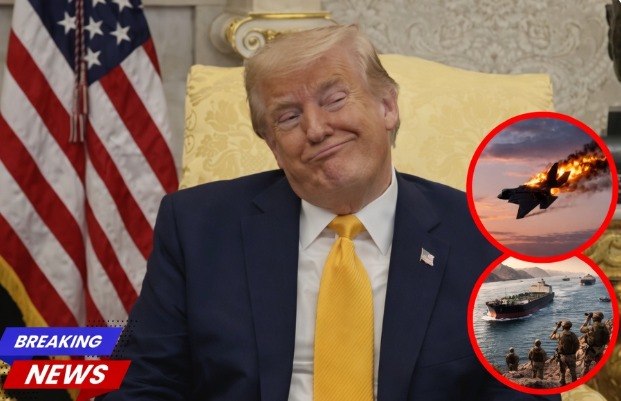
Donald Trump has portrayed the conflict in sweeping terms, describing a scenario in which opposing forces have been effectively neutralized. In his account, their naval fleet has been destroyed, their air force eliminated, and their air defense systems rendered inoperable. He suggests that, as a result, U.S. forces now enjoy complete freedom of movement, able to operate in the region without encountering meaningful resistance.
However, reports from the ground indicate a far more complex and uncertain situation. U.S. military installations in the region have continued to face periodic attacks, while unmanned aerial vehicles have reportedly been able to navigate contested airspace with limited opposition. There have also been unconfirmed accounts suggesting the loss of advanced aircraft, including a potential incident involving an F-35 Lightning II. At the same time, the Strait of Hormuz remains disrupted, posing significant challenges to global trade and energy supply chains. This contrast between official rhetoric and on-the-ground developments has prompted concern among analysts and observers. Critics argue that such optimistic portrayals may not fully reflect the realities of an evolving conflict marked by ongoing risks and instability. They suggest that emphasizing total control could obscure the persistence of threats and the potential for further escalation. Ultimately, the situation appears fluid, with competing narratives shaping public perception. While some statements emphasize success and dominance, available reports point to a more nuanced and unsettled reality that continues to develop.