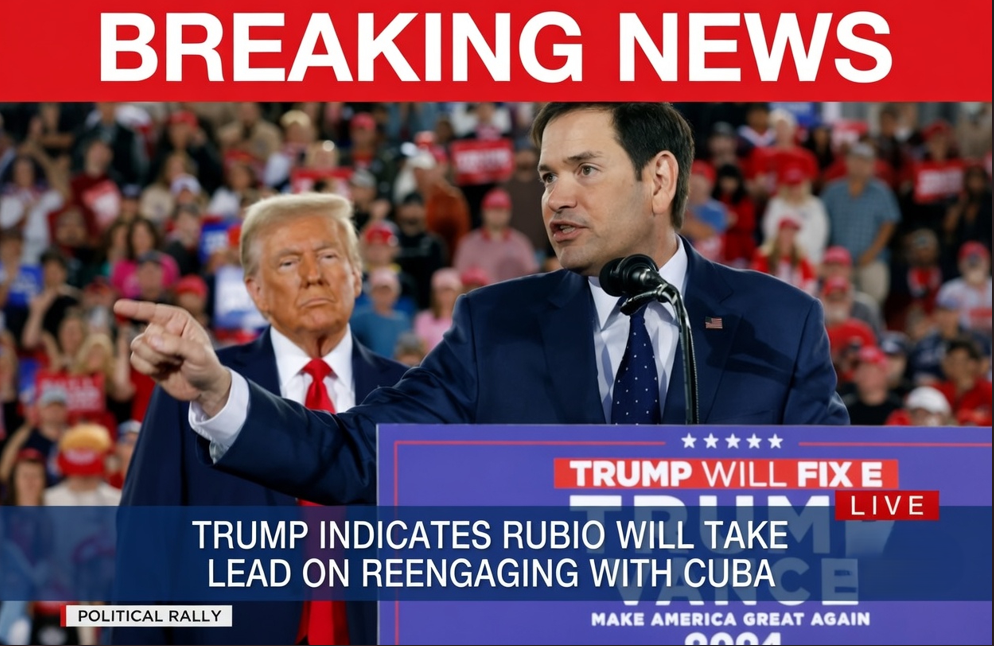
President Donald Trump has publicly signaled a pivot toward active reengagement with Cuba, suggesting that the island nation’s leadership is on the verge of collapse. During recent remarks, including a speech at the Shield of the Americas summit held in Doral, Florida, Trump articulated a vision for a post-communist Cuba, characterizing the current administration in Havana as being in its “last moments of life.” This declaration marks a significant moment in U.S.-Caribbean relations, as the President balances rhetoric of a “friendly takeover” with the harsh reality of a regime that he claims is “down to fumes.” At the forefront of this diplomatic strategy is Secretary of State Marco Rubio. Trump has lauded Rubio’s performance, predicting he will be remembered as one of the most effective diplomats in American history. By appointing a Secretary of State of Cuban descent who “speaks the language,” Trump aims to leverage cultural ties and deep-seated trust within the Cuban American community. The President emphasized that the Cuban American vote was a cornerstone of his electoral success, and he remains committed to those who “went through hell” under the Castro regime. Rubio is reportedly already in active negotiations to determine the future of the island. The geopolitical context of this move is heavily influenced by the situation in Venezuela. Trump noted that Cuba’s previous resilience was largely dependent on the Maduro administration. However, following reported U.S. military strikes that led to the capture of Nicolas Maduro, the flow of oil, energy, and financial aid from Caracas to Havana has ceased. Without this vital lifeline, Trump argues that the communist-run nation is facing a humanitarian crisis of unprecedented proportions. He noted that the country lacks the money and energy necessary to sustain its “bad philosophy,” making a deal with the United States almost inevitable.
Trump’s approach reflects a mix of economic pressure and opportunistic diplomacy. He indicated that while the United States does not wish to see a humanitarian disaster, the Cuban government’s past actions against its citizens warrant a firm hand. The President remains confident that a deal can be reached quickly, given that Cuba is “at the end of the line.” Whether the transition is “friendly” or otherwise, the administration’s focus has shifted toward ensuring a “great new life” for the island, positioning Marco Rubio as the primary architect of what could be a historic shift in Western Hemisphere politics.