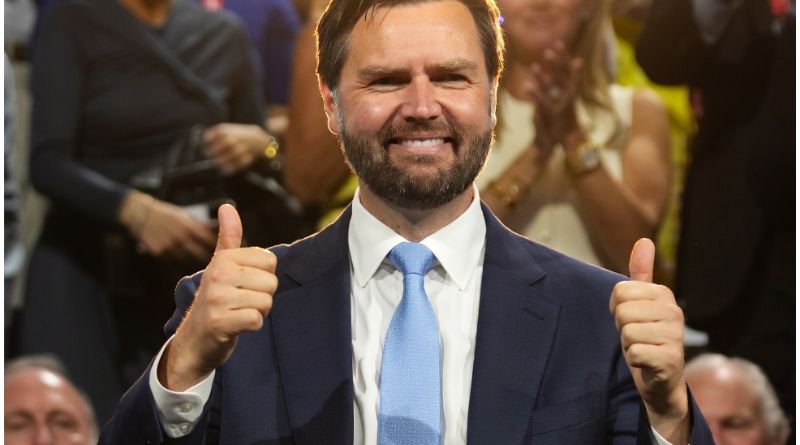
In a significant escalation of federal oversight, Vice President J.D. Vance has been appointed by President Donald Trump to lead a high-profile anti-fraud task force. This initiative represents a cornerstone of the administration’s domestic policy, aiming to dismantle systemic corruption and the misappropriation of taxpayer funds. At the heart of this “War on Fraud” is a sophisticated artificial intelligence platform designed to revolutionize how the government monitors and intervenes in financial misconduct. By transitioning away from the sluggish, manual review processes utilized by previous administrations, the task force can now flag or block suspicious claims in near real-time, drastically reducing the window of opportunity for criminals to siphon public funds from essential services.
The task force’s operational core involves a strategic partnership with the Centers for Medicare & Medicaid Services (CMS), currently under the leadership of Mehmet Oz. This collaboration has already demonstrated its effectiveness in California, specifically within the Los Angeles metropolitan area. Last month, CMS identified and suspended 70 hospice and home health providers after they were flagged as high-risk for potential fraud. Officials noted that funding for these providers was paused within a single week of detection. Administration sources expect these enforcement actions to grow exponentially as the AI system is refined and applied across more healthcare sectors nationwide, signaling a zero-tolerance policy toward the exploitation of public programs.
Geographically, Minnesota has emerged as a primary focal point for the administration’s initial scrutiny. Vice President Vance and Mehmet Oz recently announced that $259.5 million in Medicaid funding would be withheld from the state due to mounting fraud concerns. This decision has placed a spotlight on the administration of Governor Tim Walz, coming shortly before his announcement that he would not seek a third term. President Donald Trump has suggested that the task force’s efforts may find significant targets in Democratic-led states, though he emphasized that Republican-led states would also face investigation where patterns of abuse are detected. The goal is to establish a standardized, automated model for fraud prevention that operates independently of local political leanings.
The urgency of the task force’s mission is underscored by past failures, such as the Feeding Our Future scandal in the Twin Cities area of Minneapolis and St. Paul. Initially investigated during the Joe Biden administration, that case revealed a $250 million fraud network tied to pandemic-related food assistance programs. However, J.D. Vance recently indicated that the scope of suspected fraud in the region might be far larger, citing figures as high as $19 billion. This staggering estimate highlights the task force’s broader objective: to uncover and rectify years of accumulated fiscal leakage. By deploying CMS technologists to implement AI infrastructure across the country, the administration plans to replicate the success seen in Minnesota to protect the integrity of the U.S. Treasury on a global scale.
As the initiative expands, California and other high-spending states are expected to face rigorous audits. Vance confirmed during an event in North Carolina that the administration is committed to conducting the first comprehensive “national look” at systemic fraud. The task force’s rhetoric remains centered on the concept of fiscal justice, asserting that taxpayer-funded services must support the hard-working Americans who rely on them rather than being diverted to fraudsters or those who harbor hostility toward the nation. This combination of artificial intelligence and aggressive executive mandate sets the stage for a fundamental shift in how the federal government secures its financial resources for the foreseeable future.