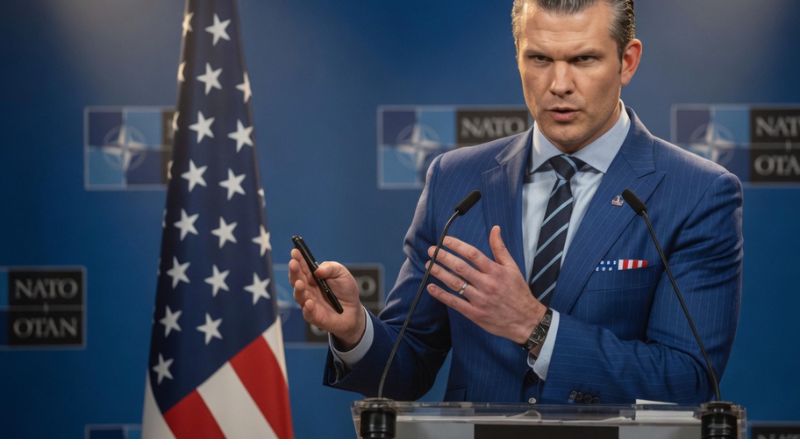
Defense Secretary Pete Hegseth pushed back forcefully against the media and anonymous sources on Monday amid renewed scrutiny over his use of the Signal messaging app. Speaking to reporters at the White House during the annual Easter Egg Roll, Hegseth dismissed recent reports of a second Signal chat in which he allegedly shared details about planned U.S. military strikes against Iran-backed Houthis in Yemen. He insisted that he and President Donald Trump remain fully aligned on defense matters.
“What a big surprise that a few leakers get fired and suddenly a bunch of hit pieces come out from the same media that peddled the Russia hoax,” Hegseth said in response to a New York Times story. “This is what the media does. They take anonymous sources from disgruntled former employees, and then they try to slash and burn people and ruin their reputations. Not going to work with me, because we’re changing the Defense Department, putting the Pentagon back in the hands of war-fighters. Anonymous smears from disgruntled former employees on old news doesn’t matter.”
Hegseth, attending the family-friendly event with his father and children, emphasized his commitment to reforming the Pentagon. “So I’m happy to be here at the Easter Egg Roll with my dad and my kids,” he added, shifting focus from the controversy to personal priorities and the administration’s broader agenda.
When asked whether he had spoken with the president, Hegseth confirmed he had and stated they were “on the same page all the way” and would continue pushing forward together. The comments came as the White House faced questions about information security practices following earlier Signal-related incidents.
The latest reporting stems from claims that Hegseth discussed sensitive operational details—such as flight schedules for aircraft involved in the March strikes—in a separate Signal group chat that included his wife and brother. This follows an initial controversy in which a Signal chat among senior Trump officials, inadvertently including Atlantic editor-in-chief Jeffrey Goldberg, revealed planning for the Houthi operation. Goldberg later published excerpts from the messages.
White House Press Secretary Karoline Leavitt rejected a NPR report suggesting the administration had begun searching for a replacement for Hegseth. “This @NPR story is total FAKE NEWS based on one anonymous source who clearly has no idea what they are talking about,” Leavitt posted on X. “As the President said this morning, he stands strongly behind @SecDef.” The White House’s official Rapid Response account echoed the denial, labeling NPR a “Fake News propaganda machine.”
This marks the second time recently that Trump has publicly backed Hegseth amid Democratic calls for his resignation. Last month, following the initial leak, Trump downplayed the episode, noting that National Security Advisor Mike Waltz had taken responsibility for adding Goldberg to the chat by mistake. Trump stressed that the military operation was “unbelievably successful” and that “no harm” resulted.
Hegseth has maintained that no classified information was compromised and portrayed the stories as recycled attacks from opponents resistant to his efforts to prioritize warfighters at the Pentagon. The administration continues to defend its use of secure communications while critics question the judgment involved in discussing operational details on commercial apps.