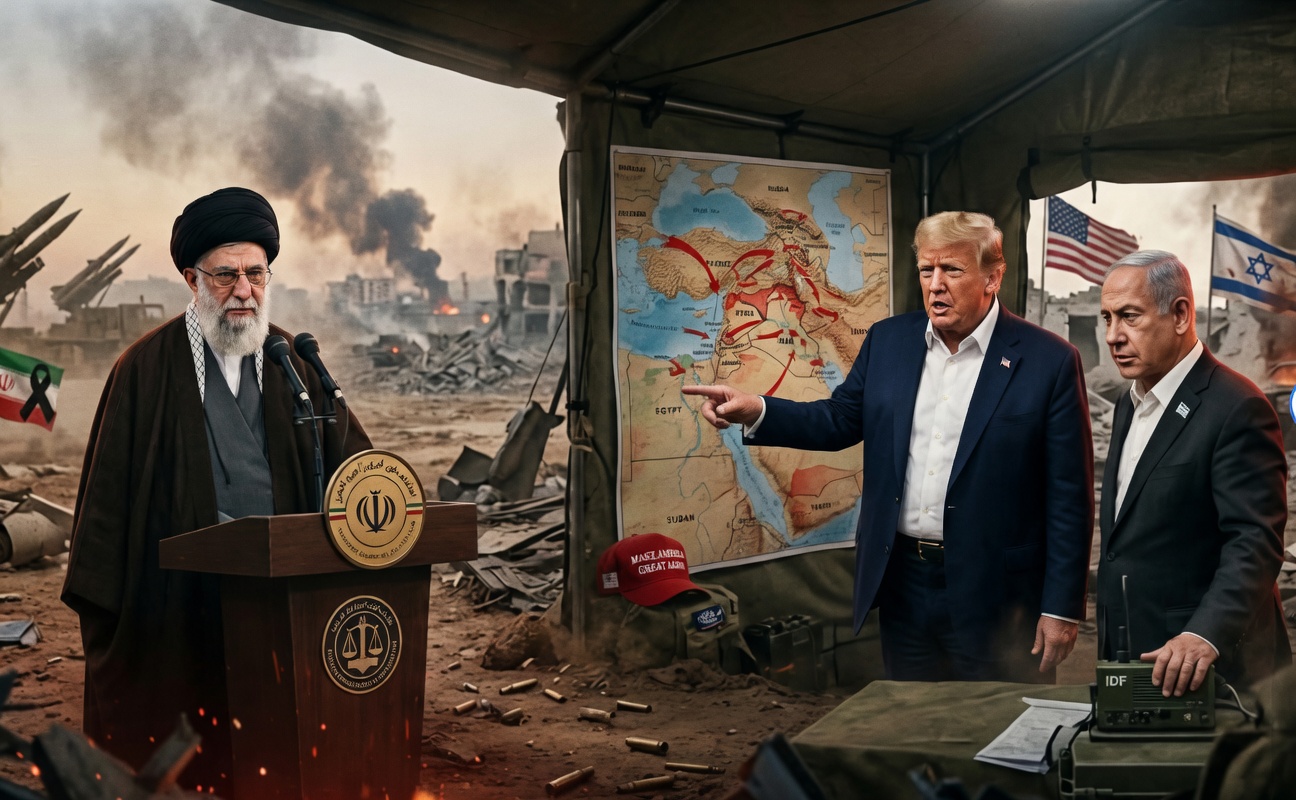
Is Israel Under Attack in 2025–2026?
Recent headlines have sparked widespread concern with reports of Israel facing renewed attacks. Sensational claims, such as “Iran will strike America tonight,” have circulated online, often accompanied by fragmented or unverified information. While some of these posts appear exaggerated or clickbait-driven, the broader reality in the Middle East remains tense and complex.
The year 2025 brought significant escalation in the long-standing conflict between Israel and Iran, along with its regional proxies. Israel conducted major strikes on Iranian targets, including nuclear facilities, missile sites, and military infrastructure. In response, Iran launched ballistic missile barrages toward Israeli cities, while Hezbollah from Lebanon and Houthi forces from Yemen added layers of rocket and drone attacks. These exchanges marked one of the most intense periods of direct confrontation in years.
As tensions carried into 2026, the situation intensified further. In early 2026, joint U.S.-Israeli operations targeted Iranian assets, prompting retaliatory Iranian missile strikes on Israeli population centers. Reports in recent days describe Iranian missiles hitting areas including Haifa, where residential buildings were damaged or partially collapsed, resulting in civilian casualties and injuries. Additional strikes have been reported near Tel Aviv and other central regions, with air defenses intercepting many incoming projectiles but some causing damage and disruption.
The conflict involves multiple fronts: direct Iranian missile attacks, Hezbollah rocket fire from the north, and occasional Houthi involvement from the south. Israel has responded with precision airstrikes aimed at degrading enemy capabilities, while emphasizing the protection of its civilians through robust defense systems like Iron Dome.
The region’s volatility stems from deep-rooted geopolitical rivalries, proxy warfare, and security concerns on all sides. While sensational social media claims often amplify fears of imminent wider war, the actual developments reflect an ongoing cycle of strike and counterstrike rather than a single sudden assault.
International observers continue to monitor the situation closely, urging de-escalation to prevent further civilian suffering and broader regional instability. The coming weeks will be critical in determining whether diplomacy can temper the current cycle of violence.