White House officials and California leaders have pushed back against media reports suggesting Iran planned a drone attack on the Golden State in retaliation for U.S. military action.
The controversy erupted after ABC News reported that the FBI had warned California police departments about a possible Iranian “surprise attack” using unmanned aerial vehicles launched from an unidentified vessel off the U.S. coast. The story, published in mid-March 2026, framed the alert as a direct threat tied to Operation Epic Fury, the U.S. campaign against Iran that began on February 28, 2026.
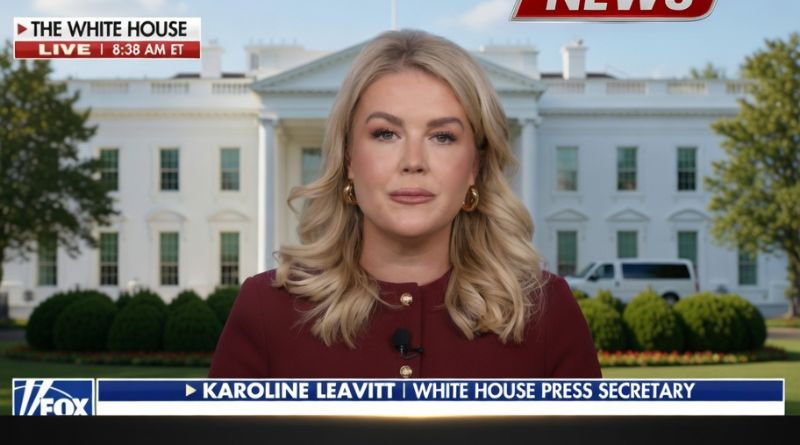
White House Press Secretary Karoline Leavitt immediately condemned the reporting. She accused ABC News of deliberately omitting key language from the FBI email, which began with “We recently acquired unverified information.” Leavitt demanded an immediate retraction, writing on X that the story was based on a single low-credibility tip intended only for local law enforcement awareness. “To be clear: No such threat from Iran to our homeland exists, and it never did,” she stated. ABC later updated its article to include the “unverified” qualifier.
Even Democratic California Governor Gavin Newsom downplayed any imminent danger, saying state intelligence teams were monitoring the situation as part of routine vigilance rather than responding to an active plot.
The episode highlights ongoing friction between the Trump administration and parts of the media amid the Iran conflict. It also comes as the White House addresses criticism from some conservative voices questioning the clarity of the administration’s messaging on Operation Epic Fury.
Last week, Leavitt issued a detailed defense of President Trump’s objectives after conservative commentator Matt Walsh highlighted apparent inconsistencies. Walsh pointed to shifting explanations around whether the strikes were strictly preemptive and why preventing a nuclear weapon remained a stated goal when officials had previously declared Iran’s nuclear sites “obliterated” during Operation Midnight Hammer in June 2025.
In a pointed response on X, Leavitt reiterated Trump’s core aims for the operation: destroying Iran’s missile capabilities and production, annihilating its navy, neutralizing its support for terrorist proxies, and ensuring the regime can never acquire a nuclear weapon. She emphasized that “killing terrorists is good for America” and noted that 49 senior Iranian leaders, including Supreme Leader Ayatollah Ali Khamenei, were eliminated in the opening strikes.
Leavitt framed the campaign as a necessary correction after 47 years of Iranian aggression, including attacks on Americans and funding of terrorism. She stressed that the regime had refused good-faith negotiations and remained committed to rebuilding its nuclear program despite the 2025 strikes.
As of early April 2026, the administration describes Operation Epic Fury as a limited 4-to-6-week operation that largely achieved its military objectives, leading to a ceasefire. Iran has reportedly agreed to reopen the Strait of Hormuz and engage in further talks. U.S. officials say the operation significantly degraded Iran’s conventional forces, missile industry, and proxy networks.
The California drone alert appears to have been precautionary sharing of raw, low-confidence intelligence rather than evidence of an active plot. The broader debate reflects the challenges of communicating complex military objectives and intelligence during an active conflict.