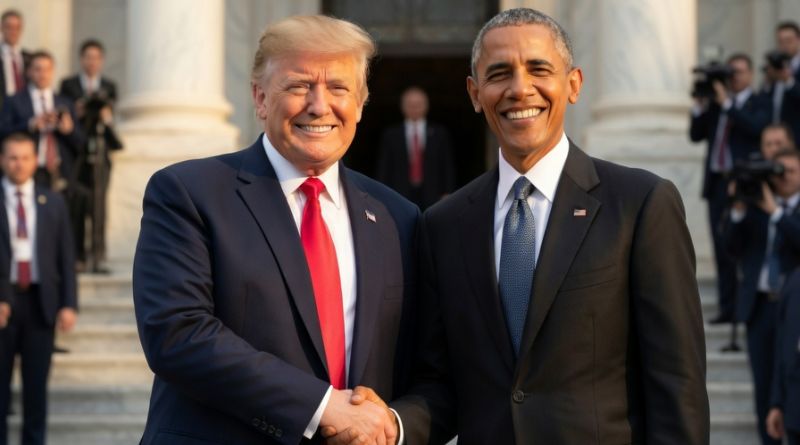
A recent on-air exchange involving Donald Trump and Barack Obama quickly turned into a widely discussed political moment. What began as fallout from a controversial social media post escalated when Obama addressed the broader climate of public discourse in a candid interview.
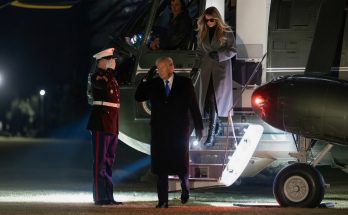
The spark came in early February 2026, when a video shared on President Trump’s Truth Social account included a brief, AI-generated clip depicting former President Barack Obama and former First Lady Michelle Obama with their faces superimposed on ape bodies. The post, which also pushed unsubstantiated claims about the 2020 election, was deleted within hours amid bipartisan backlash. The White House attributed it to a “staff error,” and Trump later stated aboard Air Force One that he had not watched the full video and “didn’t make a mistake.” He condemned the racist imagery but stopped short of a personal apology.
About a week later, Obama responded during a YouTube interview with podcaster Brian Tyler Cohen. Without naming Trump directly, Obama lamented what he called a loss of “shame,” “decorum,” and “respect for the office” in modern politics. “There’s this sort of clown show that’s happening in social media and on television,” he said, describing much of the noise as a distraction. He added that a majority of Americans find such behavior “deeply troubling.”
The moment was instantly amplified. Clips of Obama’s measured critique and Trump’s earlier defense circulated rapidly across cable news, YouTube, and platforms like X. Supporters of Trump viewed the original post’s removal and Obama’s remarks as overblown “fake outrage” or partisan attacks. Critics, including some Republicans, saw the video as a disturbing example of dehumanizing rhetoric and a further erosion of civility. Reactions split sharply along familiar lines: praise for bluntness on one side, condemnation of tone and imagery on the other.
Yet the episode revealed more than personal friction between two longtime adversaries. It underscored how today’s media ecosystem transforms fleeting moments into viral events. Short clips emphasizing tone, facial expressions, and punchy phrases spread faster than full context, often shaping public perception before deeper discussion can occur. In this case, a one-second visual in a larger video and a handful of quoted lines from Obama’s interview dominated headlines for days.
This shift carries real consequences. Political figures are now judged not only by policy substance but by how they perform in high-pressure, always-on environments—and how those performances are clipped, shared, and memed. Algorithms reward emotional intensity, while nuance struggles to break through. What once might have remained a private staff mishap or a thoughtful interview now becomes national theater almost instantly.
In the end, the Trump-Obama flare-up reflects a larger reality of contemporary politics. Public perception forms quickly, often around symbolism and style rather than sustained argument. As live television, social platforms, and short-form video continue to merge, single moments increasingly define broader narratives—testing norms of decency and reshaping how Americans debate ideas. Whether this accelerates division or eventually prompts a pushback toward more substantive discourse remains to be seen.