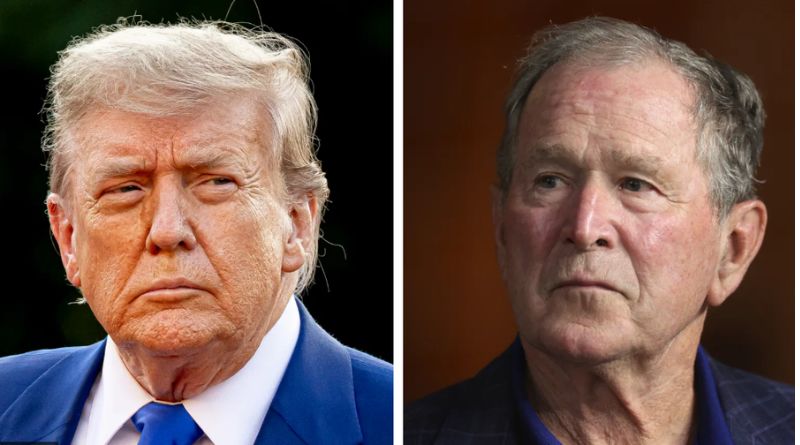
Former Presidents George W. Bush and Barack Obama joined U2 frontman Bono on Monday to console outgoing staff of the U.S. Agency for International Development (USAID) as the agency marked its final day as an independent entity.
In a private videoconference not open to media, the three delivered emotional tributes while criticizing the Trump administration’s decision to dismantle the 60-year-old organization. Clips reviewed by the Associated Press showed Obama calling the move “a travesty” and “a colossal mistake.” He told staff their work represented “some of the most important” efforts happening anywhere in the world and predicted that leaders from both parties would eventually recognize its value.Cnbc
Bush, who rarely criticizes his fellow Republican, focused on his legacy project, the President’s Emergency Plan for AIDS Relief (PEPFAR). Launched during his administration, the program is credited with saving approximately 25 million lives through HIV/AIDS treatment and prevention. “You’ve showed the great strength of America through your work—and that is your good heart,” Bush said. He argued that preventing millions of deaths serves U.S. national interests.
Bono, a longtime advocate for African aid, recited an original poem and grew emotional. “They called you crooks. When you were the best of us,” he declared, warning that the shutdown would cause widespread suffering, including deaths from malnutrition and halted health programs. Observers noted that Obama and Bono appeared particularly moved, while Bush remained focused on legacy.
USAID was established by President John F. Kennedy in 1961 to deliver foreign economic and humanitarian assistance. Over decades, it managed billions in aid for health initiatives, disaster relief, food security, and development projects. Supporters highlight successes like contributions to global disease reduction; critics, however, pointed to bureaucratic inefficiencies, weak oversight, and programs that strayed from core U.S. strategic goals.
The agency became an early target of the Department of Government Efficiency (DOGE) in early 2025. Then-DOGE leader Elon Musk described USAID as “a viper’s nest of radical-left Marxists who hate America” and beyond repair. President Trump praised DOGE’s findings of waste, citing examples such as millions spent on DEI scholarships in Burma, LGBTQI+ programs in Lesotho, indigenous empowerment projects, and other niche initiatives he argued did not advance American interests.
Secretary of State Marco Rubio, who served as acting USAID administrator in its final weeks, oversaw the restructuring. Roughly 83% of contracts and programs—totaling thousands—were canceled after review. Remaining activities aligned with administration priorities were absorbed into the State Department effective July 1, 2025. Rubio stated that post-Cold War efforts often failed to meet development goals, sometimes worsened instability, and fueled anti-American sentiment while creating an “NGO industrial complex” at taxpayer expense.
“Under the Trump Administration, we will finally have a foreign funding mission… that prioritizes our national interests,” Rubio said. The shift aims for greater accountability, strategic focus, and efficiency under direct diplomatic control.
The farewell event underscored deep divisions. Critics, including global health groups, warned of humanitarian fallout, with some studies projecting millions of additional preventable deaths over time from disrupted HIV, malaria, nutrition, and vaccine programs. The administration maintained that targeted, interest-driven aid would replace blanket spending that yielded mixed results.
This restructuring reflects a broader push to reduce federal bureaucracy and realign foreign assistance with “America First” principles. Whether the streamlined approach under the State Department delivers better outcomes—or whether key programs continue in altered form—will be judged by long-term results rather than initial rhetoric. The debate pits fiscal accountability and strategic priorities against concerns over lost expertise and humanitarian impact.