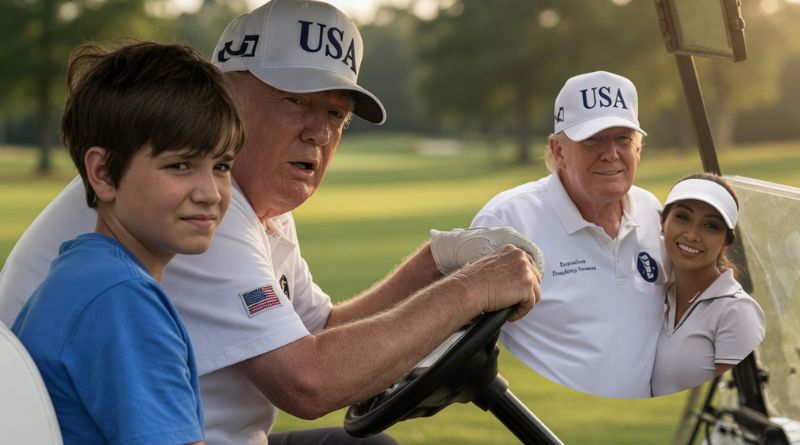
A viral video from April 13, 2026, at Trump International Golf Club in West Palm Beach, Florida, has sparked intense online debate. In the clip, President Donald Trump, then 79, rides in a golf cart with his 17-year-old grandson, Donald Trump III. He spots Nina Coates, a golf content creator and Instagram influencer, who waves excitedly to get his attention.
Trump stops the cart and enthusiastically comments multiple times: “She’s in great shape! Great shape! Look at her! … Is she in good shape or what?” He then exits the cart (adjusting his belt), beckons her over for a photo, and gives her a hug while asking if the man nearby is her husband. Coates and her companion appear delighted by the encounter. She later posted positively on Instagram, calling the compliment one of the best she had received and thanking Trump with laughing and heart emojis.
Critics’ Reaction
For Trump’s critics, the moment exemplifies a familiar pattern. They describe the interaction as inappropriate, especially with his teenage grandson present, viewing it as a public display that blurs professional boundaries and treats women as objects of commentary. Outlets and social media users labeled it “creepy,” “thirsting,” or “disgusting,” arguing that a sitting president should model higher standards of decorum. Some tied the incident to a broader narrative of power and privilege, suggesting it reflects a worldview where personal impulses override expected dignity. The backlash intensified online, with hashtags and commentary framing it as another example of Trump’s unfiltered style clashing with contemporary expectations of leadership.
Supporters’ Perspective
Supporters push back strongly, calling the outrage overblown and selective. They note that Coates was not a passive bystander but an enthusiastic fan actively seeking attention by jumping and waving. Trump’s remarks, in their view, represent classic, boisterous Trump—direct, complimentary, and free of political correctness. Many argue it was harmless banter that clearly brightened the woman’s day, as evidenced by her own positive reaction. In a polarized media environment, they see the criticism as yet another instance of opponents manufacturing scandal from routine, good-natured interaction.
Golf Course Culture Context
The episode has also revived discussion of Trump’s longstanding “golf course culture.” For decades, reports have described his competitive approach to the game, including allegations of bending rules. Caddies at clubs like Winged Foot reportedly nicknamed him “Pelé” (after the soccer star) for frequently kicking errant balls back into favorable positions—a habit detailed in books and witness accounts. Trump has openly embraced a win-at-all-costs mentality in recreational play, which detractors interpret as emblematic of character shortcuts, while supporters dismiss it as trivial gamesmanship common among high-stakes personalities.
Cultural Divide
This golf cart clip serves as another Rorschach test in America’s deep cultural and political divide. Critics see it as evidence of an enduring persona unfit for the gravity of the presidency, especially amid national challenges. Supporters celebrate it as authenticity from a leader who refuses to conform to scripted politeness. The woman involved enjoyed the moment, yet online interpreters projected vastly different meanings onto it.
Ultimately, reactions reveal more about the observers than the event itself. Trump’s unapologetic, larger-than-life style continues to energize his base while provoking fierce opposition. Whether one views the exchange as charming banter or a lapse in judgment, it underscores how personal conduct, public persona, and media amplification fuel endless partisan conflict. In an era of economic pressures and global tensions, the intensity of debate over a few seconds of golf-course compliments highlights how deeply entrenched the national fault lines remain.