U.S. and Iran Close in on Potential Deal to End Conflict
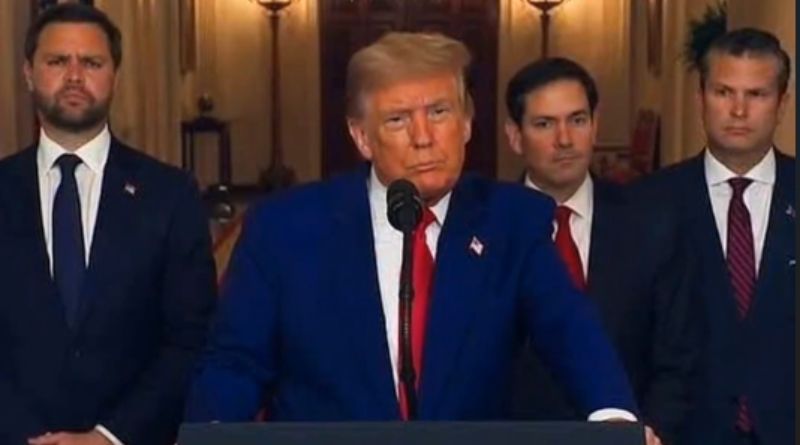
President Donald Trump and his senior national security team, including Vice President JD Vance and Secretary of State Marco Rubio, are finalizing details of a possible agreement aimed at ending the ongoing war with Iran.
Speaking during a visit to India, Rubio reiterated Washington’s firm position that the Strait of Hormuz must be reopened to international shipping. “The straits have to be open, they’re going to be open,” Rubio said. He described Iran’s closure of the vital waterway as “unlawful, illegal, unsustainable for the world, and unacceptable.”
Rubio noted that diplomatic talks were continuing in Qatar and expressed cautious optimism. “There were some talks going on in Qatar today, so we’ll see if we can make progress,” he said. Negotiators are currently debating specific language in the draft document, a process that could take several more days. President Trump has made clear his preference for either “a good deal or no deal,” according to administration officials.
The latest developments come days after U.S. Central Command carried out what it described as “self-defense strikes” in southern Iran on Monday. The strikes targeted missile launch sites and Iranian vessels attempting to lay mines, aimed at protecting American troops and naval forces from escalating threats. Captain Tim Hawkins, a CENTCOM spokesperson, confirmed the action but declined to provide specifics on ships involved or exact strike locations. “U.S. Central Command continues to defend our forces while using restraint during the ongoing cease-fire,” he said.
The U.S. maintains a significant naval presence in the region, including two aircraft carriers and nearly two dozen warships enforcing a blockade around Iranian ports in the Gulf of Oman and Arabian Sea. Iranian surface-to-air missiles have threatened American aircraft and vessels, prompting the recent response near the key port and naval base at Bandar Abbas.
A fragile ceasefire has been in place for approximately six weeks, though sporadic clashes between American and Iranian forces have continued. Iranian officials acknowledged Monday that substantial progress has been made in negotiations. Foreign Ministry spokesman Esmaeil Baqaei said Tehran and Washington have reached understandings on “a large portion of the issues,” but cautioned that a final agreement is not imminent. He accused the U.S. side of shifting positions at times.
A senior Trump administration official said Iran has agreed in principle to eliminate its stockpile of highly enriched uranium. In return, the United States would lift its naval blockade if Iran reopens the Strait of Hormuz to unrestricted shipping. Further sanctions relief could follow verifiable reductions in Iran’s nuclear enrichment activities.
President Trump has repeatedly criticized the 2015 nuclear deal negotiated under President Barack Obama, claiming it provided Iran with “massive amounts of CASH” and a pathway to nuclear weapons. Administration officials believe the emerging framework would impose stricter, longer-term limits on enrichment than the previous agreement, with robust enforcement mechanisms.
While both sides report alignment on core principles, work continues on verification details and implementation timelines. Officials note that Iran appears more willing to compromise following recent U.S. military actions. Trump has emphasized that any final deal must include strong, enforceable guarantees against future nuclear weapons development.
The high-stakes negotiations carry significant implications for global energy markets, regional stability, and U.S. foreign policy in the Middle East. Progress in Qatar suggests a possible breakthrough could occur in the coming weeks, though many challenges remain.