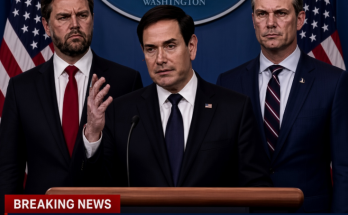
A controversial federal worker buyout proposal is fueling a nationwide debate over government spending, workforce restructuring, employee rights, and the long-term future of public service. At its core lies a difficult question: can shrinking the federal workforce save money without weakening the essential services millions of Americans depend on every day?
Even as policymakers discuss reform, the public still expects every Social Security check to arrive on time, every storm to be tracked, every drug to be inspected, and every critical government function to continue without interruption.
Supporters argue that voluntary buyouts offer a practical and responsible path forward. They see the plan as a chance to reduce costs, streamline a large bureaucracy, modernize agencies, and open space to recruit a new generation of tech-savvy employees equipped for today’s challenges.
Critics view the proposal very differently. They warn it could become a slow-motion dismantling of institutional knowledge and public service, replacing decades of experience with uncertainty and creating gaps that may not be immediately visible but could carry lasting consequences.
The debate reflects a deeper divide over what Americans expect from their government. For some, workforce reductions represent long-overdue fiscal discipline and a necessary step toward greater efficiency. For others, they signal that experience, continuity, and dedication to public service are being treated as expendable budget items.
Behind every government position is an individual facing a complex personal decision. While a buyout may appear financially attractive, worries about future job security, health insurance, retirement planning, and workplace pressure can make a supposedly voluntary choice far more difficult than it seems.
If large numbers of experienced employees leave at once, the effects may surface only when critical services begin to slow. Disaster assistance could be delayed, benefits processing could take longer, regulatory oversight could weaken, and agencies could struggle to maintain continuity during emergencies.
Ultimately, the debate reaches beyond budgets and staffing numbers. It raises broader questions about how to balance fiscal responsibility with the need to maintain effective public institutions. Any reform that reshapes the federal workforce must weigh not only financial outcomes but also the people who perform these essential roles and the services on which the public depends.