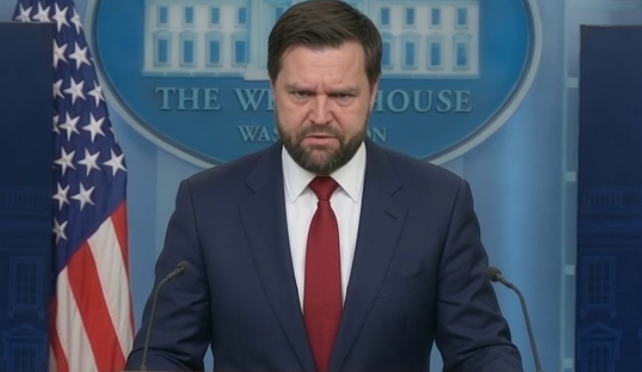
A few carefully chosen—or ill-chosen—words can travel far, sometimes crossing oceans and igniting reactions that transcend partisan lines. That was the case recently when remarks by U.S. Vice President JD Vance drew strong responses from across the United Kingdom, particularly from veterans and political leaders. What stood out was not merely disagreement, but a notable tone of unity in defense of Britain’s military heritage and its longstanding partnership with the United States.
Vance’s comments, made during discussions on potential security guarantees for Ukraine, referenced the limitations of troops “from some random country that hasn’t fought a war in 30 or 40 years.” The statement was widely interpreted as a slight against European allies, including the UK, prompting swift condemnation. Figures such as former Veterans Minister Johnny Mercer, SAS veteran and author Andy McNab, Admiral Lord West, General Sir Patrick Sanders, James Cartlidge, James Cleverly, and Prime Minister Keir Starmer all weighed in, emphasizing a core principle: respect matters, especially when discussing shared history and sacrifice.
For many in the UK, the issue went beyond politics. It touched on the deep bonds forged between allied forces through decades of joint operations—from the beaches of Normandy in World War II to the deserts of Iraq and the mountains of Afghanistan. British troops have fought alongside their American counterparts in numerous conflicts, suffering significant losses and contributing meaningfully to coalition efforts. Veterans and their families carry these memories, viewing them as foundational to the “special relationship” between the two nations.
The reaction reflected broader sensitivities about how allies communicate. Trust, once strained, can take time to rebuild, and words from high-profile leaders carry outsized weight. Critics argued that downplaying or overlooking allied contributions risked diminishing the very partnerships essential for collective security in an uncertain world.
Vance later clarified that his remarks were not directed at the UK or France, both of which he acknowledged had “fought bravely alongside the U.S. over the last 20 years, and beyond.” He pointed instead to other nations lacking recent combat experience or adequate equipment. Prime Minister Starmer, without naming Vance directly, used the moment to pay tribute to British service members who “died fighting for Britain alongside our allies,” underscoring national pride and remembrance.
At its heart, this episode serves as a reminder of something larger than any single comment. The Anglo-American alliance has weathered many storms and remains fundamentally strong, underpinned by shared democratic values, intelligence cooperation, and military interoperability. Yet moments like this illustrate the importance of careful diplomacy and mutual respect. Even the most enduring partnerships depend on honoring the past, acknowledging sacrifices, and choosing words that reinforce rather than erode confidence. In an era of evolving global threats, preserving that trust is not just symbolic—it is strategic.