Federal Oversight and Financial Shifts: Trump Challenges D.C. Autonomy as Republicans Claim Fundraising Dominance
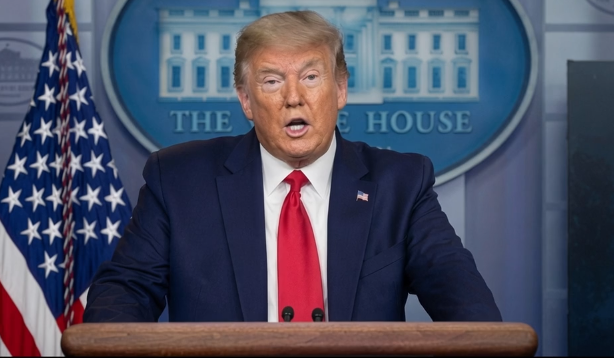
President Donald Trump has signaled a potential escalation in federal oversight of Washington, D.C., tying the move to the outcome of the city’s Democratic mayoral primary. In comments delivered from the Oval Office, Trump suggested that a victory by Janeese Lewis George, a prominent Democratic Socialist and current D.C. Council member, could prompt the federal government to assume greater direct control over the nation’s capital. The warning underscores long-standing tensions between the executive branch, Congress, and local D.C. governance under the District of Columbia Home Rule Act, which grants residents limited self-government while preserving Congress’s ultimate authority.
George currently holds a double-digit lead in polling ahead of the June 16 primary against Kenyan McDuffie. Her campaign focuses on addressing housing affordability, expanding social programs, and implementing public safety reforms. As a member of the Democratic Socialists of America, she has drawn particular attention for her positions on issues such as opposition to youth curfews during periods of heightened teen-related unrest. Trump argued that such leadership could jeopardize recent gains in the city, including reductions in crime and a thriving restaurant scene. He emphasized that he would not tolerate policies he views as harmful to local businesses and the overall direction of the capital.
George has pushed back strongly, characterizing Trump’s remarks as a direct assault on local democracy and the principle of home rule. The exchange highlights deeper ideological divides over how the District—home to more than 700,000 residents who lack full voting representation in Congress—should be governed.
This is not the first instance of the Trump administration asserting federal influence over D.C. Less than a year ago, officials invoked emergency powers to take control of the Metropolitan Police Department, deploying National Guard troops throughout the city. The action drew sharp criticism from local leaders and Congressional Democrats, who labeled it an overreach of authority. Although day-to-day police operations were eventually returned to local control, the continued presence of federal personnel and Trump’s latest comments suggest the administration remains prepared to intervene if the city’s political direction shifts further left.
At the same time, the national political landscape is being shaped by a notable disparity in campaign finances. Joe Gruters, Chairman of the Republican National Committee (RNC), asserted that Republicans are positioned to significantly outspend Democrats in the current election cycle. Speaking on Breitbart, Gruters highlighted the RNC’s approximately $125 million in cash reserves, contrasting it with the Democratic National Committee’s reported negative cash position. When including the National Republican Senatorial Committee and the National Republican Congressional Committee—each holding around $80 million—Gruters projected the Republican side could amass up to $800 million. Democrats, by comparison, are expected to have roughly $350 million available.
A key factor in this financial outlook is an anticipated court ruling on coordinated campaign spending limits. Should the court allow parties to spend at more favorable “candidate rates,” it would ease previous restrictions and enable closer coordination between party organizations and individual candidates. Such a decision could substantially magnify the Republican financial advantage.
Together, the potential for renewed federal intervention in Washington, D.C., and the GOP’s reported fundraising strength illustrate a volatile period in American politics. As primary elections draw nearer, these developments underscore ongoing debates over local autonomy, federal power, and the role of money in shaping electoral outcomes. Observers on both sides of the aisle will be closely watching how these dynamics unfold in the months ahead.