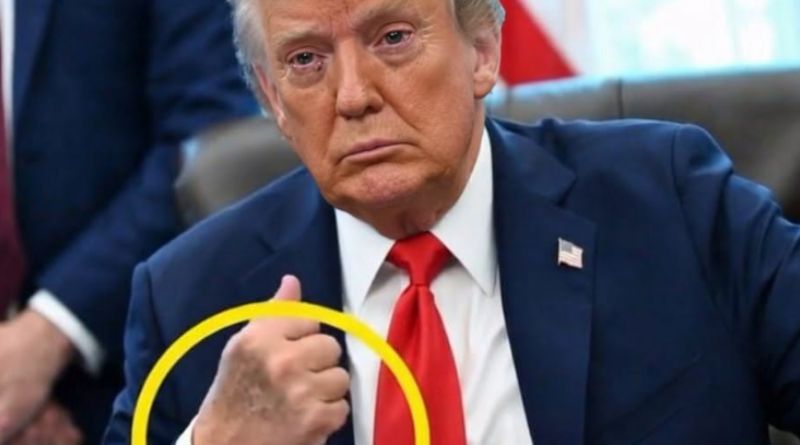
White House Discloses President Donald Trump’s Diagnosis of Chronic Venous Insufficiency
WASHINGTON — The White House announced on July 17, 2025, that President Donald Trump has been diagnosed with chronic venous insufficiency (CVI), a common condition affecting blood circulation in the legs. White House Press Secretary Karoline Leavitt made the disclosure during a briefing, aiming to address public speculation fueled by visible swelling in the president’s lower extremities during recent public appearances.
The diagnosis emerged from a proactive medical evaluation by the White House medical team. Trump underwent comprehensive testing, including bilateral lower extremity venous Doppler ultrasounds, to evaluate vein function. An echocardiogram was also performed to exclude serious complications such as deep vein thrombosis (DVT), arterial disease, or underlying cardiac issues. Officials confirmed that results showed no evidence of life-threatening conditions, and the president continues to enjoy excellent overall health.
Chronic venous insufficiency develops when the one-way valves inside leg veins weaken or become damaged, making it harder for blood to return to the heart against gravity. As a result, blood pools in the lower legs, often leading to edema (swelling), aching, heaviness, and in some cases skin changes. The condition is particularly prevalent among individuals over the age of 70 and is considered benign when properly managed. Standard treatments focus on symptom relief and prevention of progression through conservative measures such as prescription compression stockings, regular physical activity, leg elevation, and maintaining a healthy weight. In more advanced cases, minimally invasive procedures may be considered, though the White House has not indicated any need for such interventions at this time.
Leavitt described the evaluation as a precautionary step taken “out of an abundance of caution” after Trump noticed mild swelling. She stressed that the president’s demanding schedule — encompassing rallies, domestic and international travel, and ongoing executive responsibilities — remains fully intact. The announcement follows weeks of online discussion and media attention surrounding videos and photographs showing Trump moving with noticeable deliberation and visible leg swelling.
Public reaction was swift and predictably divided along partisan lines. Supporters rallied with messages of encouragement on social media using hashtags such as #TrumpStrong, viewing the disclosure as evidence of transparency and reassurance that no major health crisis exists. Critics, meanwhile, seized on the news to question the president’s physical fitness for the demands of office. Medical professionals stepped forward to contextualize the diagnosis, noting that CVI is a manageable vascular issue rather than a sign of broader decline.
The White House medical team confirmed that Trump is receiving appropriate ongoing care and monitoring. By voluntarily releasing details of the president’s health evaluation, the administration sought to promote transparency and normalize discussions about age-related conditions among public servants. As Trump, now in his late 70s, continues to fulfill his duties at a high tempo, officials have pledged to provide further updates if warranted. The episode underscores the delicate balance between personal health management and the intense scrutiny faced by national leaders in an era of constant media and digital visibility.